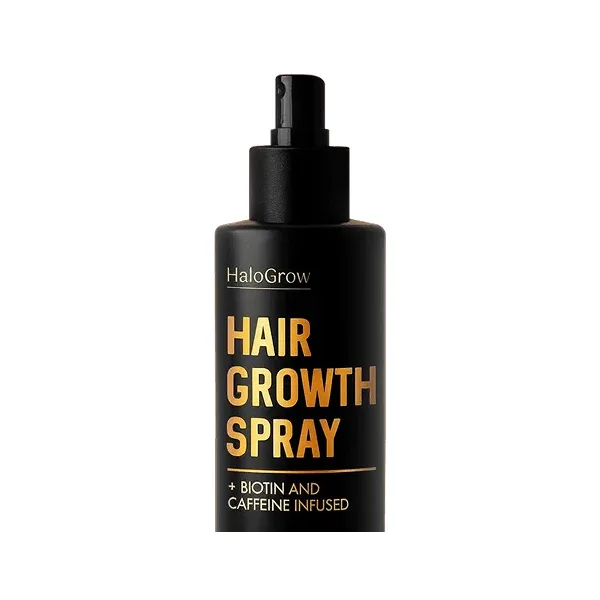
Ads sell herbs; the cart names two drugs
You are not choosing a spray format. You are choosing which story to believe — herbs on the ads, or minoxidil and finasteride on the cart — before a Drug Facts panel ever appears. Nothing on this page is medical advice. Products that name minoxidil or finasteride can have side effects, interact with other medicine, and are unsuitable in pregnancy. Sudden patchy loss, scalp pain, or shedding after an illness needs a dermatologist, not a checkout timer.
Affiliate landing pages on this funnel read like a herbal narrative: He Shou Wu, ginger root, caffeine, and biotin applied to fight DHT. The checkout page we opened on , without those ad parameters, leads with minoxidil and finasteride. That is not a wording tweak. It is two regulatory worlds on one product line. Herbs-as-cosmetics and drugs-as-OTC-or-prescription do not share a label. Until a bottle photograph settles which world arrived, the cart is a cliff.
What the advertorial funnel emphasizes
The long-form pages cite biotin for keratin support, ginger for scalp circulation, caffeine to extend the growth phase, and He Shou Wu as a traditional botanical. They also reference percentage improvements in density and shedding with footnote markers — those figures come from the seller’s marketing. A named trichologist quote appears on some variants. We do not treat that as a verified endorsement; it is not linked to a named practice, license number, or published study.
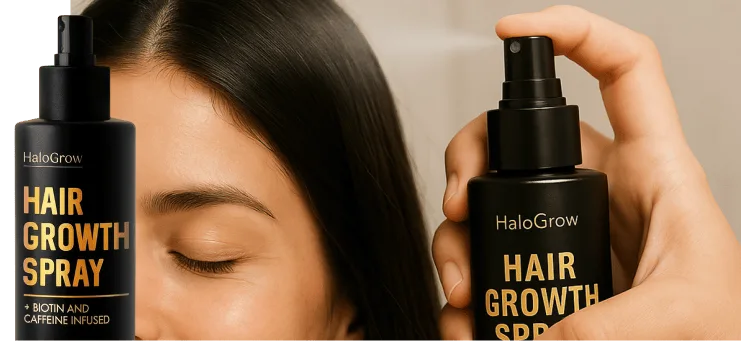
This review will not say the spray grows hair. It will not say the herbs grow hair. It will not say minoxidil in this bottle is 2 percent, because that number was not on the page we opened. It will describe the mismatch, the missing Drug Facts panel, the dated cart totals, and the public FDA documents that already exist for minoxidil and finasteride as named drugs. The bottle that arrives is the only object that can close the mismatch. Photograph it.
No Drug Facts on the page we opened
In the United States, over-the-counter minoxidil foams and solutions carry a standardized Drug Facts box with strength, directions, and warnings. The FDA’s hair-loss drug page is the public doorway to that class. Oral finasteride is prescription-only. Topical finasteride appears in compounding and telehealth channels with clinician oversight. Seeing both drugs named in a checkout bullet — without a label photo — is a reason to pause, not a shortcut around a dermatologist.
Bullets on the product card that day: contains minoxidil and finasteride; no alcohol, sulfates, or parabens; non-greasy leave-in; heat and UV protection. Supporting copy also named biotin, caffeine, castor oil, and aminexil. Aminexil is a L’Oréal trade name for a minoxidil-related compound — another mix of drug and cosmetic language. We did not find concentrations (for example, 2% minoxidil) or a pregnancy warning block on that screen.
A Drug Facts panel is not decoration. It is how US OTC drugs tell you the active, the amount, the dose, and who should skip. A checkout that names two drugs and shows no panel has not finished the sentence. “No alcohol, sulfates, or parabens” is a cosmetics sentence. It does not replace Drug Facts. Heat and UV protection is a styling sentence. It does not replace Drug Facts.
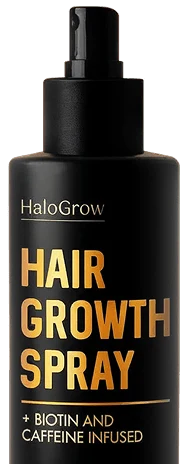
Pages we actually opened
- Partner checkout on — minoxidil and finasteride in the product bullets, bundle totals, 30-day money-back line.
- Advertorial pages on the same funnel — biotin, ginger, caffeine, He Shou Wu; no Drug Facts image.
- Seller terms linked from the cart footer at tryhalogrow.com.
- The FDA hair-loss drugs page and FDA finasteride information for the named-drug context.
If the bottle that arrives still has no Drug Facts and still names minoxidil or finasteride, stop and ask a pharmacist or clinician what you are holding. If the bottle names only herbs, you received a different story than the cart. Either mismatch is a 30-day document problem, not a “give it eight weeks” problem. Advertorial weeks do not outrank a missing panel.
Finasteride in a spray is a clinician question
Finasteride is a 5-alpha-reductase inhibitor used for androgenetic hair loss under medical supervision. The FDA’s finasteride page is the public safety document. It is contraindicated in pregnancy. People who can become pregnant are told not to handle crushed or broken oral tablets because of absorption risk. A spray sold through an affiliate cart is not a prescription workup, not a pregnancy-prevention plan, and not a standing order from a clinic.
Topical finasteride is discussed in dermatology literature and sold in some compounding and telehealth channels. That does not make an unnamed strength in an affiliate spray an OTC Drug Facts product. If the cart’s finasteride word is accurate, you are in drug territory. If it is inaccurate, you were advertised a drug you may not have bought. Either fork needs a clinician if you proceed, and a hard stop if pregnancy is possible.
This review will not print a topical-finasteride dose for HaloGrow because the checkout did not. It will not print a systemic-absorption percentage we did not find on that page. It will say: named finasteride belongs in a conversation with a clinician, including what else you take, what you are trying to conceive, and whether a labeled oral or a labeled minoxidil-only OTC is the actual plan.
Men’s oral finasteride labeling also carries warnings clinicians already know how to walk through. Copying those warnings into a spray lander without a panel is not counseling. A 30-day money-back line is not counseling. A trichologist quote without a license number is not counseling. Counseling is an appointment.
What FDA minoxidil labeling actually shows
FDA-approved OTC minoxidil products state a concentration and a twice-daily dose (commonly 1 mL for solutions). Women’s 2% and men’s 5% are the familiar labeled strengths on US Drug Facts panels. Keranique, reviewed separately on this site, prints 2% w/v and 6 pumps as 1 mL on its listing. HaloGrow’s funnel does not. That contrast is documentary, not a “versus” scoreboard. A labeled bottle tells you the millilitres. An unlabeled cart names the drug and stops.
OTC minoxidil is indicated for hereditary thinning (androgenetic alopecia) in the populations on the panel, not for patchy autoimmune loss, not for shedding after a fever, not for a tight ponytail. The FDA hair-loss page is the class context. Consistent twice-daily use over months is how labeled products describe a trial, including an early shed some labels mention as hairs cycling. This review will not import those timelines onto HaloGrow as a promise. HaloGrow did not print them on the page we opened.
If the HaloGrow bottle that arrives is a labeled minoxidil OTC, use that bottle’s Drug Facts, not this funnel’s herbs. If it names finasteride too, you have left the OTC minoxidil aisle. If it names neither, you have the advertorial’s herbs and a cart that said otherwise. Three bottles, three jobs for a camera.
Aminexil is a trade name sitting in the mix
Supporting copy named biotin, caffeine, castor oil, and aminexil. Aminexil is a L’Oréal-associated trade name for a diamine compound discussed in cosmetic hair care, sometimes described as related to minoxidil’s chemical neighborhood. A trade name on a lander is not a Drug Facts strength. It is another signal that this funnel blends cosmetic language and drug language until the shopper cannot tell which rulebook applies.
Biotin is a vitamin. Caffeine is a stimulant used in some scalp cosmetics. Castor oil is a cosmetic oil. None of those three are FDA-approved hair-loss drugs. Putting them on an advertorial next to He Shou Wu is a herbal-cosmetic story. Putting minoxidil and finasteride on the cart is a drug story. Aminexil sits in the alley between those stories. This review leaves it in the alley and asks the bottle to pick a lane.
No alcohol, sulfates, or parabens is a shampoo-aisle boast. It can be true of a cosmetic. It can be true of a vehicle that also contains a drug. It does not tell you the millilitres of minoxidil. Do not let a clean-beauty sentence stand in for a panel.
He Shou Wu on the ads is a botanical story
He Shou Wu (Fallopia multiflora / Polygonum multiflorum, also sold as Fo-ti) is a traditional botanical. Advertorials on this funnel treat it as part of a DHT-fighting herbal set with ginger, caffeine, and biotin. Traditional use is not an FDA hair-loss indication. Liver-injury case reports exist in the public literature for some He Shou Wu preparations; this review is not a hepatology paper and will not diagnose. It will say: a botanical advertorial and a finasteride cart cannot both be the entire truth without a label.
Percentage improvements in density and shedding with footnote markers on those advertorials come from the seller’s marketing. We did not open a linked journal article that matched those footnotes. Until a citation is a paper you can read, a percentage on a lander is a lander percentage. This site will not reprint those percentages as findings.
Ginger for “scalp circulation” and caffeine to “extend the growth phase” are cosmetic talking points. They are not Drug Facts. Fight-DHT language on an herb page is how a funnel borrows a drug story’s enemy without borrowing a drug story’s panel. DHT (dihydrotestosterone) is the hormone pathway finasteride actually targets in labeled use. Herbs do not get to wear that mechanism because a lander wants one villain.
Leave-in is not a millilitre dose
HaloGrow’s funnel describes part-the-hair, spray, massage one to two minutes, leave in without rinsing. Morning or evening use is described. The checkout we reviewed does not publish a millilitre dose. Labeled minoxidil solutions commonly say 1 mL twice daily. A leave-in spray without millilitres is a routine, not a dose. Routines feel easy. Doses are how OTC drugs are written.
Non-greasy leave-in is why people quit messy solutions. That comfort is real as a format pitch. It is also how a shopper skips the “how much drug landed on the scalp” question. If the bottle is a drug, ask how much. If the bottle is a cosmetic, the leave-in sentence is ordinary. The cart named drugs. Ask how much.
Heat and UV protection on a thinning-hair spray is a styling claim sitting on a possible drug. Do not blow-dry a drug you have not identified. Do not skip a clinician because the mist felt light. Format is not pharmacology.
Eight-to-twelve-week advertorial time is not a label
Advertorial copy talks about eight- to twelve-week transformations. Even labeled minoxidil is measured in months, and labels often mention an early shed. Eight weeks is a marketing window that fits a 30-day money-back line poorly and a six-bottle “six-month supply” cart oddly. If change, on labeled products, is judged around three to four months and beyond, a 30-day refund is a short clock for a long story. That mismatch is documentary. It is not a finding that HaloGrow works on any clock.
This review will not say you will see thicker hair at week eight, twelve, or fifty-two. It will say the funnel’s clocks do not agree with each other, and they do not agree with the usual labeled-minoxidil calendar, and the refund clock is the shortest of the set. Photograph the label on day one so day thirty is an argument about a document, not a feeling.
Transformations in ads are selected pictures. We do not treat them as a trial. We do not have before-and-afters of our own, and we would not invent them. The keyword “halogrow before and after” exists because shoppers search it. This page answers with a mismatch, not with a gallery.
Patchy loss belongs in a clinic, not a cart
A closer match is someone who already discussed OTC minoxidil with a clinician, whose thinning is gradual and hereditary, and who will read the bottle before the first spray. Stop and get medical advice if hair falls in patches, if you see scalp scarring, if you are pregnant, nursing, or trying to conceive, or if you take blood-pressure medicine, hormones, or other prescriptions. If the box that arrives still does not match the checkout story, that is also a stop.
Alopecia areata, telogen effluvium after illness, thyroid disease, iron deficiency, traction from tight styles — these are clinic lists. A spray cart is not a differential diagnosis. Sudden loss is the skip. Painful scalp is the skip. Infection signs are the skip. This is YMYL copy because hair-loss products sit next to those lists whether landers admit it or not.
Minoxidil as a labeled OTC still has warnings about chest pain, swelling, and unwanted facial hair on some panels. Finasteride has its own list. Combining “contains minoxidil and finasteride” in a bullet without those lists is the documentation failure this 3.7 is built on. We are not restating a full label we were not shown. We are pointing at the hole.
Pregnancy is a stop, not a footnote
Finasteride is contraindicated in pregnancy. Minoxidil OTC labels also tell pregnant and nursing people to ask a doctor. A funnel that names both drugs and does not show a pregnancy block on the screen we opened has not met the ordinary bar for a drug display. If you are pregnant, nursing, or trying to conceive, do not sort this mismatch at a checkout. Sort it with a clinician, or do not sort it at all.
Partners in a household who can become pregnant need the same stop if the bottle is a finasteride-containing spray that can transfer. We do not have transfer data from this cart. We have the FDA’s handling caution on oral finasteride tablets. A spray is not a tablet. Caution still points at a clinician, not at a lander.
This paragraph is not a complete obstetrics note. It is the reason the 3.7 cannot become a 4.5 on format alone. Easy leave-in does not outrank a missing pregnancy sentence on a page that named finasteride.
Photograph the bottle that arrives
The label that arrives with the bottle is the document that settles the mismatch. Photograph the front, the back, and any Drug Facts or Supplement Facts. Compare names: minoxidil, finasteride, aminexil, biotin, He Shou Wu. Compare numbers: any percent, any millilitre. Compare warnings: pregnancy, age, broken skin. If the photos do not match the October 2 checkout bullets, you have a 30-day case, not an eight-week routine.
Keep the box. Keep the invoice. Keep the advertorial URL if you still have it. Funnel parameters change what a page says. The checkout we opened without those parameters named drugs. Your click path might have named herbs. Both paths need the same bottle photo at the end.
Do not start a twice-daily habit until the photo exists. A leave-in mist is easy to begin and hard to attribute later. Attribution is the whole review. If you cannot photograph a panel, you cannot tell a pharmacist what you hold, and you cannot tell this site what to score beyond the cart’s disagreement. Keep the camera next to the scissors you use on the box.
Free gifts are list theatre
Optional add-ons appeared as free gifts with list prices beside them — treat those dollar amounts as marketing, not as cash you can recover. Free add-ons named that day included a hair-health guide (list $9.95), an eyebrow and lash serum (list $18.92), and a hair-growth shampoo (list $27.30). This review does not treat $9.95, $18.92, or $27.30 as money you could have spent elsewhere. They are struck-through theatre next to “free.”
The shampoo gift, if it arrives, is another bottle with another label you should photograph. Do not assume it contains the same actives as the spray. Do not assume it is empty of drugs. Read it. The eyebrow and lash serum is a different body site. This page will not tell you to put a scalp spray on lashes. Sites matter. Labels matter.
A hair-health guide with a $9.95 list is a PDF or a booklet. It is not a clinician. It cannot outrank Drug Facts you still do not have.
tryhalogrow.com terms are the other document
Seller terms linked from the cart footer at tryhalogrow.com are the contract layer. Refund clocks, auto-ship if any, and governing law live there if they live anywhere. The checkout’s 30-day money-back line is a banner until that file agrees. Read the file before you pay. This review will not paraphrase clauses we did not capture line by line on October 2 beyond the 30-day sentence and the bundle totals.
A paid fast-shipping upgrade was listed separately from $0 shipping in the cart data. $0 in the cart data we saw is not a promise about a later cart. Confirm live. International duties were not in our notes. They are not printed here.
Thirty days versus months is a clock fight
Thirty days is a short window for a product the ads describe in months. Labeled minoxidil is also a months product. If you need thirty days to receive shipping, read a label, email a clinician, and decide, you may already be near the refund edge. Order only if you will photograph on arrival and decide quickly, or if you are willing to keep a bottle that may be a drug without a pre-purchase panel.

Six bottles as a “six-month supply” on the cart assumes a month-per-bottle use the page did not millilitre-define. That supply math is seller grouping, not a dose. Four bottles at $79.96 were marked most popular that day. Popularity on a cart is a badge. It is not a trial.
Two URLs, two stories
Affiliate landers often change copy with tracking parameters. The herbal advertorials we opened on this funnel emphasized biotin, ginger, caffeine, and He Shou Wu. The checkout we opened on October 2, 2026, without those ad parameters, named minoxidil and finasteride. A shopper who never sees both URLs will think they bought one product. They may have been shown two products’ worth of language. Save both URLs if you can. Save the checkout bullets. Save the bottle.
This is not a claim that the warehouse ships two SKUs. We do not have a warehouse document. It is a claim that the public pages disagree, which is already enough to slow down. Regulatory worlds — cosmetic versus OTC drug versus prescription — are not a marketing A/B test. They are different labels, different warnings, different people who should never use the product.
If your inbox later shows a different story than the page you saved, you have a paper trail. If you saved nothing, you have a memory against a funnel that already demonstrated it can speak two dialects. Memory loses. Photographs win. That is why this review repeats the camera.
Partner checkout URLs and tryhalogrow.com terms are also different hosts. A footer link can outrank a banner when they conflict. Read both. This 3.7 exists because we had to read both and still had no panel.
Do not assume a later visit will show the same bullets. Direct-to-consumer pages update. October 2, 2026, is the date stamp on the drug names and the $29.99 / $79.96 / $119.94 totals. A live cart may differ. Confirm. Do not paste this review’s totals onto a new screen without looking.
DHT is a borrowed villain on the herb pages
Dihydrotestosterone is the androgen pathway labeled oral finasteride is written to inhibit, under a clinician. Advertorials that say herbs “fight DHT” are borrowing that villain because it sounds like a mechanism. Biotin does not become finasteride because a lander wants one enemy. Ginger does not become a 5-alpha-reductase inhibitor because a footnote has a percentage. This review will not credit a botanical lander with a drug’s target.
If the checkout’s finasteride word is accurate, the villain language finally meets a named drug — and then you need a clinician, not a lander. If the checkout’s finasteride word is inaccurate, the villain language was costume. Either way, DHT-talk without a panel is how YMYL pages get people to skip appointments. This site will not help with that skip.
Women’s hereditary thinning and men’s hereditary thinning are not the same labeled populations on many minoxidil panels. Finasteride’s labeled oral use in the US has been a men’s androgenetic-alopecia story at 1 mg, with a separate 5 mg prostate story, not a casual unisex spray. The HaloGrow funnel markets in a women’s-hair-search neighborhood (the keywords on this product include hair growth spray for women). A cart that names finasteride in that neighborhood is exactly why the clinician sentence exists. We will not say the spray is safe in pregnancy-capable shoppers. We will say the opposite: stop.
None of this is a finding about what is in the bottle. It is a finding about what the pages said. Pages are all we have until a label photo exists.
A pharmacist needs a photo, not a lander
A pharmacist can read a Drug Facts panel, a prescription label, or a Supplement Facts box. A pharmacist cannot read an affiliate advertorial you describe from memory. Bring the bottle. Bring the photos. Ask whether the names on the glass match anything they can identify as an OTC minoxidil, a compounded product, or a cosmetic. Ask about pregnancy. Ask about blood-pressure medicine. Minoxidil as a drug began as an antihypertensive; labeled topical OTC still carries warnings some panels print about chest pain and swelling. We did not see those warnings on the HaloGrow screen. Ask anyway if the bottle names minoxidil.
Do not ask a pharmacist to bless a percentage from a lander footnote. They will not have that paper. Do not ask them to bless He Shou Wu as a finasteride substitute. That is the mismatch. Let them react to the glass.
If they say they cannot identify the product, that is information. Unidentifiable plus named drugs on a cart is a 30-day return, not a twice-daily habit. If they say it looks like a standard OTC minoxidil, use that panel’s directions, not the funnel’s leave-in poem, unless the panel and the poem agree. The panel wins.
Telehealth that actually prescribes topical finasteride is a different channel: identity check, medical history, a named clinician. An affiliate cart is not that channel. Do not let a bullet substitute for a history form.
Cosmetic and drug rulebooks do not share a mist
US cosmetics do not have to prove they treat androgenetic alopecia. US OTC drugs in the minoxidil class do have to carry Drug Facts. Prescription drugs have labels of their own. One SKU cannot honestly be all three without the paperwork that matches. HaloGrow’s public pages, on October 2, 2026, talked like a cosmetic on the ads and like a two-drug product on the cart, with the paperwork of neither on the screen we opened. That is the 3.7.
“Leave-in,” “non-greasy,” “heat and UV protection” are cosmetic rulebook phrases. “Contains minoxidil and finasteride” is a drug rulebook phrase. “He Shou Wu” is a botanical rulebook phrase. Stacking them is how a shopper’s caution gets tired. Tired shoppers click. This review is for the shopper who is still willing to be annoyed.
FTC rules on substantiation and on consumer reviews are why this site will not invent a before-and-after. They are also why we will not launder advertorial percentages into our voice. Seller footnotes stay seller footnotes.
If a future bottle is clearly a cosmetic with no drug names, this page’s drug cautions would be about a cart that over-named. If a future bottle is clearly a labeled OTC minoxidil, the herb ads over-named. If a future bottle names both drugs, the missing pre-purchase panel was the failure. Three forks, same camera.
A six-month supply without millilitres is a grouping
One, four, and six bottles as month supplies assume a use-rate the checkout did not measure in millilitres. A labeled 1 mL twice-daily solution has a known bottle duration if you know the fill volume. HaloGrow’s cart did not give us that arithmetic. “Six-month supply” is therefore a seller grouping. It may be generous, stingy, or unrelated to a drug dose. We will not convert $119.94 into a per-millilitre price.
Four bottles at about $19.99 each matched six bottles at about $19.99 each on that screen. The unit rate flattened. One bottle at $29.99 is the trial rate. If you are in the photograph-and-decide camp, the one-bottle rate is the only rate that matches a 30-day clock. A six-bottle order on a 30-day refund is a stack of glass you may be shipping back. Ask the terms whether opened bottles return. We did not capture that clause line by line.
$0 shipping in the cart data we saw is an advantage we recorded. A paid fast-shipping upgrade sat beside it. If you are racing the 30-day clock against 8–12 week ads, fast shipping is a cart question, not a medical one. It still will not create a Drug Facts panel in transit.
List prices $74.99, $266.99, and $399.99 are theatre. Payable totals were $29.99, $79.96, and $119.94. This review scores the payable column and the missing panel, not the discount costume.
Blood-pressure history is not a lander field
Oral minoxidil was a blood-pressure drug before topical versions became an OTC hair-loss class. Labeled topical OTC panels still tell some people to stop and ask a doctor if they have heart-related symptoms. The HaloGrow checkout we opened did not ask for a blood-pressure history. Affiliate carts rarely do. That absence is not a clearance. If you take antihypertensives, or if a clinician has ever mentioned minoxidil as a systemic drug, you need that clinician, not a mist, to say whether a product that names minoxidil belongs on your scalp.
This paragraph does not assert HaloGrow is oral minoxidil. The cart described a leave-in spray. It names minoxidil as a contained ingredient without a percent. Unknown percent plus unknown absorption plus unnamed other drugs is a stack of unknowns. Unknowns go to a clinician. They do not go to an eight-week gallery.
Hormones, other hair-loss drugs, and isotretinoin-era skin plans are the same kind of unknown. The checkout did not take a medication list. You still have one. Bring it to the appointment. Bring the bottle photo. Do not crowd-source a combination plan in comments this site will never host as testimonials.
Unwanted facial hair is a labeled topical-minoxidil complaint on some panels, especially when product runs onto the face. A leave-in mist can run. If the bottle is minoxidil, keep it on the scalp you meant. If the bottle is a cosmetic, the run is a stain. You will not know which until the photo. That is the theme of the review, applied to a cheek.
Chest pain, dizziness, swelling of hands or feet — if a labeled panel lists those as stop-and-call symptoms, and your bottle names minoxidil, treat them as stop-and-call even if the HaloGrow lander never printed them. We are pointing at the class document, not inventing HaloGrow’s panel. The class document exists because the FDA hair-loss page exists. Use it.
This cart is not a children’s aisle
Labeled OTC minoxidil is not written as a pediatric product. Finasteride is not a children’s hair spray. The HaloGrow pages we opened did not publish an age cutoff because they did not publish a Drug Facts panel. Absence of a cutoff is not a children’s indication. Keep this SKU away from kids’ bathrooms. A leave-in bottle that looks like a detangler is a poisoning-control story waiting to happen if a child copies a parent. Lock it up the way you would lock any named drug.
Teen hereditary thinning is a clinician visit, not a six-bottle bundle. This review will not give a starter age. The missing panel cannot either.
Pets are not on the label we never saw. Do not assume a scalp spray is pet-safe. Store it. This is ordinary household caution, restated because YMYL pages forget households.
Shared bathrooms need a sentence on the bottle: not a cosmetic until the photo says so. Partners who can become pregnant need the finasteride stop even if they are not the person spraying, if transfer is possible. We lack transfer data. We have enough names on the cart to refuse casual sharing.
School sports, helmets, and traction from tight styles are clinic differential items, not spray indications. If a teen’s hairline is from braids or a bun, a cart that names finasteride is the wrong object twice: wrong age story, wrong cause story. See a clinician. Skip the funnel.
A labeled 2 percent bottle is a different document
This catalog also reviews a kit whose treatment bottle prints minoxidil 2% w/v and a 1 mL dose. That page is a different SKU, a different funnel, and a Drug Facts-shaped listing. Mentioning it here is not a comparison table and not a “who wins” heading. It is a reminder that US shoppers already have a documentary standard for topical minoxidil: a percent, a millilitre, a twice-daily line, and warnings. HaloGrow’s October 2 checkout did not meet that standard on the screen we opened, even while naming minoxidil — and naming finasteride beside it, which the 2% women’s OTC aisle does not casually include.
If you want a labeled OTC minoxidil trial, a labeled bottle is the object that already exists. If you want this spray anyway, you are accepting a funnel that spoke two languages. The 3.7 is that acceptance’s price in our scoring, not a dare. Nothing on this page says the labeled bottle will grow your hair either. Labeled minoxidil still has population limits, months-long calendars, and stop lists. It just prints them.
Finasteride remains the extra word that keeps HaloGrow out of a simple OTC-minoxidil conversation. A 2% panel does not contain it. A clinician conversation might. An affiliate bullet should not be the first time you see it.
Shoppers arriving from “hair growth spray for women” search terms are in the exact neighborhood where pregnancy cautions and women’s 2% panels usually live. A cart that names finasteride in that neighborhood without a panel is why this review is long. Length is the point. Slow down. Photograph the glass. Call a clinician if the glass names a drug. Use the thirty-day path if the glass disagrees with the cart. Do not start an advertorial calendar on a mystery mist. The 3.7 is the pause. Take it before the first spray, not after week eight of a lander clock you cannot check against a panel on the glass.
Bottles the checkout billed on October 2
The cart grouped bottles as one-, four-, and six-month supplies. Optional add-ons appeared as free gifts with list prices beside them — treat those dollar amounts as marketing, not as cash you can recover.
Figures from that cart on October 2, 2026
One bottle $29.99 (list $74.99), listed as a 1-month supply. Four bottles $79.96 (about $19.99 each), listed as 4 months; marked most popular. Six bottles $119.94 (about $19.99 each), listed as 6 months. Shipping $0 in the cart data we saw; a paid fast-shipping upgrade was listed separately. Return line: 30-day money-back language on the benefits block.
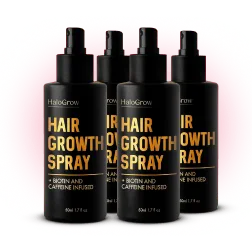
Those totals are what the partner checkout showed on . Confirm live figures before you pay. Policy details live in the seller’s terms. Photograph the ingredient label when the package arrives so you can compare it to what the cart claimed.
The 3.7 we give this spray
We give HaloGrow Hair Spray 3.7 / 5. The leave-in routine is easy to follow. Bundle math on that October cart is steep. Free standard shipping showed in the data we recorded. Those are real advantages in a category where people quit greasy solutions.
The score stays in the mid-3s because the herbal ads and the drug-named checkout do not agree, no Drug Facts panel appeared before purchase, and finasteride — if the label is accurate — is not a casual cart add-on. A labeled 2% minoxidil product publishes clearer drug labeling even when the first box costs more. If you order this spray anyway, treat the checkout’s actives as something to confirm on the bottle.
3.7 is editorial. See how we review. We compared advertorials, the October 2 checkout, the terms link, and FDA pages for the named drugs. We did not assay a bottle. We did not find a Drug Facts panel on the page we opened. We do not say this spray grows hair. We do not say the herbs grow hair. We do not treat a trichologist quote without a license number as an endorsement. The mid-3s score is the mismatch plus a usable leave-in format and dated bundle math, nothing kinder.
A later funnel that shows one ingredient story, a panel, a millilitre dose, and a pregnancy block would be a different document set. The 3.7 is tied to October 2, 2026, and to two stories that did not match. Until those stories match on glass, the leave-in format is not a reason to skip a clinician, and the $19.99 unit rate on four- and six-packs is not a reason to skip a camera.
Label questions that belong before the first spray
On October 2, 2026 the checkout named minoxidil and finasteride, said the formula has no alcohol, sulfates, or parabens, and listed biotin, caffeine, castor oil, and aminexil in supporting copy. We did not find a full ingredient panel or Drug Facts label on that page. We did not find a millilitre dose or a pregnancy warning block on that screen either.
Affiliate advertorial pages on the same funnel emphasize biotin, ginger root, caffeine, and He Shou Wu. The checkout page names minoxidil and finasteride. The label that arrives with the bottle is the document that settles the mismatch. Percentage density claims with footnote markers on those advertorials are seller marketing, not papers we opened.
The partner checkout listed one bottle at $29.99, four bottles at $79.96, and six bottles at $119.94, each with $0 shipping in the cart data. List prices shown beside those totals were $74.99, $266.99, and $399.99. The footer stated a 30-day money-back line.
No. The page we opened on October 2, 2026 did not show a Drug Facts box with strength, millilitre dose, or a pregnancy warning block. US OTC minoxidil products ordinarily carry that box. Photograph whatever label arrives.
Yes. Finasteride is a prescription-class 5-alpha-reductase inhibitor in its labeled oral form and is contraindicated in pregnancy. A cart bullet is not a workup. If the bottle names finasteride, stop and ask a clinician before the first spray. People who can become pregnant should not treat this as a casual cosmetic, even if the ads talked about herbs.
No. This site does not state or imply a hair-regrowth outcome for this spray. Advertorial percentages and eight-to-twelve-week transformation copy are seller marketing. We did not assay a bottle.
None. The funnel describes part-the-hair, spray, massage one to two minutes, leave in. Morning or evening use is described. Labeled OTC minoxidil commonly states 1 mL twice daily. HaloGrow’s checkout did not publish that number.
No. Sudden patchy loss, scalp pain, or shedding after an illness needs a dermatologist. A checkout timer is not a diagnosis. Gradual hereditary thinning is the pattern labeled minoxidil is written for — and even then, a clinician is the first stop if you are unsure.
A hair-health guide (list $9.95), an eyebrow and lash serum (list $18.92), and a hair-growth shampoo (list $27.30). Treat those dollar amounts as marketing, not as cash you can recover. Photograph any bottle that arrives.
Linked from the cart footer at tryhalogrow.com legal terms. The 30-day money-back line on the checkout is a banner until that file agrees. Read it before you pay.
No. Aminexil is a L’Oréal trade name that appeared in supporting copy alongside biotin, caffeine, and castor oil. The checkout’s drug names were minoxidil and finasteride. A trade name is not a Drug Facts strength.
Stop. Photograph the label. Use the 30-day path and the seller terms. Do not start an eight-to-twelve-week advertorial routine on a bottle that disagrees with the checkout. If drugs are named on the bottle, ask a clinician before any spray.