Recorded trance is not a therapy appointment
The buyer choice on Happyo is simple, and it is easy to blur. One path is a recorded file you press play on, in a room you already occupy, for about ten minutes. The other path is a person who can ask you questions, name a condition if one is present, change a prescription, write a letter for work or school, or sit with you when the day is unsafe. Happyo sells the first path. It does not sell the second.
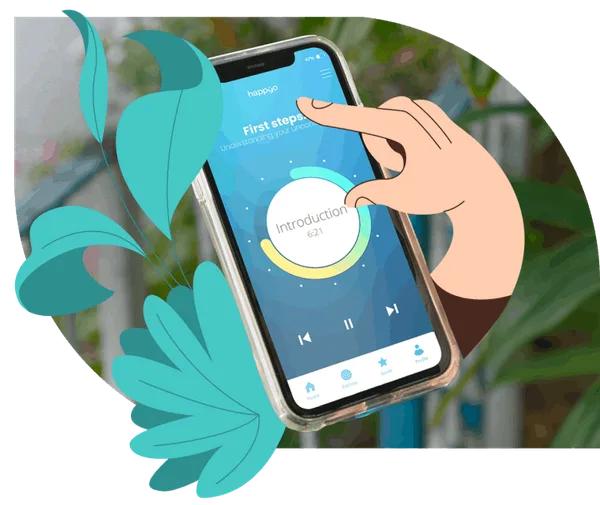
What the brand actually ships is a mobile and web player. You pick a session, sit somewhere quiet, and listen. The copy on the offer calls this self-led trance work and says experienced hypnotherapists built the audio. That sentence is a production credit. It is not a license hanging on your wall, and it is not a clinician assigned to your account. Nobody on the other end of the download is taking a history. Nobody is watching what happens if you pause the track halfway through.
A live session, even a short one, has a different shape. A hypnotherapist in a clinic can stop, ask what you noticed, and change the next ten minutes. A psychiatrist can decide that the problem is not “task delay” but a condition that belongs on a chart. A licensed counselor can tell you that the next step is not another recording. The player cannot do any of those things, because it is not looking at you. It is playing a file.
What the player page asserts
The offer names anxiety, procrastination, ADHD-related focus, and self-trust. It also lists mood tracking, personalized insights, goal setting, and a community. “No side effects” and “root cause” are marketing lines on that page. This review did not verify either line as a clinical finding, and it does not treat either line as one.
Those topic labels matter because they sound like diagnoses. They are not. Anxiety, in everyday speech, covers a tight chest before a meeting and also covers conditions that the National Institute of Mental Health describes as diagnosable anxiety disorders. ADHD is a clinical category. Procrastination is a habit word. Self-trust is a slogan. Putting those words on one checkout does not mean the audio can tell them apart. The offer is naming moods and goals for a playlist. It is not offering an evaluation.
The same gap shows up in the “real-time emotional support” phrasing the product listing uses. Real-time, in ordinary English, suggests a person on the other end. The product as sold is still a recording. You start playback. You stop playback. There is no live call. If the phrase is doing work in an ad, the work is marketing. The object in the cart is still prepaid audio.
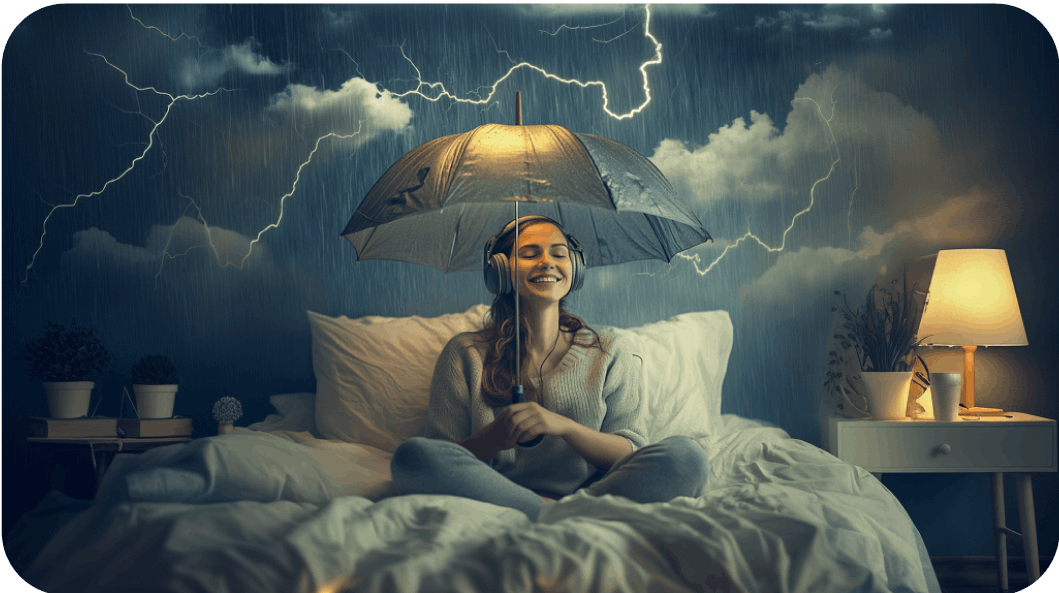
Nothing here examines you. Nothing here can tell ADHD from ordinary task delay. If a doctor already prescribed a medicine, an app download does not refill it or replace it. Those three sentences are the floor of this review. Everything else — the ten-minute sit, the mood log, the prepaid blocks, the 4.3 score — sits on top of that floor. Readers who need the second path should stop here and use the crisis and clinician notes later on this page, not the partner checkout.
Public-health pages draw the same line in plainer language. The 988 Suicide & Crisis Lifeline exists because a recording is not a crisis service. The National Center for Complementary and Integrative Health page on hypnosis describes hypnosis as a mind-and-body practice used with a trained clinician in some settings, and it does not present a consumer audio file as a substitute for care. This review uses those pages as context for the category. It does not treat Happyo as having been evaluated by those agencies. The listing does not claim an FDA device clearance or a prescription status, and this page does not invent one.
What ten quiet minutes actually contain
The routine is short on purpose. The product copy describes sessions of about 10 minutes. That number is the whole session as sold, not a trailer before a longer appointment. The constraint is finding an uninterrupted stretch every day, not learning a dense interface. If the only quiet block in the house is after everyone else is asleep, that is the block the product is asking you to keep.
Open the app, choose a track matched to a mood or goal, and use headphones if you can. Follow the audio for about 10 minutes. You start and stop playback yourself — there is no live call. Afterward the app asks you to log mood and look at the insights it generates. Those extras only matter if you keep opening them. Skipping the log does not break the audio. Filling the log does not turn the audio into an exam.
Ten minutes is long enough to sit still and short enough to fit beside a commute or a lunch break, which is why the format is easy to underestimate. A person who already has a clinician may use a short sit as a habit, the way some people use a breathing tape. A person who is shopping for a diagnosis will not get one in that window. The length of the file is not evidence of depth. It is a duration printed on the offer.
The same page is explicit that this is online only. You need a device and a connection. If the connection drops, the session stops. If the device is shared, privacy is a household problem, not a setting the listing documents. People who cannot spare ten quiet minutes, or who expect an overnight shift after one play, are a poor match for the product as sold. The page itself says regular daily use matters and that change is not instant. That is the seller’s timeline language. It is not a result measured on this site, and it is not a promise that a particular number of days will produce a particular feeling.
Headphones versus speakers is a practical choice the listing leaves to you. Headphones make it easier to keep the words off a shared room. Speakers make it easier to lie down without wearing anything. Neither choice is a clinical protocol. The listing does not publish a required listening posture, a required time of day, or a required number of completed sessions before a refund clock starts — because, on the checkout this review recorded, a refund clock was not published at all. The ten minutes are the product. The quiet room is the buyer’s job.
Because the sit is short, it is tempting to stack it with other tools: a journal, a walk, a second app. This review does not map those stacks. It only notes that the object in the cart is one player with optional furniture around it. If a second product is a prescription, the prescription still belongs to the prescriber. If a second product is another recording, that is still not a clinic. The ten-minute window does not absorb other care. It sits beside it, or it sits alone.
When 988 or a clinician is the next click
The safety note on the offer is the line to take literally: this app is not a replacement for professional treatment of a severe mental-health condition. That sentence is doing more work than the rest of the landing page. It is the manufacturer drawing a boundary. This review keeps that boundary in view rather than softening it into a lifestyle disclaimer.
Skip the download and get a person
- You want a diagnosis, a medication change, or a letter for work or school.
- You have epilepsy, or you are already under psychiatric care — ask that clinician before adding trance audio.
- You are in crisis. In the United States, call or text 988. If you are outside the US, use a local emergency number.
988 is not a competitor to Happyo. It is a different class of help. The Substance Abuse and Mental Health Services Administration describes 988 as a lifeline for people in suicidal crisis or emotional distress, reachable by call, text, or chat. A prepaid audio plan does not route to that service. If the day is unsafe, the next click is 988 or a local emergency number, not a session picker. That is true whether or not you already paid for six months of Happyo.
Epilepsy appears in the skip list because trance, dissociation, and certain kinds of focused attention are not casual add-ons for everyone. This review is not a neurology paper and does not invent a risk figure. It repeats the instruction that already belongs on a careful reading of the offer: ask the clinician who already knows your history. The same instruction applies if you are in psychiatric care. A new audio habit can look harmless on a checkout. The person who prescribed your medicine is the person who can say whether a self-led trance sit belongs in the same week.
Letters and diagnoses are paper and chart work. Schools, employers, and insurers ask for them because a licensed human is accountable for the words. A mood log is not a letter. A community post is not a chart. If the reason you are shopping is “I need someone to name this,” the player will not name it. If the reason is “I need the dose changed,” the player will not change it. Those are not extra features waiting behind a higher plan. They are a different profession.
A closer fit is an adult who already has clinical care (or does not need it) and wants a short, pill-free audio habit for everyday worry or task delay — and who will actually press play most days. “Everyday worry” and “task delay” are the offer’s own territory. They are narrower than the diagnostic words on the same page. Readers who recognize themselves in the narrower territory still have to do the ten-minute sit. Readers who recognize themselves in the skip box should not treat the 4.3 score as permission to skip a person.
Outside the United States the number is not 988. Local emergency services, local crisis lines, and local clinicians are the documented routes. This review does not publish a country-by-country list because the listing does not, and because inventing one would be a safety error. If you are not in the US, use the emergency number you already know, then a local clinician. The app remains a recording wherever you are sitting.
Prepaid months sit beside a live session
This is a prepaid multi-month subscription, not a week-to-week trial. You are not buying a single file. You are buying access for a block of months, billed as a lump. That structure is closer to a gym term than to a one-off therapy invoice. A live clinician often bills by session, with a cancellation rule you can read before the first hour. Happyo’s partner checkout, on the day this review recorded it, billed by the block and did not print cancel, pause, or refund language on that page.
Put the three Happyo totals next to the idea of one live hour, not as a quality contest, but as a calendar contest. A single therapy session in many US cities costs more than $33 before insurance; that comparison is a market observation, not a finding about Happyo’s audio. The $33 plan still only buys two months of a recording. It does not buy 60 minutes with a person who can answer back. If the job you need is an answer, the cheaper monthly rate is not the relevant number. If the job you need is a short daily sit, the monthly rate is the number that matters.
| 2 months | $33.00 billed every two months ($16.50 / month), listed against $66.00 |
|---|---|
| 4 months | $53.94 billed every four months ($13.49 / month), listed against $107.88 |
| 6 months | $66.00 billed every six months ($11.00 / month), listed against $264.00 |
Figures this review can stand behind
Those three plan prices are what the checkout showed when this review was written. Cancel, pause, and refund language was not stated on that page. Read the current terms before you pay — this site is not publishing terms it could not find. Crossed-out comparison figures ($66.00, $107.88, $264.00) are the seller’s own reference prices, not independent valuations.
The six-month block is the cheapest monthly rate this review recorded: $11.00 a month if you prepay $66.00. That math only helps if you will still be opening the app in month five. Prepaid months are a bet on habit. They are a poor bet if you are shopping because this week is acute. Acute weeks belong with 988 or a clinician, as the skip box already said. They are also a poor bet if you cannot find the cancel path before the next bill, because that path was not on the recorded page.
The two-month block is the smallest cash outlay at $33.00. It is also the highest monthly rate at $16.50. Buyers who want to see whether they will actually sit for ten minutes may prefer the smaller block even though the monthly figure is worse. This review does not know whether a two-month block auto-renews into another two-month block, because the recorded checkout did not say. Assume renewal until you read a sentence that says otherwise, and keep the confirmation email.
The four-month block at $53.94 sits in the middle. $13.49 a month is closer to the six-month rate than to the two-month rate. The listing against $107.88 is again the seller’s reference, not a street price this site verified elsewhere. None of the three blocks was described as a free trial on the page this review recorded. If a later version of the checkout adds a trial, that would be a new fact. It is not a fact on this page.
A live session has a different failure mode. If the hour is a mismatch, you can usually stop booking. If a prepaid audio block is a mismatch, you need the terms you could not find. That asymmetry is why this review spends more lines on missing refund language than on the pleasantness of the voice in the file. The voice is not a documented spec. The missing terms are.
Mood-log furniture around the player
Beside the audio, the listing names mood tracking, personalized insights, goal setting, and a community. This review calls those extras furniture because they surround the thing you paid for without becoming the thing you paid for. A couch in a waiting room is not the appointment. A mood slider under a player is not a clinician. You can use both. You can ignore both. The session still ends when the file ends.
Mood tracking, as a category, is common in consumer wellness apps. A log can help a person notice that Tuesdays are harder than Thursdays. It can also become a second job: tapping faces, rating sleep, chasing a streak. The Happyo listing does not publish how the insights are generated, what they are personalized on, or whether a human ever reads the log. In the absence of that documentation, treat the insights as software output. Do not treat them as a second opinion.
Goal setting is similarly ordinary. The offer already names goals such as focus and self-trust. A goal inside an app is a reminder, not a treatment plan. If a clinician has already set a plan, the app goal does not override it. If no clinician is in the picture, an app goal still does not diagnose the thing you are trying to change. It files a sentence next to a playlist.
Community features, when they exist in wellness products, range from silent feeds to moderated groups. The Happyo listing names a community and does not, on the material this review used, describe moderation rules, anonymity, or what happens to posts if you cancel. Until those rules are in front of you, assume that anything you type could be seen by other users and stored by the company. That is not a scandal. It is the default for a named community that has not published its house rules on the checkout page.
None of the furniture is billed as a separate line item on the three plans this review recorded. The $33.00, $53.94, and $66.00 totals are for the prepaid access blocks. There was no à-la-carte price for mood tracking alone, and no documented way to buy the audio without the extras. If you only want the ten-minute sit, the extras will still be in the interface. Closing them is a user habit, not a SKU.
Personalized insights are the easiest extra to over-read. “Personalized” sounds like someone considered your case. In software it often means that your taps are inputs to a template. This review cannot say which of those two meanings Happyo uses, because the listing did not say. The honest move is to keep the word on the listing and not upgrade it into care. If an insight ever disagrees with a clinician, the clinician’s chart wins. If an insight ever suggests you are in danger, 988 still wins.
What the player will not diagnose
Diagnosis is a professional act. It uses history, criteria, and, in many cases, a differential that rules things out. The Happyo player does not collect that history in a clinical sense. It offers tracks tagged with everyday words. Pressing a track labeled for ADHD-related focus does not mean you have ADHD. Pressing a track labeled for anxiety does not mean you have an anxiety disorder. The tag is a shelf label.
The NIMH page on ADHD describes the condition as something a qualified health professional evaluates. Everyday task delay can look similar from the inside: unfinished email, delayed chores, a brain that will not start. Those experiences are real. They are also not a diagnosis. An audio file that uses the letters ADHD in a headline is still an audio file. It has not administered an assessment. It has not spoken to a teacher, a parent, or a psychiatrist.
Anxiety disorders, on the same agency’s pages, are more than a buzz of nerves before a presentation. They have duration, interference, and patterns a clinician looks for. A ten-minute sit can be a coping habit for a person who already knows the difference. It cannot draw the difference for a person who does not. If the worry has started to run the calendar, or if panic is in the picture, the next step is a person. The player will still play if you ignore that. Playing is not evaluating.
“Root cause,” as the offer uses it, is a marketing phrase with a clinical costume. In medicine, a root cause might be a thyroid problem, a medication effect, a grief reaction, or a diagnosable disorder. A recorded trance does not run labs. It does not inspect a pill bottle. It does not know if the delay you feel is depression, sleep debt, or a workplace that is too big for one person. Selling a root-cause story without an exam is how wellness copy fills a blank. This review leaves the blank empty.
“No side effects” is the other costume. Medicines have side-effect lists because regulators require them. Consumer audio is not a drug, and it does not get a Drug Facts box. That does not make it universally inert. People with trauma histories, people with epilepsy, and people in active psychiatric treatment are why the skip box exists. A marketing line that erases those people is not a safety study. This review does not convert “no side effects” into a finding. It flags the line as unverified copy.
Work and school letters sit in the same gap. A dean, a manager, or an insurer who asks for documentation is asking for a professional signature. A screenshot of a mood log is not that signature. A completed six-month plan is not that signature. If the reason you are considering Happyo is to obtain paperwork, you are in the wrong checkout. The player will not diagnose you into a form.
Headphones, a closed door, and a daily sit
The listing asks for a quiet stretch. That requirement is easy to skip past on a phone, and it is the actual product constraint. Ten minutes of trance-style audio in an open kitchen is a different object from ten minutes behind a closed door. The words are the same. The sit is not. If the household cannot give you the door, the app cannot invent one.
Headphones help keep the session off other people’s ears. They also make it easier to lie down without aiming a speaker. The listing does not require a specific model, a noise-cancelling rating, or a wired connection. Any working pair, or the device speaker, is enough to start playback. Comfort is on you. So is not falling asleep into a meeting if you press play at a desk. The player will not clock your posture.
Daily use is the seller’s own emphasis. The page says regular daily use matters and that change is not instant. Read that as a habit pitch, not as a dose. There is no milligram. There is no documented number of completed sessions at which a result appears. There is only the implication that skipping days is how people drift off the product. Prepaid months make that implication expensive if you drift and the block keeps running.
Sleep is a special case of the closed door. Some people use evening audio as a wind-down. Some hypnosis-style recordings are built for that. The Happyo listing, on the material this review used, describes a short daytime-or-any-time sit more than it describes a sleep protocol. If you fall asleep during the ten minutes, you have still used the file. You have not completed a documented clinical procedure. If sleep itself is the problem — insomnia that has lasted weeks, breathing pauses, nights that already need a clinician — a wellness player is not a sleep study.
Travel days will test the “online only” line. A flight without Wi-Fi, a dead phone, a shared hostel room: each one removes a piece of the setup. The listing does not, in the copy this review recorded, describe an offline library or a download manager. If offline playback exists later, that would be a new fact to check in the current app. It is not a fact this page will invent. Plan as if you need a connection, because that is what the page stated.
Community and insights that stay optional
Optional is the word this review wants to keep attached to every extra. The player works if you never open the community. The player works if you never tap a mood. The listing still puts those extras in the same screenshot as the audio, which is how furniture becomes part of the pitch. You are allowed to leave it in the hallway.
Insights that claim to be personalized should be read with the same caution you would use on a fitness watch’s “readiness” score. The number or sentence may be consistent. Consistency is not the same as clinical validity. This site did not receive a methods paper for Happyo’s insights, and the checkout did not link one. In that silence, the insight is a sentence the software wrote. It can be interesting. It cannot clear you for work, school, or a medication change.
A community can be a reason people stay. It can also be a reason people leave, if the feed is noisy or if other users start offering amateur diagnoses. This review cannot describe Happyo’s community because the listing did not document its rules in the pages used here. What can be said is generic and still useful: do not post information you would not want stored; do not take another user’s story as your treatment plan; do not treat a like as care. If the community is the only reason you are paying, you are paying for a forum wrapped around audio, and the audio is still the SKU.
Goal setting, left optional, is a list. Goal setting, taken as a contract, becomes a way to feel behind. The listing does not punish you, in any documented way, for missing a goal. There is no score from this site that rises if you complete goals. The 4.3 on this page is an editorial score for the product as documented, not a grade of your streak. If a streak counter exists in the app, it is the manufacturer’s interface, not this publication’s rating.
Questions the cart leaves open
A checkout is a document. What it prints is a claim you can check. What it omits is also a claim, in the negative: the seller did not put that sentence in front of the payment button on the day this review recorded the page. Several omissions matter more for Happyo than they would for a one-off tea box, because the money is prepaid across months and the category sits next to mental-health care.
| Topic | On the recorded page |
|---|---|
| Plan totals | $33.00 / $53.94 / $66.00 for 2 / 4 / 6 months |
| Monthly equivalent | $16.50 / $13.49 / $11.00 |
| Seller reference prices | $66.00 / $107.88 / $264.00 |
| Session length | About 10 minutes, in the product copy |
| Format | Online player; device and connection required |
| Cancel / pause / refund | Not stated on that page |
| Whether blocks auto-renew | Not stated on that page |
| Offline playback | Not stated on that page |
| Human review of mood logs | Not stated on that page |
| Community moderation rules | Not stated on that page |
Auto-renewal is the quiet hinge. Many prepaid “save more on six months” offers renew unless you cancel. Some do not. The recorded Happyo checkout did not settle the question in the copy this review had. Until you see a sentence that says the block ends without a further charge, plan as if a further charge is possible. That is conservative reading, not inside information. Keep the order confirmation. Look for a billing dashboard after you pay, if you pay.
Refund timing, when it is missing, is not the same as “no refunds.” It is the same as “we could not cite a rule.” Some wellness apps refund unused time. Some refund nothing after playback starts. Some require a support email and several days. This site will not guess which of those Happyo uses. The partner-checkout link later on this page is labeled “Buy from the official site” because the totals, and the terms under them, can move. Read the current page, not this paragraph, at the moment you pay.
Data handling is another open question. Mood logs and community posts are personal even when they are casual. The checkout this review recorded did not place a privacy policy summary next to the totals. A privacy policy may exist elsewhere on the manufacturer’s site. This review does not invent its clauses. If you will log moods that mention medicines, workplaces, or other people, read the current privacy policy before the first tap. That reading is part of the purchase, not an afterthought.
Device support is similarly thin in the material used here. “Mobile and web player” means a phone or a browser. It does not, by itself, list iOS versions, Android versions, or whether a tablet is a supported shape. If your only device is old enough that apps fail to install, the prepaid block will not install itself. Check the current store listing for compatibility at the time you buy. This page does not publish a compatibility matrix it does not have.
Everyday worry versus a labeled condition
The offer uses both registers at once. Everyday worry and task delay are ordinary English. Anxiety, ADHD-related focus, and “root cause” are clinical costumes. This review keeps them in separate drawers. The 4.3 score is for a short daily listen aimed at the ordinary drawer. It is not a score for treating a labeled condition. Mixing the drawers is how a checkout becomes a substitute for care.
Everyday worry, as this page uses it, is the tight morning before a meeting, the rumination that fades when the day fills, the delay on a task you will still finish. Many adults already manage that mix with walks, lists, and sleep. A ten-minute recording is another item on that list. It is not a small version of psychiatry. If that is the job you want the file to do, the product as documented is at least in the right building.
A labeled condition has criteria, duration, and usually a person who owns the chart. Major depression, bipolar disorder, PTSD, a panic disorder, ADHD as diagnosed, a psychotic illness: those names are not playlist tags. They are reasons to be in care. The offer’s own safety note already says the app is not a replacement for professional treatment of a severe mental-health condition. This review will not walk that sentence back to make the checkout feel larger.
Task delay is the slipperiest everyday word on the page. It overlaps with boredom, with ADHD, with depression, with a job that is badly designed, and with a phone that is too interesting. A track “for” delay cannot sort those. If delay has started to cost rent or relationships, a recording is a thin tool. If delay is the usual human friction of a Tuesday, a ten-minute sit is the kind of small ritual the product is built to sell. You still have to press play. The file will not start itself because you prepaid.
Self-trust, the last of the offer’s named themes, is not a DSM category and not a measurable endpoint this site can check. It is a feeling-word. Audio that talks about self-trust can be pleasant. Pleasant is allowed. Pleasant is not an outcome study. This review will not translate a theme into a result.
Trance audio in public health language
Hypnosis has a research literature and a consumer-audio industry, and they are not the same pile of paper. NCCIH describes hypnosis as a mind-and-body practice in which a person is guided toward focused attention and reduced peripheral awareness. In clinics, that guidance is a trained human who can stop. On a phone, that guidance is a file. The word is shared. The accountability is not.
This review does not score “whether hypnosis works.” That question is too large, and it is not the SKU. The SKU is Happyo’s prepaid recordings, sold for everyday worry and task delay, with extras around the player, with a safety note that points away from severe illness. Public pages on hypnosis are cited so that readers can see the category Happyo is borrowing, not so that this site can claim Happyo was studied in the papers those pages summarize.
Guided recordings are everywhere: sleep stories, breathing tracks, meditation libraries, hypnosis tracks on the same app stores. Happyo is one more library with a prepaid wrapper. What is distinctive in the documents this review used is not a unique clinical method. It is the combination of a ten-minute promise, a hypnotherapist production credit, topic tags that brush against diagnoses, and a checkout that prepaids months without printing refund rules. Distinctive is not the same as validated. It is the same as “this is what you can actually check.”
Self-led trance, the offer’s phrase, means you remain able to start and stop. That is an important consumer fact. It is also the reason this is not an appointment. In an appointment, stopping is a conversation. In a player, stopping is a pause button. If you need the conversation, you are not under-using the pause button. You are in the wrong product class. The production credit does not move you into the right one.
None of this is an argument against sitting quietly. Sitting quietly is free. The paid object is a particular recording, a particular interface, and a particular billing shape. This site’s job is to keep those three objects in view so the word “hypnotherapy” does not smuggle in a clinic that is not in the cart.
A production credit does not staff a clinic
The offer’s line about experienced hypnotherapists is easy to upgrade, in a reader’s head, into “I will be seen.” This review refuses that upgrade. A producer can be skilled, licensed, and sincere, and the file can still be a file. The credit tells you who made the audio. It does not tell you that a professional will review your mood log, notice if you stop opening the app, or call you if a session goes badly. Those acts require a roster. The listing does not describe a roster.
In a clinic, credentials hang next to a complaint process. If a session is harmful, there is a board, a supervisor, or at least a person who can be named. On a prepaid player, the complaint process — if it exists — is a support inbox next to a billing question. This review did not find a named clinician assigned to buyers, a supervision model, or a description of what happens if trance audio collides with trauma. Absence is not proof that nobody skilled worked on the tracks. Absence is proof that skill in production is not the same as care in delivery.
Buyers sometimes treat a production credit as a shortcut around the skip box. The shortcut does not hold. Epilepsy, active psychiatric care, and crisis are still reasons to get a person, even if the voice on the track belongs to someone who would be careful in a room with you. The voice is not in the room. The 4.3 on this page already prices that gap: the format is clear about being recorded, and the marketing still leans on clinical costumes. A credit cannot close the gap. Only a human on a calendar can.
The 4.3 we assign the prepaid audio
We give Happyo 4.3 / 5. The format is honest about being recorded audio. The cheapest rate this review recorded is $11 a month if you prepay six months. The extras (mood log, goals, community) are optional furniture, not a clinic. The safety note on the offer points people with severe conditions toward professional treatment, which is the correct direction even when the rest of the page uses diagnostic costumes.
The score stays below 4.5 because “no side effects” and “root cause” overreach, refund terms were missing from the page we read, and the product is a poor match for anyone who needs a licensed human. A higher score would require documentation this checkout did not provide: a cancel path next to the totals, a quieter line between playlist tags and diagnoses, and marketing that does not erase side-effect questions for people already in care.
4.3 is not a forecast that you will feel different after ten minutes, or after six months. This publication does not run trials and does not collect user ratings. The figure is an editorial score for the product as documented, explained on our review methodology page. It will not appear in a chart as a patient-reported outcome. It should not be quoted as proof that prepaid trance audio treats a condition.
Readers who already have a clinician, who want a short pill-free sit for everyday worry or task delay, and who will read the current terms before prepaying six months, are the readers the documents support. Readers who need a diagnosis, a dose change, a letter, or a crisis response are not. The partner link below is a checkout, not a clinic door.
Before you press play on Happyo
No. You press play on recorded audio and stay in control of playback. The offer describes self-led trance work produced by hypnotherapists. That is a production credit, not a licensed clinician sitting with you. The player does not examine you, diagnose you, write a letter, or change a prescription. A live session can stop and ask what you noticed. A file cannot. If the job you need is an appointment, this is the wrong object.
The product copy describes sessions of about 10 minutes. You need a quiet stretch and headphones or speakers. The page says regular daily use matters and that change is not instant. There is no live call. You start and stop playback yourself. Ten minutes is a duration, not a laboratory result, and not a promise that a particular feeling will arrive when the file ends.
The checkout this review recorded listed $33.00 for two months, $53.94 for four months, and $66.00 for six months ($11.00 a month). Those totals were billed as prepaid blocks, not as a week-to-week trial. Cancel, pause, and refund terms were not stated on that page. Crossed-out figures beside the totals are the seller’s reference prices. Read the current checkout before you pay.
No. The offer names anxiety, procrastination, ADHD-related focus, and self-trust as topics for audio. Naming a topic is not a diagnosis. Distinguishing ADHD from ordinary task delay, or an anxiety disorder from everyday worry, is clinical work. The player does not do that work. Public pages from NIMH describe those conditions as things a qualified professional evaluates. A playlist tag does not evaluate you.
Do not use the app as a crisis line. In the United States, call or text 988, the Suicide and Crisis Lifeline. If you are outside the United States, use a local emergency number. The offer itself says the app is not a replacement for professional treatment of a severe mental-health condition. Prepaid months do not change that instruction.
No. An app download does not refill a prescription or stand in for a medicine a clinician already prescribed. If you are under psychiatric care, or if you live with epilepsy, ask that clinician before adding trance audio. The skip box on this page exists for those cases. The player has no chart and no authority over a dose.
The listing also names mood tracking, personalized insights, goal setting, and a community. Those tools only matter if you keep opening them. They do not turn recorded audio into a clinic. This review treats them as optional furniture around the ten-minute sit. There was no separate price for the extras on the three prepaid blocks this review recorded.
Yes. The same page is explicit that you need a device and a connection. There is no in-person session. People who cannot spare ten quiet minutes, or who expect an overnight shift after one play, are a poor match for the product as sold. Offline playback was not described on the material this review used, so this page does not promise it.
They were not on the partner page this review recorded. Read the current terms before you pay. This site is not publishing pause, cancel, or refund language it could not find. Until a sentence on the current checkout says a block ends without a further charge, plan as if a further charge is possible and keep the confirmation email.
The format is honest about being recorded audio, and the cheapest rate recorded was $11 a month if you prepay six months. The score stays below 4.5 because “no side effects” and “root cause” overreach, refund terms were missing from the page we read, and the product is a poor match for anyone who needs a licensed human. The figure is editorial, not a user-rating average, and it is not a treatment outcome.