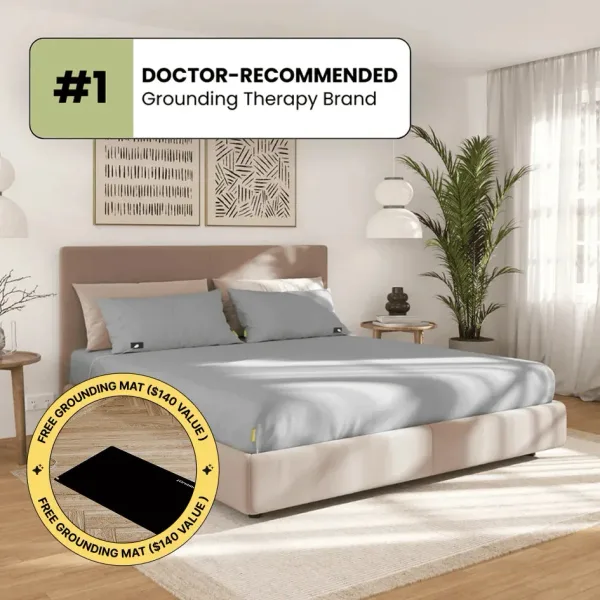
The round hole on the outlet is the whole circuit
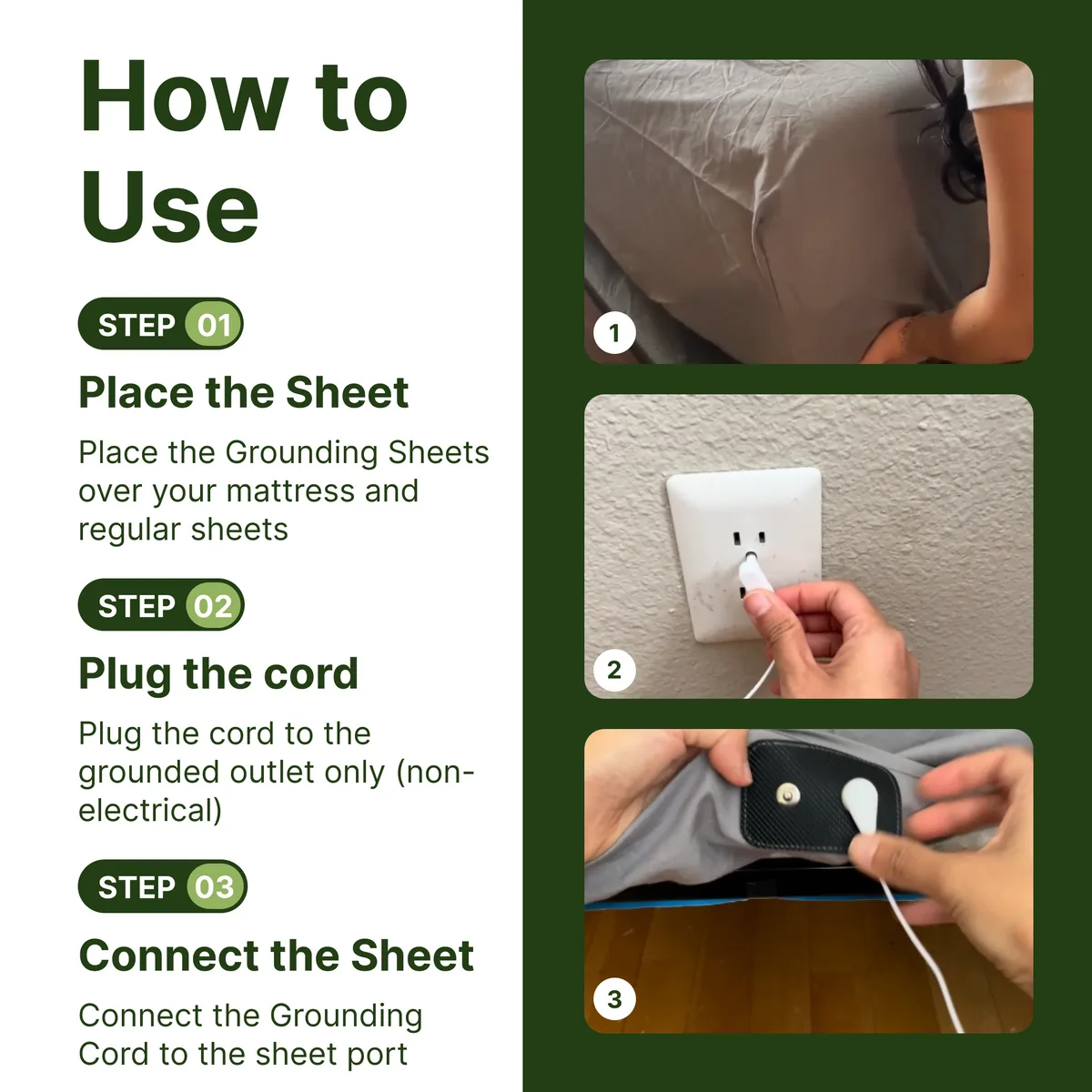
The buyer choice is a conductive bedsheet that borrows the house ground pin, or a clinical claim about sleep and pain. Terra is the sheet. It is not the clinic. Each SKU ships with a grounding cord. One end snaps or buttons to the conductive fabric. The other plugs into the round ground hole on a standard three-prong outlet. That hole is tied to the home’s grounding electrode — a rod or equivalent path — not to the hot or neutral wires that power lamps.
The listing says the connection is non-electric: no current is meant to heat the sheet or run a motor. You are borrowing the path electricians use for safety, not sleeping on a live circuit. On a NEMA 5-15 receptacle the two vertical slots carry hot and neutral. The round hole is equipment grounding conductor. The U.S. Department of Energy’s explainer on grounding electricity is the public document for that pinout. OSHA’s page on electrical grounding hazards is the workplace version of the same idea: ground is a fault path, not a convenience outlet for gadgets that want a story about electrons from the Earth.
International adapters for UK, EU, and AU outlets are included on the bed-sheet listing. Placement still matters. The cord has to reach the outlet without pulling the fitted corner off the snap. Most setups run the lead along the bed frame rather than across the pillow. A cord that stretches diagonally across a walkway is a trip hazard even if the electrical claim is only a ground tap.
Terra is sold as wellness bedding. It is not a medical device on this page, and nothing here is medical advice. If you have chronic pain, insomnia, anxiety, or a cardiac condition, speak to a clinician before changing a sleep setup on the strength of marketing copy. The FDA’s note on how to determine if a product is a medical device is the classification rule. A checkout page that talks about cortisol does not move a textile into that category.
The sheet only does what the listing describes if the outlet ground pin is actually connected to earth. Older homes, DIY wiring, and ungrounded two-prong sockets are failure modes. A three-prong faceplate can hide a two-wire run. That is a common retrofit, not a rare one. Plug the Terra cord only into the ground hole with the supplied adapter — never into an unmodified two-prong socket with a cheater plug. A cheater that bonds ground to neutral, or that leaves ground floating, is the opposite of the path the product copy describes.
Buildings vary. A copper water pipe used as a grounding electrode in an older house is not the same object as a dedicated ground rod on a later service. A subpanel that lost its equipment-grounding conductor is not a “good enough” bedroom circuit. None of those conditions are diagnosed by looking at a silver thread in cotton. They are diagnosed with a tester and, if the tester is unhappy, with an electrician. The product does not include a wiring inspection. The listing does not claim that it does.
GFCI protection and grounding are related and not identical. A GFCI watches for current leaving hot and not coming back on neutral. It can trip on a miswired ground accessory even when the intent is only a passive tap. If a GFCI trips when the Terra cord is in, stop. Do not reset the device in a loop until the receptacle is checked. Tingling, warmth, or buzzing from the fabric is the same stop: unplug and do not use the product until the wiring is checked. Those sensations are not listed as a benefit. They are a reason to treat the circuit as unknown.
What the ground pin is, and what this page does not claim
The round hole is equipment ground. Silver fiber can conduct. A cord can join those two. Sleep quality, inflammation, and mood are not proven by that join. The manufacturer’s site describes excess positive charge, oxidative stress, cortisol rhythm, and autonomic nervous system balance. Those are physiological stories. The part a buyer can verify is narrower: there is silver in the cloth, a cord exists, and the cord is meant to attach only to the ground pin.
Five percent silver is a conductor, not a sleep finding
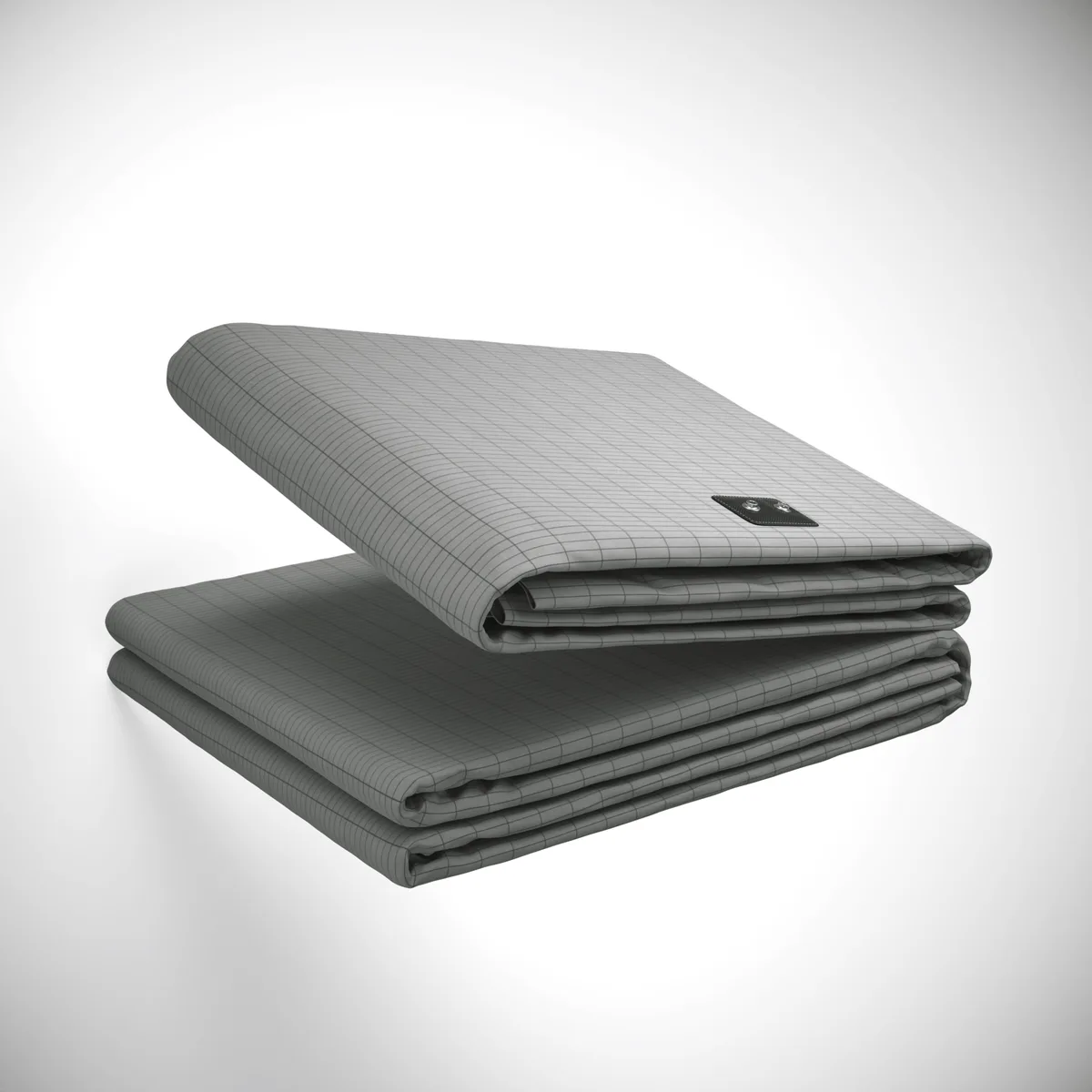
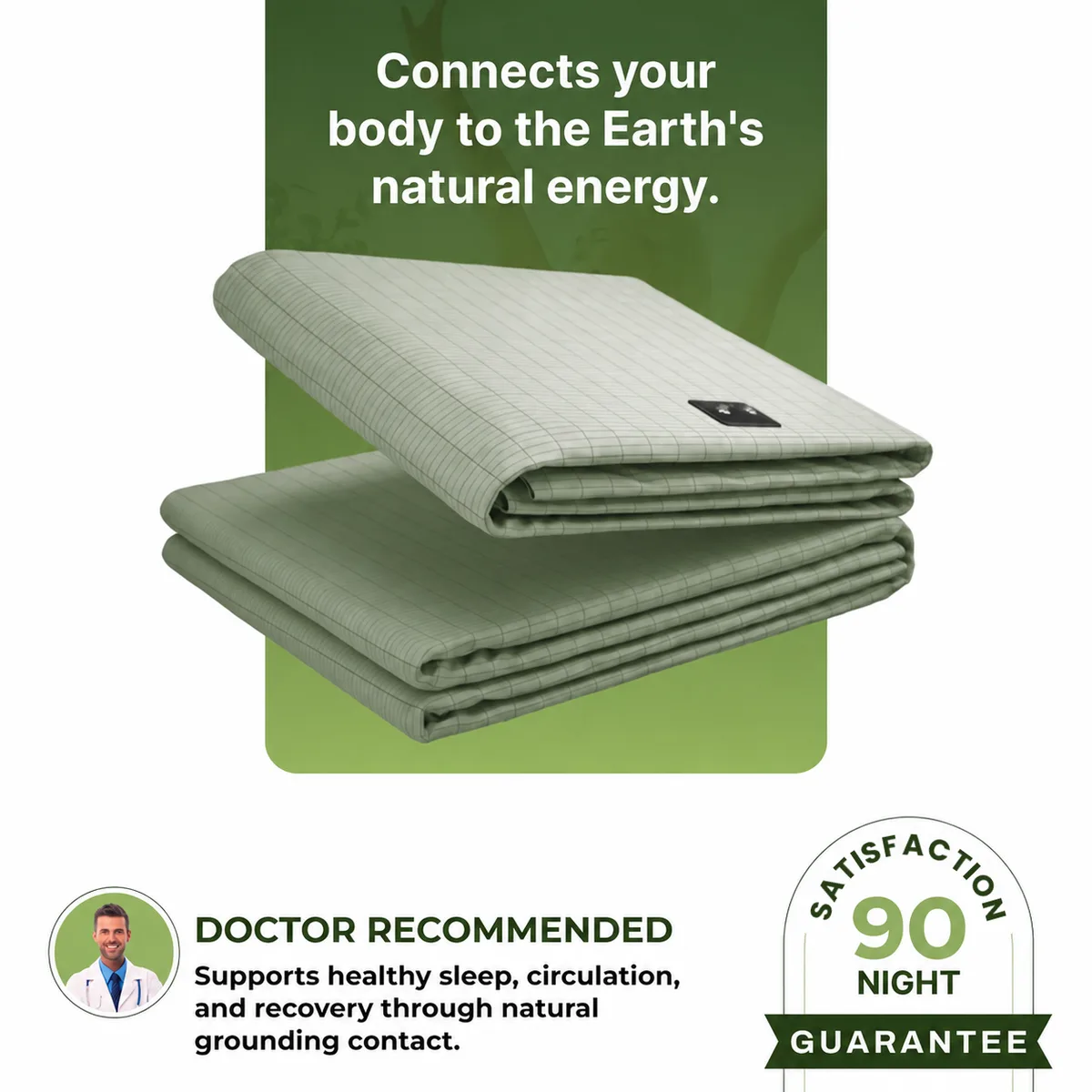
The bed-sheet listing specifies 95% organic cotton and 5% conductive silver fiber, in Ivory Gray, Off White, or Warm Olive. Silver carries the ground connection through the weave. The hand feel is closer to textured cotton than to a foil blanket. Continuity depends on those threads staying intact, which is why the care instructions ban bleach, chlorine, and fabric softener — those chemicals can coat or break the path the brand relies on.
Earthing, as a story, is that contact with the Earth’s surface lets electrons flow into the body. Walking barefoot on grass is the outdoor version. Indoor products try to recreate that path through a conductive textile wired to electrical ground. That analogy is the marketing frame. It is not a measurement this review performed. Metal in a weave can lower resistance compared with ordinary cotton. Lower resistance is not a sleep study.
Conductive textiles show up in ESD workwear, EMI shielding, and medical electrodes. Those uses come with specs: ohms per square, wash-cycle retention, electrode placement. The Terra listing names the 95/5 blend and the cord. It does not publish a resistance map of the fitted sheet after fifty washes. A buyer who wants that number will not find it here, because it is not on the page we read. What is on the page is fiber content plus a care list designed to protect conductivity.
Color names — Ivory Gray, Off White, Warm Olive — are finish choices. They do not change the ground-pin story. A darker olive does not “ground more.” A paler ivory does not “ground less.” The conductive fraction is the 5% silver fiber. If a later listing changes that blend, the hardware description on this page would be out of date. The 95/5 split is the figure we have from the bed-sheet listing as written.
Organic cotton is a fiber claim, not a conductivity claim. It tells you the bulk of the cloth is cotton sold under an organic label. It does not tell you thread count, and this page does not invent one. It does not tell you whether the silver yarns are wrapped, coated, or blended as staple. The listing’s useful sentence is the percentage split. Treat extra adjectives as merchandising unless they come with a test method.
Skin contact is overnight and large. Anyone with a known silver or metal sensitivity should read the fiber line before ordering, and should talk to a clinician if a rash is the concern. This page does not have a dermatology file on Terra. It has a fiber list. Pets are a mechanical problem more than a chemistry one: the brand FAQ references pet-safe use, and claws can still snag cotton. A pulled yarn can open the conductive path even if the sheet still looks like a sheet.
What a three-prong tester shows before the snap
A cheap plug-in outlet tester from a hardware store lights a pattern for hot, neutral, and ground. It is not a full electrical inspection. It is the minimum check that matches the product’s own premise: the round hole must be a real ground. If the lights show open ground, reverse polarity, or open hot, the Terra cord has nothing honest to attach to. Leave the sheet in the package until the receptacle is corrected.
Open ground is the pattern that matters most for this product. The face looks like a three-prong outlet. The ground pin goes nowhere useful. That can happen when a two-wire cable was extended with a three-prong device, when a ground screw was never bonded, or when a downstream tap lost its equipment-grounding conductor. The tester does not tell you which of those it is. It tells you not to treat the round hole as earth.
Reversed hot and neutral is a different fault. It is dangerous for lamps and appliances. It is also a reason not to add a novelty ground tap to the same receptacle. Bootleg grounds — a jumper from neutral to the ground hole inside the box — can fool a simple tester. They are a code problem. They are also a reason an electrician, not a bedsheet, is the next purchase if the house is old and the outlets have never been opened.
Do not plug the cord in if the receptacle is two-prong, or a three-prong tester shows open ground or reversed polarity; if you would need a cheater adapter or a ground-lift plug to make the cord fit; if a GFCI trips when the cord is inserted, or the fabric tingles, warms, or buzzes; or if you want a medical treatment for pain, insomnia, or anxiety rather than a conductive textile.
The brand FAQ says the sheet is safe with electric blankets because it does not draw mains power. That sentence is about the Terra cord not being a load. It is not a permission slip to daisy-chain heat, controllers, and a ground lead in a tangle on the floor. Route every cord so a night-time walk to the bathroom does not catch an ankle. If the electric blanket’s own instructions conflict with adding another conductor on the bed, follow the blanket maker and a clinician, not a wellness listing.
Adapters for UK, EU, and AU outlets on the bed-sheet listing are shape adapters for the ground pin, not voltage converters. The product is not meant to take mains voltage in any of those regions. If a local socket has no earth pin, the adapter does not create one. Travel housing, older European two-pin rooms, and ungrounded North American summer cabins are the same problem in different shapes: no earth, no circuit, no reason to force the plug.
A bedroom on a GFCI-protected circuit is common near baths and in later remodels. GFCI devices nuisance-trip for many reasons. Adding a ground accessory is one more variable. If the only grounded outlet you can reach is behind a heavy dresser, do not run an extension maze to “make it work.” The listing describes a cord to a nearby outlet. It does not describe a long chain of power strips.
Cotton-silver wash chemistry: bleach, softener, and the 40°C line
The brand FAQ says machine wash at or below 40°C (104°F) on a gentle cycle with mild detergent, tumble dry low or air dry, and skip bleach and fabric softener. That list is not a suggestion for nicer cotton. It is how the manufacturer says to keep the conductive path. Chlorine bleach attacks fibers and can attack metal. Fabric softener leaves a residue that can coat yarns. High heat can stress both cotton and any metallic thread.
The manufacturer states the sheets withstand testing with virtually no wear after 100 wash cycles. That is their durability claim, not an independent lab result on this page. There is no linked report here with a method, a sample size, or a resistance-after-wash table. A reader who needs that report has to ask the manufacturer for it. Until it is public, treat “100 washes” as a brand sentence.
Sweat and skin oils still accumulate on cotton. If conductivity feels weaker after bleach or years of high-heat drying, the ground path may be gone even if the sheet still looks fine. Inspect the snap and cord for fraying. A cracked insulator on the plug, a bent pin, or a snap that no longer bites the fabric is a replacement-parts problem, not a reason to tape the cord into the outlet.
Detergent choice on the FAQ is “mild.” That usually means skipping bleach boosters and skipping fabric-softener beads in the drum. It does not mean a specific SKU this page can name, because the FAQ does not name one. If a household already washes everything with chlorine or with a strong alkaline cleaner, this sheet does not join that pile. Put it in its own gentle load. Do not iron on a high setting unless the manufacturer’s care line says you can — the FAQ we read points to low-heat drying, not to a hot iron on silver yarn.
The unused-return rule, discussed below, collides with washing. Once the sheet has been laundered, the written refund policy’s “unlaundered” condition is already broken. That is not a trick of wording. It is why the first-week decision is a packaging decision as much as a sleep decision. If you need to wash before you will even try the cord, you are already outside the clean return case the policy describes.
Spot-cleaning a stain without a full wash is still use. Body oils on a fitted sheet after one night are use. The written policy’s words are unused and unlaundered, not “tried for a week and then washed on gentle.” If support later grants an exception, that is an exception, not the rule we read. Ask before the first night if you need the exception in writing.
Fitted-pocket depths through California King
Sizes on the manufacturer’s FAQ: Single 35 × 75 in and Twin / Twin XL 39 × 80 in with a 10-inch pocket; Full, Queen (60 × 80 in), King, and California King with a 12-inch pocket. Confirm mattress height before you order. A 14-inch pillow-top, a mattress-plus-topper stack, or an adjustable base with a thick pad can exceed a 10- or 12-inch pocket. A pocket that is too shallow pops off the corner. A popped corner can pull the snap away from the cord.
Fitted Queen and Fitted Single in Ivory Gray were on the dropdowns we saw with the 3 October 2026 checkout. That does not mean every color is in every size on every day. Direct-to-consumer size grids change. If you need California King in Warm Olive, look at the live dropdown, not at this paragraph. This page records what the FAQ and that day’s cart showed. It does not warehouse inventory.
A Twin XL at 39 × 80 in is the dorm and extra-long twin shape. A Single at 35 × 75 in is narrower. Those two share the shallower 10-inch pocket on the FAQ. Full, Queen, King, and California King share the 12-inch pocket. Queen is named with a 60 × 80 in flat dimension. This page does not invent the missing flat dimensions for King and California King; the FAQ names those sizes without the extra inch figures in the excerpt we used. Measure the mattress you have.
Deep-pocket aftermarket sheets exist because U.S. mattresses got taller. Terra’s pockets, as listed, are 10 and 12 inches. That is middle of the consumer range, not the 16- to 18-inch hotel-style pocket. If the bed already needs extra-deep sheets, this product may not dress it. An extra-deep conductive sheet is not a SKU this listing described to us.
The brand FAQ also references pet-safe use. Claws can still snag cotton. A cat that kneads the foot of the bed can pull a loop in a conductive yarn. A dog that sleeps on the throw can wear a path. Pet-safe is not claw-proof. If the household includes pets that shred ordinary sheets, they will not treat silver-thread cotton as sacred.
The unused-return rule behind the sleep-trial banner
The landing page advertises a generous sleep trial — marketing copy about 30 nights. The written refund policy on the manufacturer’s site is tighter. That gap is the checkout detail that matters most on this product. A trial that requires unused, unlaundered goods is not a 30-night wear test. It is a 30-day window to send back a product you barely used.
What those two documents actually say
- Returns must be requested within 30 days of delivery, on the policy we read.
- Items must be unused, unlaundered, in original packaging, with all parts included.
- A $30 restocking fee may apply, and outbound shipping is typically non-refundable.
- You pay return postage unless support grants an exception.
- The fitted sheet is the largest overnight contact area; pillow case, throw blanket, and desk mat are separate SKUs, each with its own cord.
If you need several nights on the sheet before you decide, you may already be outside the clean return case the policy describes. Contact support through the manufacturer’s contact form before you wash or cut packaging if returns matter to the decision. Public complaint threads on Trustpilot and Reddit describe refunds declined after use; we do not reproduce those as testimonials — read them on those sites yourself.
Restocking fees are legal in many consumer contracts when they are disclosed. Thirty dollars on a $99.95 sheet is not a rounding error. Non-refundable outbound shipping plus buyer-paid return postage plus a restocking fee can erase a large share of the item price even when a return is accepted. Read the live policy at checkout. Policies change. The lines above are what we read, not a promise that next month’s policy is identical.
Keep the cord, adapters, and bags together. “All parts included” is an easy fail if the UK adapter is in a kitchen drawer. Photograph the packed return if you need a record of condition. None of that is a procedure the brand required us to publish; it is ordinary mail-order hygiene when the written standard is unused and complete.
The 30-night banner and the unused-goods rule can both be true in the narrow sense that you have 30 days and the goods must look new. They are not true in the sense a reader hears “sleep trial.” If the marketing sentence is what sold you, read the refund paragraph before the first night. That is the whole point of putting both documents in one list.
Pillow case, throw, and desk mat as separate cords
The fitted sheet is the largest overnight contact area. Pillow case, throw blanket, and desk mat are separate SKUs. Each has its own cord on the listing. A person who wants a grounded pillow and a grounded sheet is buying two cords and two ground holes, or one hole and a decision about which textile is attached. The listing does not describe a splitter that we recorded. Do not invent one with a hardware-store Y-adapter unless the manufacturer says that is allowed — this page has no such permission.
A desk mat is a daytime contact product: wrists and forearms, not eight hours of skin. A throw is a partial-coverage textile. Neither replaces a fitted sheet for full-body contact, and full-body contact is still not a medical claim on this page. They are different shapes of the same hardware idea: conductive cloth plus a ground lead.
On 3 October 2026 the pillow case listed from $49.95 (against $99.95), the throw blanket at $189.95 (against $379.95), and a standalone mat from $69.95 (against $139.95). The three-sheet bundle that day also named a Terra Grounding Mat listed at $139.95 value. Compare-at prices are crossed out on that offer. They are not an offer from this site, and they are not a finding that the mat “is” $139.95 in a store we checked independently.
SKU creep is how a $99.95 sheet becomes a bedroom set. If the decision is “try the hardware,” the single fitted sheet is the lowest cash outlay we recorded. If the decision is “outfit the whole bed plus a desk,” add the dated lines and the return rules for every piece. Unused and unlaundered applies to a pillow case you slept on as surely as it applies to a sheet.
Fitted-sheet and three-pack totals from 3 October 2026
U.S. dollar figures below come from the partner checkout screen, checked . Compare-at prices are crossed out on that offer. They are not an offer from this site. Each sheet in a bundle gets its own color and fitted-size dropdown.
| One fitted sheet | $99.95 (listed against $249.90) |
|---|---|
| Buy two, get one free | $259.90 for three sheets (listed against $899.70; about $86.63 a sheet) |
| Bundle extras that day | Free shipping and a Terra Grounding Mat listed at $139.95 value |
| Pillow case | From $49.95 (listed from $99.95) |
| Throw blanket | $189.95 (listed against $379.95) |
| Standalone mat | From $69.95 (listed from $139.95) |
Figures we can stand behind
Those six lines are what the listing and the partner checkout showed that day. Bonuses can change by offer. The single-sheet path is the lowest cash outlay at $99.95. The three-sheet bundle costs more up front and, on the screen we saw, bundled a mat and free shipping. Sizes on the dropdowns included Fitted Queen and Fitted Single in Ivory Gray.
The bundle math is $259.90 ÷ 3 ≈ $86.63 a sheet before you assign any value to the mat. If you do not want three sheets, the bundle is not a discount; it is extra inventory. Guest-room sheets still have to fit guest mattresses. A second color for laundry rotation only helps if you will follow the gentle-wash rules twice as often. There is no subscription price on the screen we recorded, and this page does not invent one.
The earthing papers the listing leans on
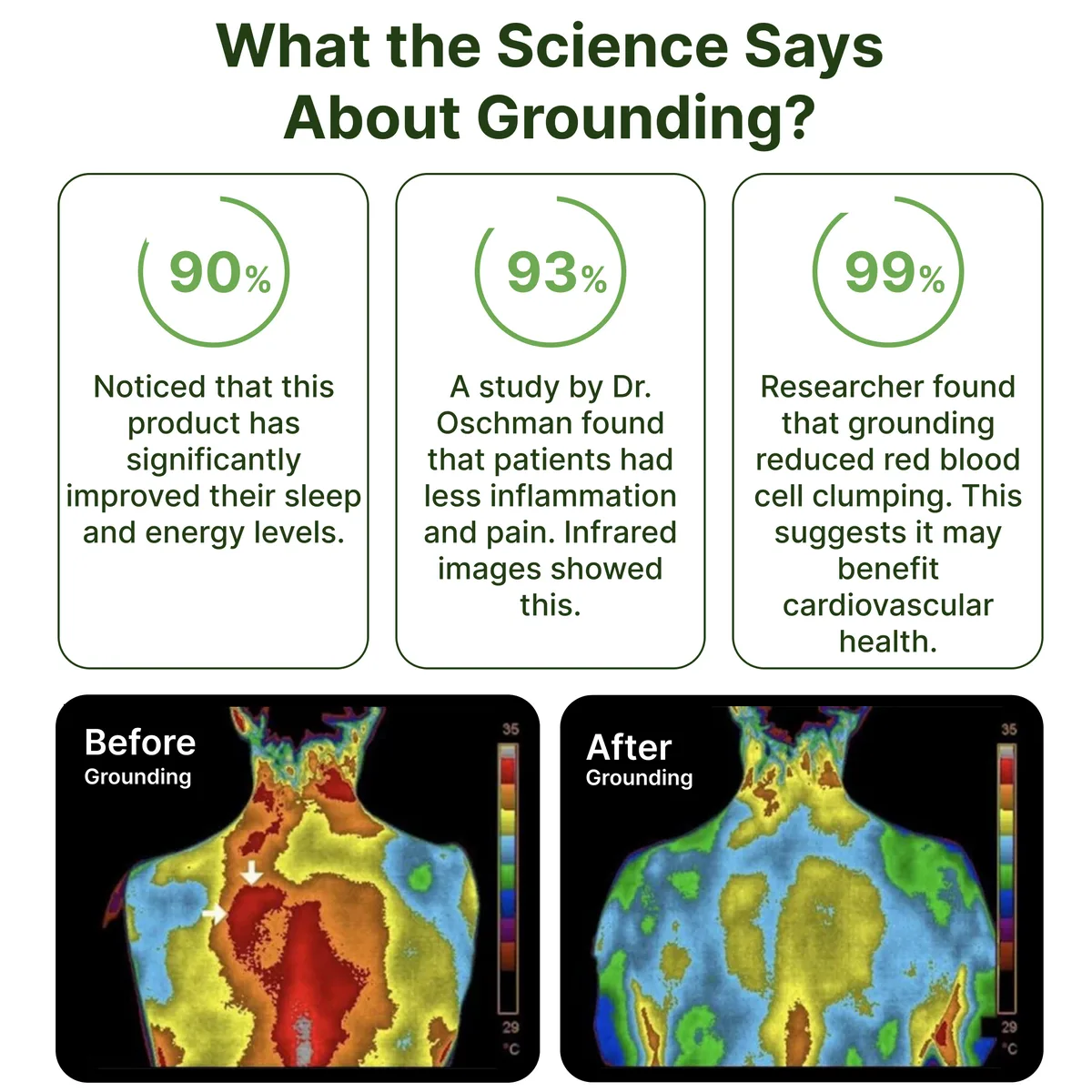
A small academic literature on earthing exists. One paper often cited in this niche is Chevalier, Sinatra, and Oschman’s “Earthing: Health Implications of Reconnecting the Human Body to the Earth’s Surface Electrons,” published in the Journal of Environmental and Public Health and available through PMC3265077. Read that paper yourself. Sample sizes in this literature are small. Blinding is difficult when the intervention is a metal cord to a wall. Many trials sit close to the industry that sells the mats.
The National Institutes of Health does not list indoor grounding sheets as an established therapy. Sleep, inflammation, and mood copy on the listing are hypotheses the brand makes. They are not outcomes this review can confirm. If symptoms are severe or new, a clinician outweighs a bedsheet upgrade. That sentence is the YMYL line for this page. It is not softened by a silver percentage.
Physiology stories on wellness sites often stack several unproven steps: that modern life isolates people from earth potential, that the isolation causes a measurable charge imbalance, that a bedsheet equalizes it, and that equalization improves sleep. Each step would need its own evidence. A conductive textile plus a ground pin documents only that a conductive path was offered. It does not document the rest of the stack.
Placebo and routine effects are real in sleep research. A new bedtime object, a cord to route, a ritual of snapping a lead — those can change how a person treats the hour before bed. That is not a reason to mock the purchase. It is a reason not to credit the silver for a quieter night. This publication does not collect sleep diaries on Terra, and it does not invent them.
Cardiac devices, pregnancy, and pediatric use are not settled by a wellness FAQ. If a household includes an implanted device, a clinician and the device maker’s guidance come first. This page has no clearance letter. It has a product that is not sold as a medical device. That combination means: do not treat the sheet as adjunct therapy unless a clinician says so in your case.
Grounding as electrical safety — the Energy.gov and OSHA documents already linked — is a different word from grounding as wellness. The first is about fault current. The second is about a proposed biological effect. Using the same English word for both is how the category markets itself. This review keeps them apart. The round hole is the safety conductor. The sleep claims are copy.
Readers who want a clinician-facing summary of complementary sleep products will not find Terra on an NIH consensus list as an established therapy. That absence is not a secret study this site is hiding. It is the state of public documentation. A PMC paper and a product FAQ can coexist. They do not add up to a treatment guideline. If a salesperson cites “studies,” ask for the PubMed identifier and read the limitations section. PMC3265077 is one identifier already on this page. It is not a stack of large randomized trials.
Ungrounded lodging, power strips, and the adapter in the box
Hotels, cabins, dorms, and older apartments are where the product’s premise most often collides with the building. A three-prong outlet behind a nightstand is not proof of a grounding electrode. Many lodging properties still have two-wire branch circuits with three-prong devices that were swapped onto the old cable. A traveler who packs a Terra sheet for a week in a rented house cannot see inside the box. A plug-in tester still fits in a toiletry bag. If the lights say open ground, the sheet is ordinary cotton with a decorative cord for that stay.
Power strips and surge protectors complicate the picture. Some strips pass the ground pin through. Some cheap tap adapters do not. The listing describes a cord into a wall outlet ground hole. It does not describe a stack of strips, USB towers, and a lamp sharing one receptacle. Adding a conductive textile to a crowded nightstand circuit is extra mechanical load on the same plastic housing. If the only free socket is on a strip, confirm that strip actually bonds ground, then still prefer a wall receptacle the tester has already read.
Extension cords are the same class of workaround. A long cord run under a rug is a trip and a heat problem for any load; Terra’s lead is not supposed to be a load, but the extension still has to carry a continuous equipment ground. Many light-duty cords do. Many damaged ones do not. This page is not going to bless a 25-foot workaround. The product as sold is a short cord to a nearby outlet. If the bed is in the middle of the room, the listing’s geometry may not match the furniture.
UK, EU, and AU adapters on the bed-sheet listing exist because those regions use different earth-pin shapes. BS 1363, Schuko, and Australian pins are not interchangeable with NEMA 5-15. The adapter is a mechanical translator for the earth pin. It is not a transformer. It does not add an earth to a room that never had one. In some Schuko rooms the earth contact is in the socket sides; an adapter that does not actually land on those contacts is a dummy. Check the adapter against a known-good earthed outlet before you travel, and check the destination outlet with a tester made for that system if you have one. This review is not a travel-electrical manual. It is a warning that “adapters included” is not “earth guaranteed.”
GFCI and AFCI breakers in later U.S. bedrooms add another stop condition already named: if the device trips when the Terra cord goes in, stop. Do not hold the reset and go to sleep. A trip means the protective device saw a condition it did not like. That condition might be the house, the cord, or both. An electrician sorts it. A wellness listing does not.
Two-prong to three-prong “cheater” plugs remain widely sold in hardware aisles. Their usual design bonds the ground pin to the outlet’s cover-plate screw or leaves it floating. Cover-plate screws are not a reliable grounding electrode. Floating pins are an open ground with extra plastic. Either way, the cheater is how people force a three-prong plug into a two-prong world. For this product that move empties the claim. There is no round-hole path. There is a sheet.
If you rent, you may not be allowed to replace a receptacle. A tester that shows a fault is then a conversation with a landlord, not a DIY afternoon, unless local rules and your lease say otherwise. Do not open an outlet box to “help the sheet work.” The product does not require you to rewire a bedroom. It requires a ground that already exists. No ground, no purchase — or a purchase you treat as ordinary bedding with a cord you never plug in, which is a waste of the $99.95 we recorded for one fitted sheet.
Surge, lightning, and storm advice from electrical-safety agencies is about whole-house protection and staying off corded appliances in a thunderstorm. A ground-tap textile does not change that advice. Unplug the Terra cord in a storm if you unplug other bedroom electronics. That is ordinary caution. It is not a performance claim about the silver yarn.
Cortisol rhythm language is still marketing copy
The manufacturer’s site describes excess positive charge, oxidative stress, cortisol rhythm, and autonomic nervous system balance. Those phrases are familiar from wellness catalogs. Cortisol is a real hormone. Autonomic balance is a real physiology topic. Oxidative stress is a real research term. None of those facts turn a 95/5 cotton-silver sheet into a diagnostic or a treatment. This page does not score Terra as a cortisol product because no cortisol measurement is on the listing we can check, and this publication did not run one.
Sleep trackers, rings, and mattress sensors are a different product class. They log motion, heart-rate proxies, or temperature. Terra logs nothing. There is no app on the listing we recorded, no dashboard, and no “nights grounded” counter. If a buyer already wears a tracker, any change after adding a sheet is still the buyer’s own log, not a trial this site can cite. Do not send us a screenshot and expect it to become a published outcome. We do not collect those.
Inflammation language on wellness bedding usually points at markers such as C-reactive protein. Those markers are blood tests ordered in clinic. A bedsheet does not order them. A listing that implies calmer tissue overnight is implying a biological endpoint. The honest remainder, again, is hardware: a conductor, a cord, a pin. If inflammation is the reason you are shopping, a clinician is the next appointment. A fitted Queen in Ivory Gray is not.
Mood and anxiety copy sits in the same stack. Anxiety disorders have diagnostic criteria. A conductive throw is not in those criteria. People who are already in care should not change medications or drop therapy because a checkout page mentioned calm. That is the YMYL boundary this site is required to keep. It is also ordinary decency.
The score of 4.3 is therefore a hardware-and-documents score. It is not a sleep-lab score. It is not a pain score. Readers who want those scores need a different kind of study than a review of a listing. The methodology page is where we say that in general. This section is where we say it for Terra.
A useful personal experiment, if a clinician has not already ruled the hardware out, is still not a published trial: keep the outlet test, keep the unused-return deadline in view, and do not change pain medication to “see what the sheet does.” If you feel tingling, warmth, or buzzing, the experiment is over and the cord comes out. That is the same stop already written in the outlet section. It belongs next to cortisol copy so the two are not confused. Marketing language can stay on the manufacturer’s site. The bedroom circuit has to stay boring.
The 4.3 we publish for Terra
We give The Grounding Co Terra 4.3 / 5. The hardware is the part a reader can check: 95/5 cotton-silver, a cord into the ground hole, four SKUs, wash limits that protect the conductive fiber, and sizing through California King. One sheet at $99.95, or $259.90 for the three-pack, on the 3 October 2026 screen.
The score stays in the mid-4s because sleep and inflammation copy outruns public evidence, and because the marketed sleep trial does not line up with a return policy that wants unused, unlaundered goods and may take $30 to restock. If the bedroom outlet tests as grounded and you have read the refund terms before the first night, the fitted sheet is a coherent way to buy this hardware. If you want treatment for pain or insomnia, see a clinician instead.
Points stay on the board for disclosing a ground-only connection, including regional adapters on the bed-sheet listing, and for publishing a care list that matches a conductive textile rather than a generic cotton sheet. Points come off for the trial-versus-policy gap and for wellness language that a reader could mistake for a device claim. The methodology page is how this site scores listings. It is document research, not a lab.
Bedroom-circuit questions still open
These are the questions a grounded-outlet check and the written refund policy still leave. Answers follow the listing, the manufacturer FAQ, the 3 October 2026 checkout, and the public electrical and device documents linked above. They are not a substitute for an electrician or a clinician. If a question below is really a wiring question, the tester and an electrician still come first. If it is really a pain or sleep question, a clinician still comes first. The sheet does not settle either queue.
No. The line is sold as wellness bedding with conductive silver fiber and a cord to the outlet ground port. The products are not FDA-cleared therapies. The listing describes possible sleep, inflammation, and mood benefits; this page does not treat those lines as outcomes. The U.S. Food and Drug Administration’s page on how to determine if a product is a medical device is the rule for that label, not a checkout slogan.
The sheet is listed as 95% organic cotton and 5% conductive silver fiber. A cord snaps to the fabric and plugs into the round ground hole of a three-prong outlet. The cord does not draw mains power; it only uses the ground path. Adapters for UK, EU, and AU outlets are included on the bed-sheet listing. Confirm the outlet is actually grounded before you leave the cord in overnight.
Marketing mentions a 30-night sleep trial, but the written refund policy requires items unused, unlaundered, and in original packaging with all parts. A $30 restocking fee and non-refundable outbound shipping may apply, and you pay return postage. That day the partner checkout showed one fitted sheet at $99.95 and a buy-two-get-one-free bundle at $259.90.
On a standard NEMA 5-15 receptacle the round hole is equipment ground. The two vertical slots are hot and neutral. The U.S. Department of Energy’s note on grounding electricity is the public explainer: the ground pin is a safety path to the grounding electrode, not a power pin. Terra’s cord is meant for that round hole only.
No. An ungrounded two-prong socket, or a three-prong outlet that tests as open ground, does not give the path the listing describes. A cheater plug that lifts the ground pin is the wrong object. If a plug-in tester shows open ground or reversed polarity, or a GFCI trips when the cord is in, stop and ask an electrician.
No. Silver is there as a conductor. The bed-sheet listing specifies 95% organic cotton and 5% conductive silver fiber. Continuity through that weave is a materials claim. Sleep, inflammation, cortisol, and mood copy on the listing are marketing hypotheses. This page does not convert fiber content into a clinical finding.
The brand FAQ says machine wash at or below 40°C (104°F) on a gentle cycle with mild detergent, tumble dry low or air dry, and skip bleach, chlorine, and fabric softener. Those chemicals can coat or break the conductive path. The manufacturer states the sheets withstand testing with virtually no wear after 100 wash cycles. That is their durability claim, not an independent lab result on this page.
Single 35 × 75 in and Twin / Twin XL 39 × 80 in with a 10-inch pocket; Full, Queen (60 × 80 in), King, and California King with a 12-inch pocket. Confirm mattress height — a 14-inch pillow-top may need the deeper pocket. The brand FAQ also references pet-safe use; claws can still snag cotton.
Yes. The fitted sheet is the largest overnight contact area. Pillow case, throw blanket, and desk mat are separate SKUs, each with its own cord. A bundle of sheets does not automatically include those other SKUs unless the checkout line names them. On 3 October 2026 the three-sheet offer bundled a Terra Grounding Mat listed at $139.95 value.
The brand FAQ says the sheet is safe with electric blankets because it does not draw mains power. Still route cords so you cannot trip on them. Tingling, warmth, or buzzing from the fabric means unplug and do not use the product until the wiring is checked. That is a stop condition, not a feature.
No. This site does not sell Terra. On 3 October 2026 the partner checkout showed a fitted sheet at $99.95 listed against $249.90, and a three-pack at $259.90 listed against $899.70. Those struck-through figures are the seller’s compare-at numbers. They are not an offer from All Buyers Reviews, and they are not a second store’s confirmed list price. The Federal Trade Commission’s guides against deceptive pricing are the public rule for former-price claims. Read the live total before you pay.
The listing requires the cord to reach a grounded outlet without pulling the fitted corner off the snap. Most setups run the lead along the bed frame rather than across the pillow. Do not stretch it as a trip line. Do not force it through a cheater into a two-prong socket. UK, EU, and AU adapters are included on the bed-sheet listing for earth-pin shape, not as proof that a destination room is earthed.