Editorial score, not a collected user tally
ChargeCard Review
A stainless-steel card power bank with three built-in cables — built for emergency top-ups, not all-day off-grid use.
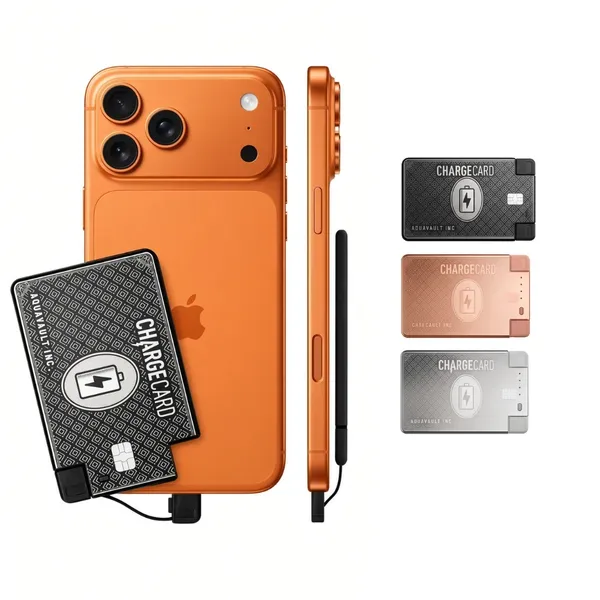
ChargeCard by AquaVault is marketed as a credit-card-sized 2300mAh pack with integrated Lightning, USB-C, and Micro-USB connectors and up to 1.5A output. It is aimed at commuters and travelers who want backup power without a separate cable. See our review methodology for how we score products.
A 2300mAh card is a top-up, not a second phone battery
Seller copy often pairs “2300mAh” with phrases like “full charge” or “up to 100% boost.” In our editorial assessment, that wording oversells what the milliamp-hour figure can deliver on a 2026 smartphone.
Many current phones ship with internal batteries in the 3500–5000mAh range. A 2300mAh external pack cannot store as much energy as the phone it is feeding, and some power is lost in conversion and cable resistance. ChargeCard is better understood as an emergency partial refill — enough to revive maps, tickets, or a rideshare app — than as a duplicate battery you can drain twice in one day.
Partial refill
At 5% battery, a mid-size phone might reach the 40–60% band — enough to finish a commute.
1.5A output
A modest charge rate by flagship fast-charging standards, acceptable for a slim emergency card.
Smaller than your phone
2300mAh stores less energy than most current phone batteries before conversion loss.
Emergency window
Built for a ticket scan or rideshare call — not a second full day of heavy use.
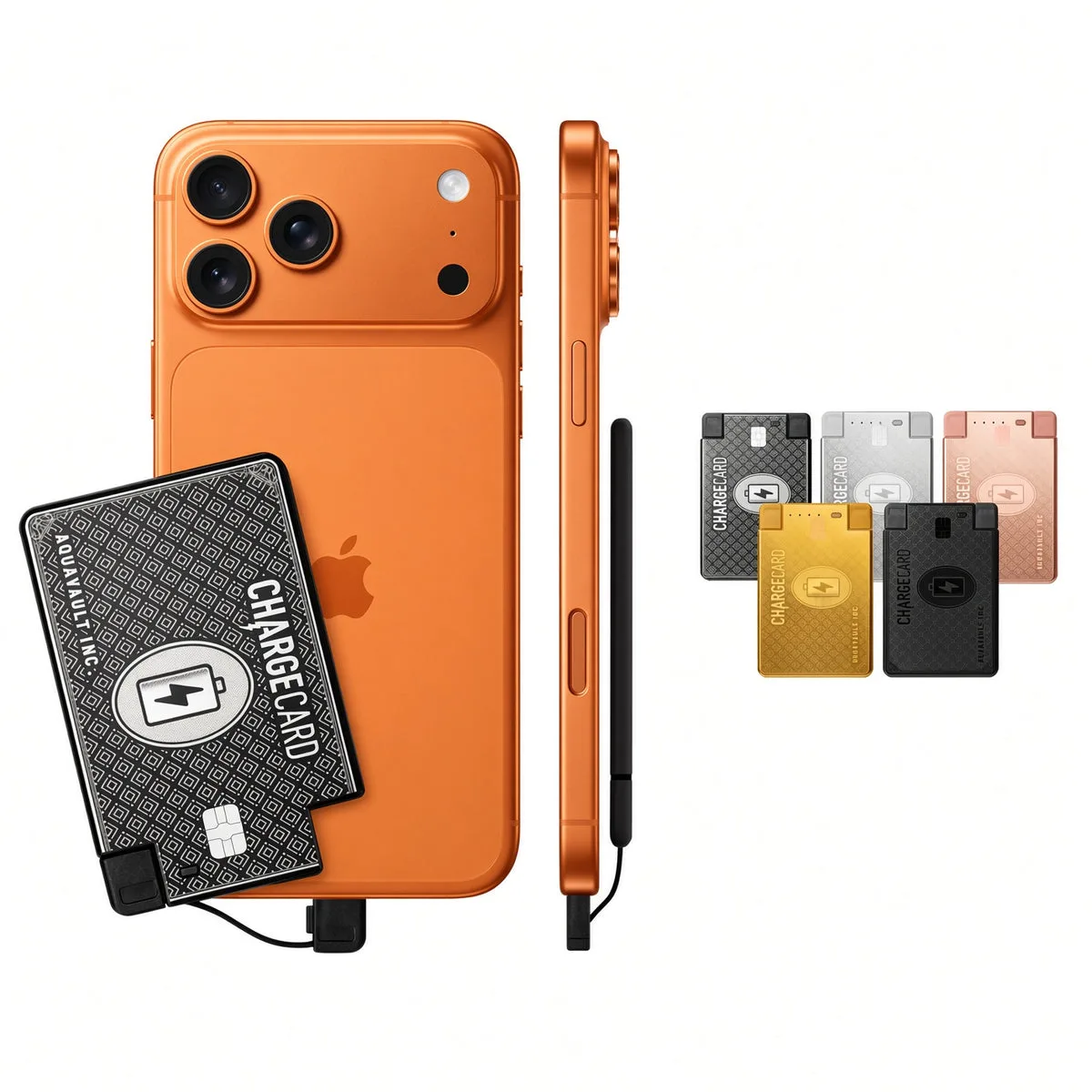
What the listed 2300mAh actually buys you
- Typical phone — internal batteries often run 3500–5000mAh; this card cannot hold as much as the phone it feeds
- Real-world gain — conversion loss and cable resistance shrink the usable top-up below the headline milliamp-hour figure
- Best use — revive maps, boarding passes, or a rideshare app when you are between outlets
- Not a fit for — all-day navigation, camping, or treating the card as a second full battery
Lightning, USB-C, and Micro-USB on one card
The main convenience pitch is integrated cables. You flip out the connector that matches your device instead of hunting for a cord in a bag. That matters most when you are between meetings, on a train, or at an airport gate.
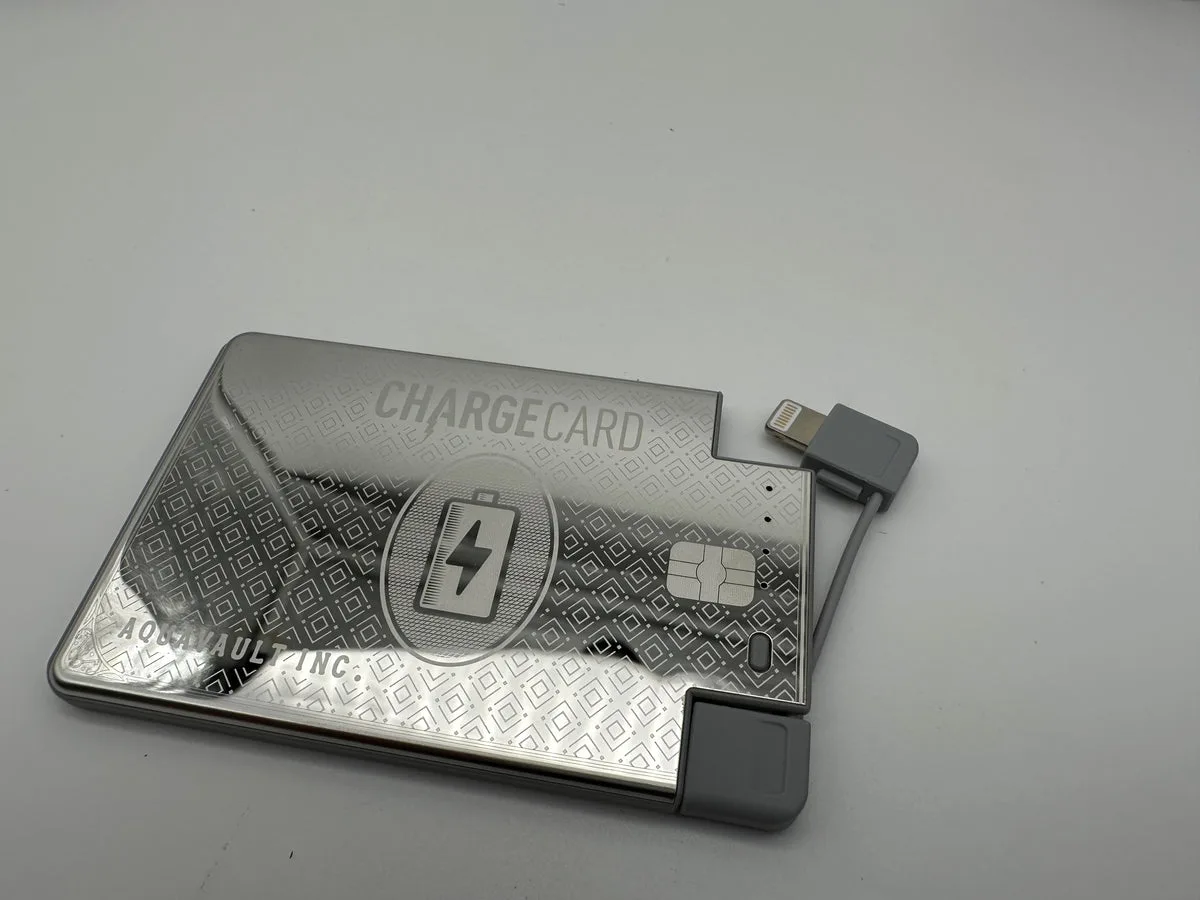
Three ports, no spare cord in your bag
- Lightning — listed for older and some current iPhone models (verify your port before ordering)
- USB-C — covers most Android phones, tablets, and many accessories
- Micro-USB — still useful for older earbuds, Kindles, and legacy gear
The card recharges through the same built-in ports, so you can top up the pack with whichever cable your wall adapter supports.
Flip out your connector
Choose Lightning, USB-C, or Micro-USB from the integrated arms — no separate cord to pack.
Plug in and top up
Listings cite up to 1.5A output — enough for an emergency partial refill, not a wall-brick fast charge.
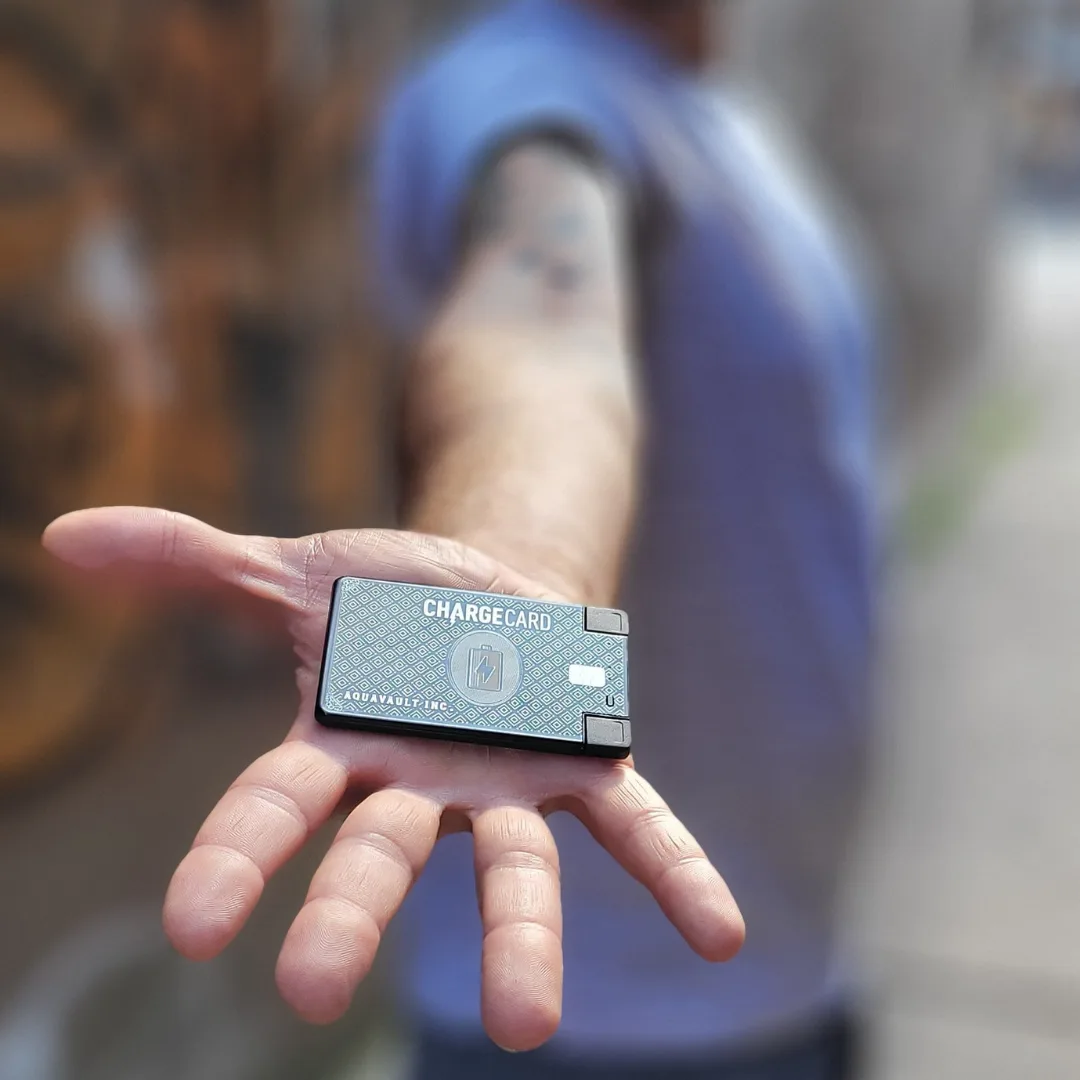
Read the four LEDs
Press the button to see remaining pack charge before you leave the house or board a flight.
The seller's pages disagree on thickness, weight, and capacity
We compared the partner checkout, two advertorial landers, and AquaVault's manufacturer store on October 6, 2026. The milliamp-hour figure is consistent at 2300mAh on most pages, but physical dimensions and even one bullet-list capacity line conflict.
| Source (checked Oct 6, 2026) | Thickness | Weight | Dimensions | Capacity noted |
|---|---|---|---|---|
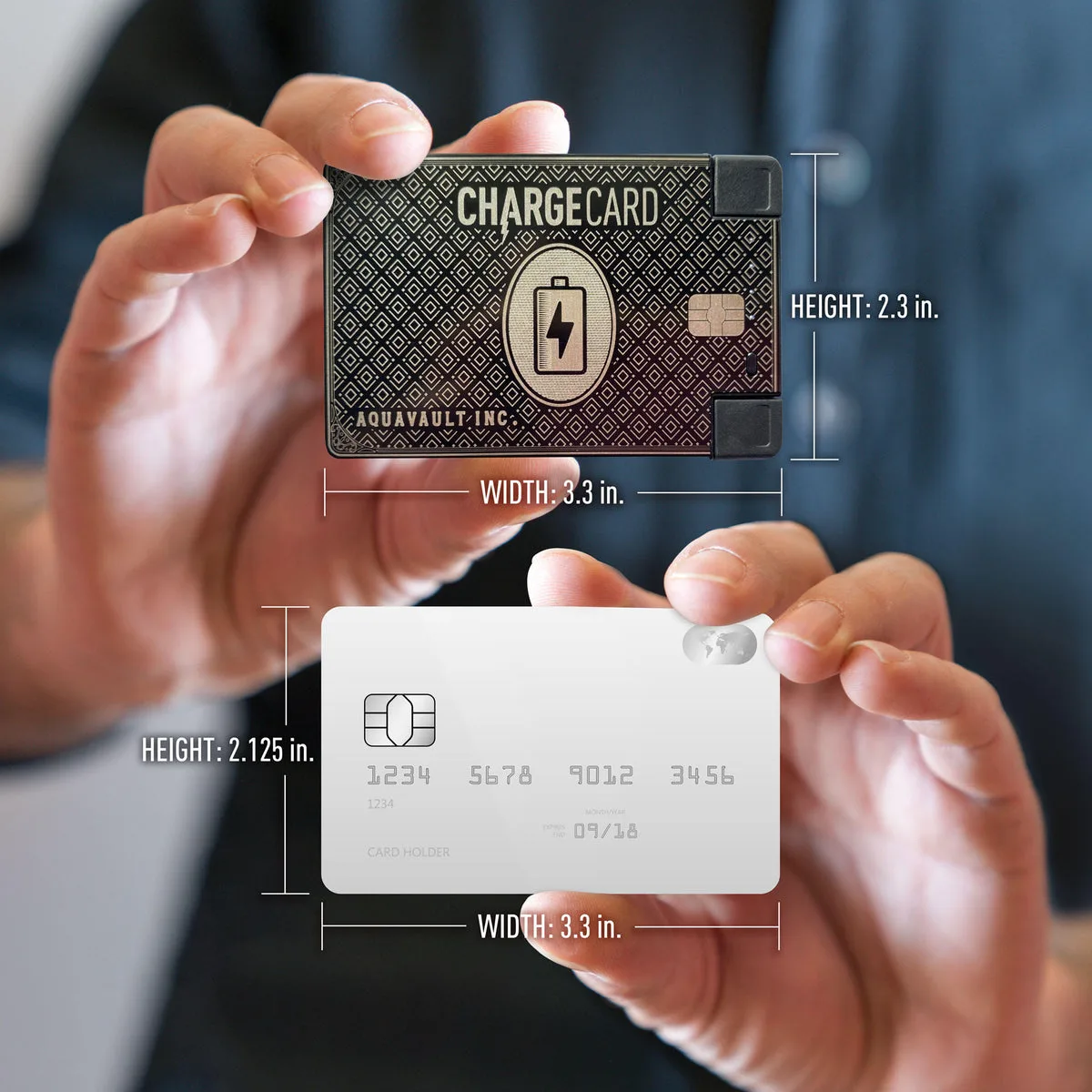
| Partner checkout & product lander | 0.1 in | 2.2 oz | 3.3 × 2.3 in (one page) | 2300mAh |
| AquaVault manufacturer store | 0.18 in | 2.1 oz | 3.3 × 2.2 in | 2300mAh |
| Two advertorial variants in the same campaign | 0.25 in | 3.5 oz | 3.4 × 2.4 in | 2300mAh in body copy; 1000mAh in one bullet list |

Measure thickness yourself if wallet fit matters
If wallet fit is your reason to buy, treat thickness as something to verify with a ruler when the unit arrives. AquaVault's own FAQ on the manufacturer store also notes the card may fit more easily in a bag or pocket than a tight card slot — which aligns with independent fit complaints on third-party write-ups.
Four lights, a two-to-three-hour refill, and pass-through only on some pages
Listings describe four LED power indicators, a roughly two-to-three-hour recharge time from a standard USB adapter, and smart charging to limit overheating. Some FAQ sections in the campaign also mention pass-through charging — using the card on your phone while the card itself is plugged in.
Status at a glance
- Four LEDs — described as a quick remaining-power readout at the press of a button
- Low-battery cue — one landing page mentions a blinking red light when the pack needs a refill
- Refill time — FAQ copy cites about two to three hours from empty on a standard USB adapter
- Pass-through — mentioned on some partner FAQ pages only; confirm with the insert that ships with your unit
About 8.5 watt-hours and a carry-on bag
Airline marketing on seller pages often says “TSA-approved” or “safe for flights.” We have not confirmed approval with any regulator. What you can verify is the arithmetic from the stated capacity.
At a typical 3.7V lithium cell voltage, 2300mAh × 3.7V ≈ 8.5 watt-hours (Wh). US and international guidance for spare lithium batteries in carry-on luggage commonly references a 100Wh ceiling for personal electronics — ChargeCard sits far below that on paper. Rules and airline policies change; check current TSA and carrier guidance before you fly, keep the pack in carry-on luggage, and never check spare lithium batteries unless an airline explicitly allows it.
Published thickness versus a normal card slot
A standard credit card is about 0.03 inches thick. Even the thinnest ChargeCard figure in the campaign (0.1 in on the checkout page) is several times that depth, and AquaVault lists 0.18 in. Many slim wallets will not accept the card in a numbered slot; a bill compartment, front pocket, or dedicated pouch is the more realistic carry method.
- Bill pocket or front pouch often works better than a numbered card slot
- Sitting on the card in a back pocket adds flex stress to cables and shell
- Stainless-steel build is pitched as durable everyday carry

Commutes, gates, and trade-show floors
The manufacturer positions ChargeCard for travel days when you drain a phone before you find a wall outlet. At ~8.5Wh on paper it sits far below common airline spare-battery ceilings, but carrier rules change — verify before you fly.
- Carry-on only for spare lithium packs on most airlines
- Built-in cables remove a tangled cord from your bag
- Still an emergency top-up — not a substitute for a larger travel battery
AquaVault, Shark Tank, and what actually aired
Advertorial pages in this campaign say ChargeCard was “featured on Shark Tank” and that Daymond John invested. The connection is indirect: AquaVault pitched its portable lockbox on Shark Tank Season 6, Episode 22 (aired March 13, 2015), and Daymond John invested $75,000 for 25% in that company. ChargeCard itself is a later product the same founders added during a travel downturn.
That history explains the “Shark Tank brand” badges on marketing pages without implying this specific charger was demonstrated in the tank. AquaVault Inc. lists a Florida address (20533 Biscayne Blvd STE 4947, Aventura FL 33180) on several order flows — useful if you need warranty contact details.

Card-sized carry versus a brick bank
The trade-off is capacity: ChargeCard wins on pocketability and built-in cables; a brick bank wins when you need a full second charge.
| Feature | ChargeCard | Brick power bank |
|---|---|---|
| Listed capacity | 2300mAh | Often 5000–10000mAh |
| Cables | Built-in (3 types) | Separate cord |
| Carry style | Wallet / pocket card | Bag or hand carry |
| Emergency top-up | Strong fit | Stronger for full refill |
Three for $89.95, one for $39.99
Prices checked October 6, 2026 on the partner checkout linked from this page. The 3-pack is pre-selected there as the best-deal tier; totals can change with promotions and optional add-ons.
Selected: 3x ChargeCard — $89.95 total ($29.98 each, save 62%)
Warranty toggle: the checkout contrasts a paid “Worry OFF” VIP line item with a default “Worry ON” path. Read what each option adds before you submit payment.
Manufacturer store: AquaVault listed $59.95 on its own product page when we checked, which may differ from this promotional funnel.
Shipping, any SafeTrak or warranty fees, and sales tax are settled on the checkout screen. Confirm the final total there — we do not sell this product and do not set its price.
Affiliate disclosure: we may earn a commission if you purchase through our links.
ChargeCard review: pros and cons
Editorial read of the specs, seller conflicts, and checkout mechanics — not a lab benchmark.
Pros
- Three built-in cables — Lightning, USB-C, and Micro-USB on one card
- True pocket carry — far smaller than brick banks when thickness matches the slim end of published specs
- Stainless-steel shell — positioned as durable with a premium finish
- Low Wh on paper — ~8.5Wh from 2300mAh is well under common airline spare-battery ceilings
- Simple use — plug in and charge; four LEDs for a quick level check
Cons
- 2300mAh is modest — partial top-up for most 2026 phones, not a full second battery
- Conflicting dimensions — thickness and weight differ across seller pages (see table above)
- Wallet slot fit is uncertain — even the manufacturer FAQ warns it may not sit in a numbered card slot
- Return window varies — 30 days on checkout vs 60 days on another lander
- 1.5A is not fast charging by current flagship standards
- Shark Tank claims need context — the aired pitch was AquaVault's lockbox, not this charger
Thirty days on some pages, sixty on another
The partner checkout we reviewed on October 6, 2026 states a 30-day worry-free guarantee for unused returns. Another landing page in the same affiliate campaign cites 60 days. AquaVault's manufacturer store describes a 30-day warranty against defects with purchaser-paid return shipping and a possible restocking fee.
Those policies are not identical. Read the guarantee block on the exact checkout you use, and contact info@theaquavault.com or 800-939-0735 if you need written confirmation before ordering.
Buy Now — Confirm Return Terms at CheckoutOur verdict: 4.2/5 — strong emergency card, read the fine print
ChargeCard solves a narrow problem well: a cable-free partial charge you can keep in a pocket when a brick bank feels excessive. Built-in Lightning, USB-C, and Micro-USB, a stainless body, and a sub-10Wh capacity on paper make sense for commuters and travelers who treat power as insurance. The score is held back by contradictory thickness and weight claims across seller pages, modest 2300mAh headroom on modern phones, and return-window language that shifts between 30 and 60 days depending on which lander you hit.
If you need a full second battery for camping or all-day navigation, a larger pack remains the better tool. If you want something you will actually carry daily, ChargeCard is worth a look — provided you confirm fit, final price, and the guarantee on the partner checkout before you pay. Editorial score 4.2/5.
Buy Now