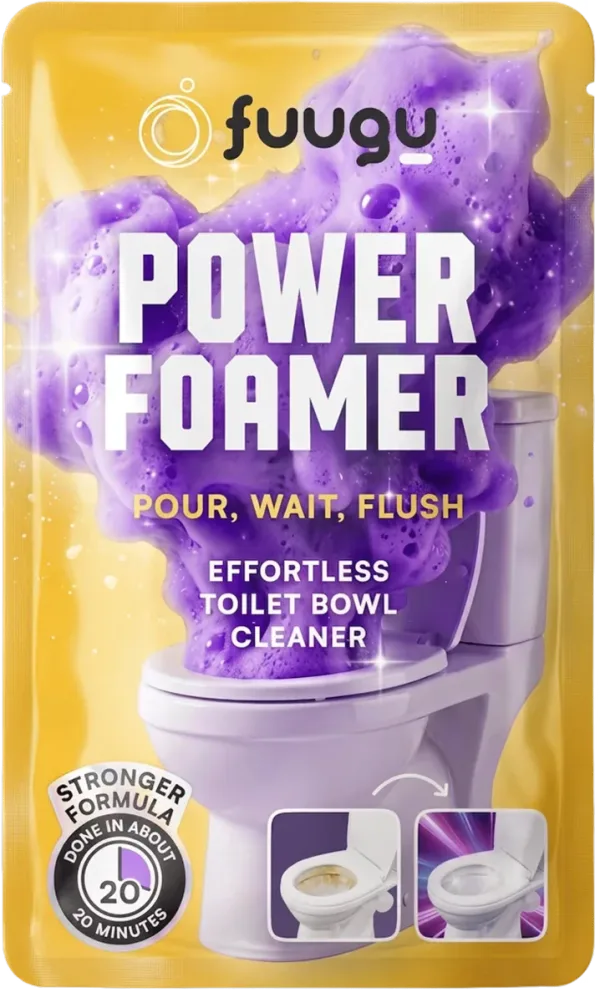
The manufacturer’s answers say cleaner, not disinfectant
The buyer choice is a weekly foam pouch that loosens mineral film, or a registered disinfectant that claims germ kill. Fuugu is only the first. Gravity-fed gels slide off the rim in seconds. That is the gap this powder tries to fill. The manufacturer says it reacts in cold standing water, builds climbing foam, and packs the hidden channel under the rim while you leave the room.
Ask the disinfection question first. The manufacturer’s own answers say no — it is a cleaner, not a disinfectant. Mineral scale and residue are the target. Germ kill after illness is a different product, used separately, with its own label. That is not this review being fussy. That is the brand’s own FAQ, and it matches how EPA labels work.
Skip the pouch
- You need a registered disinfectant after illness or in a shared bathroom.
- You will not buy a chemical without a published ingredient list — the sales page we read did not print one.
- Thick, years-old crust already resisted a brush; the manufacturer says several weekly cycles may still be required.
- You want a one-day restoration of a bowl that has not been cleaned in years.
The feature list also omits chlorine bleach, ammonia, and quats, and says there are no biocides that would upset a septic tank at one pouch per week. That is omission copy, not a full formula. Ask your septic service if the tank is already stressed. A tank that is already failing will not be rescued by a fragrance-free sentence on a sales page.
Cleaner is a legal category, not a modest adjective
On an EPA-registered disinfectant, the label carries organisms, contact times, and a registration number. A cleaner can talk about soil, film, and shine. Fuugu’s manufacturer put the product in the second group in so many words. This review will not promote it into the first group to make a bathroom feel safer than the documents support.
One pouch sits for about twenty minutes
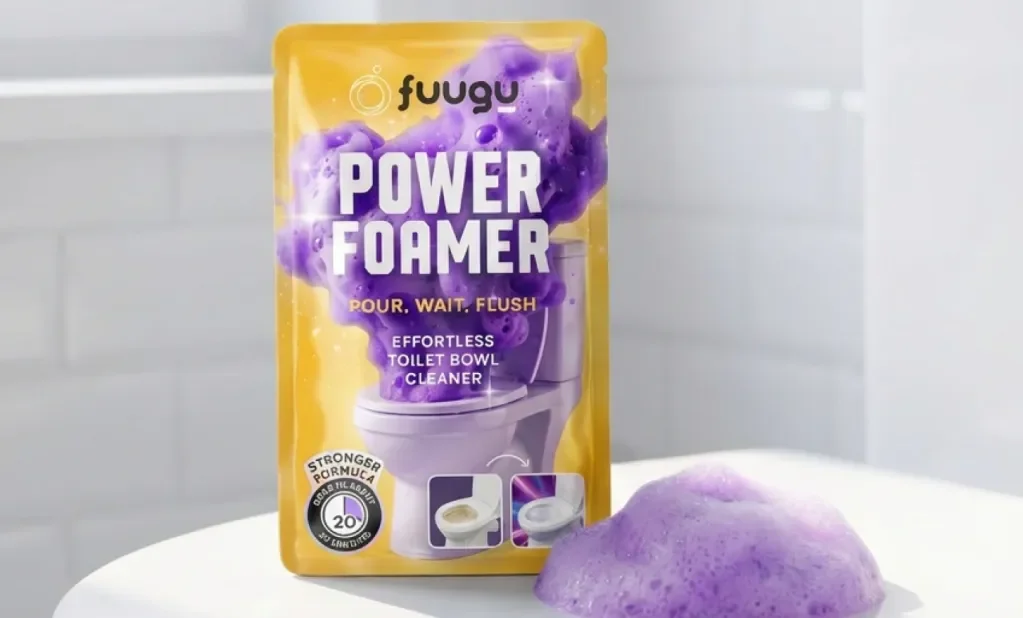
The routine is one pre-dosed pouch per toilet per week. Tear it, empty it into bowl water at its normal level, close the lid. The manufacturer quotes about 20 minutes while foam works the waterline and the under-rim area. Then flush once. No measuring cup. No hot water required on that page. Gloves are not required on that page either. If your own skin is sensitive, gloves are still allowed; the listing just does not require them.
Foam height still depends on bowl shape and water level. A two-pouch box is about two weeks for one bowl. Four pouches cover about a month at that schedule. This is maintenance chemistry, not a one-shot restoration. If the household has three toilets, three pouches a week is the listing’s arithmetic. The 12-pack then lasts about four weeks in that house, not twelve.
Closing the lid is part of the copy. It keeps foam in the bowl and kids’ hands out of it. Do not treat the 20 minutes as a suggestion to brush halfway through unless the manufacturer’s current page says to. The excerpt we used is pour, wait, flush. Extra scrubbing might help a crust; it is also extra labor the pouch was supposed to reduce. This page will not invent a brush step that the manufacturer did not print.
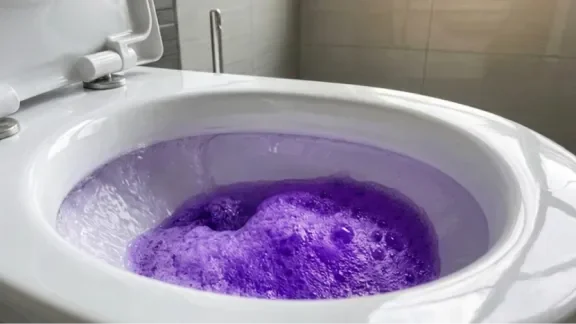
Standing water at its normal level matters. A bowl that has been plunged dry, or overfilled, is not the reaction vessel the copy describes. If you just flushed, wait for the waterline to settle. If you just used a different cleaner, flush that away first so you are not mixing unknowns. Twenty minutes is dwell, not a science-fair volcano. If the foam does nothing visible, you still wait, then flush, then look. Instant theater is not the claim.
Weekly habit is the product. Miss three weeks and you are back to whatever crust the water supplies. The pouch does not store a credit. It is not a subscription on the order page we recorded — it is a box you have to remember. People who already forget a gel bottle will also forget a pouch. The format does not install a calendar.
Hard water may take several weekly cycles
Calcium rings, limescale, rust streaks from iron-rich water, and dull mineral film are the stains the sales page leads with. The manufacturer says the formula attacks the mineral bond so scale can flush away. Results, on that same copy, vary with water hardness. Heavy, years-old buildup may need a few weekly pouches before you can judge anything.
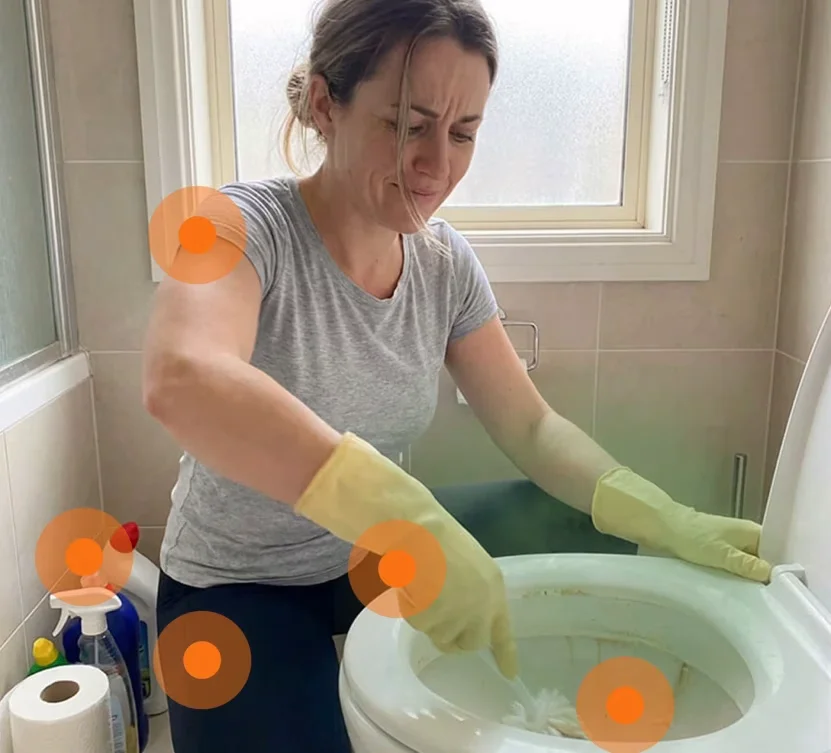
The U.S. Geological Survey’s explainer on hardness of water is the public chemistry lesson: calcium and magnesium dissolved in the supply. Hardness is not dirt. It is rock in solution that precipitates on cold ceramic. A weekly foam that claims to loosen that precipitate is still fighting geology. Geology is patient. Several weekly cycles is the manufacturer’s own hedge, and it is the hedge this review will not delete to make the pouch sound faster.
Iron staining is a different metal. The sales page names rust streaks from iron-rich water. Iron can stain porcelain in well country. Whether a given pouch lifts a given orange streak is not a result we have. It is a stain class the listing chose to name. If your well water stains sinks and tubs as well, a toilet pouch will not treat the heater anode or the supply. Those are plumbing jobs.
Municipal hardness maps exist for many U.S. cities. Look yours up if you like numbers. This review will not invent grains-per-gallon for your street. If you already know you descale a kettle every month, you are in the several-cycles population. If your kettle never crusts, you may be in the light-film population, where baking soda and vinegar — which the manufacturer acknowledges — are already a competitor.
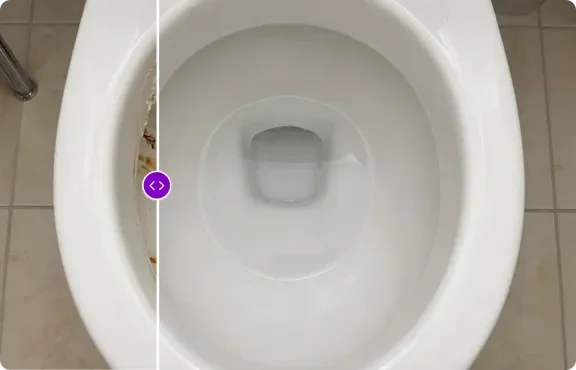
After photos on a sales page are marketing photography. They are not a before-after pair this site shot. We include the brand’s results image as an illustration of what they sell, with that limit in the caption’s honesty: it is their picture. If a ring is still there after several weekly cycles, the listing already told you that might happen. Then you decide whether a brush, a different acid cleaner, or a plumber is next. The pouch is not obliged to win a years-old crust in a week, because the manufacturer already said it might not.
EPA disinfectant labels and a bowl cleaner’s job
Under U.S. pesticide law, a product that claims to kill bacteria or viruses on surfaces is an antimicrobial pesticide. It needs EPA registration and a label with organisms and contact times. The EPA’s overview of antimicrobial pesticides is the primary document. A toilet-bowl cleaner that claims only to remove mineral film is not in that bucket unless it also makes a kill claim.
Fuugu’s manufacturer answered the kill question with no. This review repeats that no. After a stomach bug in a shared bathroom, you still want a registered disinfectant used as its label says — often a specified wet time on a pre-cleaned surface. Cleaning first, then disinfecting, is the CDC order on cleaning and disinfecting. A climbing foam that loosens scale can be the cleaning pass. It is not the disinfecting pass.
Hospitals, labs, and food businesses live on those two passes. Homes can too, especially after illness. Ordinary Tuesday mineral film is a different job. Mixing the jobs is how people bleach a bowl that still has another product in it and then breathe chlorine-related fumes. Do not mix. Flush. Wait. Use the next product only when the bowl is just water again.
Quats, bleach, and pine-type phenolics are common disinfectant chemistries. The Fuugu feature list says it omits quats and bleach. That is a positioning sentence. It does not tell you what is in the pouch. Positioning is not INCI. Cautious buyers stop here, and they are allowed to.
Under-rim foam and the gravity-gel problem
Under the rim, along the waterline, and down the trapway are the three trouble spots named. Rim jets hide. Gels and squirts slide off in seconds because gravity says so. A foam that expands upward is the mechanical idea: occupy the channel the gel never sat in. Whether a given bowl’s rim jets are actually packed is a shape problem — some rims are stingy, some are open. This publication did not map rim jets.
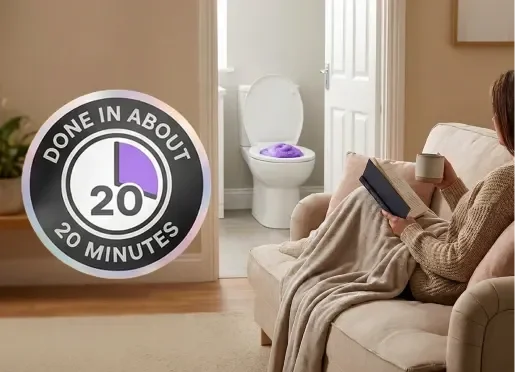
Waterline rings are the visible complaint. They sit where air, water, and ceramic meet. Foam that sits against that line for 20 minutes is the dwell the manufacturer is selling. Flushing once is the removal step. If the ring is a thick crust, several weekly dwells are already in the copy. A brush on week four is still your choice, not a step we will add as if it were on the box.
Trapway stains are downstream and darker. You cannot see them without a mirror. The listing names the trapway as a target. That is a claim about where foam goes, not a photo of your trap. If you need a camera inspection, that is plumbing, not a pouch.
Bowl shape: elongated, round, skirted, upflush, composting. The listing we recorded is ordinary standing bowl water. Composting and waterless units are not that vessel. Do not pour a reactive powder into a system the manufacturer did not describe. If you are unsure, ask support@fuugu.com before you open a pouch over a specialty toilet.
Bleach, ammonia, quats, and septic copy as omissions
Omission lists are how some cleaners market themselves in the 2020s: no bleach, no ammonia, no quats, septic-minded. Those sentences can be true and still leave the actual formula unpublished. Fuugu’s sales page, on the day we read it, did that combination. This review reports the combination. It does not fill in the blank with a guessed acid or surfactant.
Septic tanks are living systems. Biocides in quantity can hurt them. The manufacturer’s sentence is no biocides that would upset a tank at one pouch per week. Dose is doing work in that sentence. Ten pouches in one afternoon would be a different dose, and the listing does not describe that experiment. Stay on the weekly schedule if septic is the reason you are here, and still ask the service that pumps the tank.
Bleach remains a legitimate disinfectant when used as labeled. It is also a reason not to mix products. If you love bleach for the bowl on Sundays, do not add a pouch on top of it. Pick a day. Flush between. The feature list’s “no bleach” is about what is in the pouch, not a ban on owning bleach. It is a warning not to assume they play together.
Fragrance, dye, and purple foam are presentation. Purple is not a kill color. It is a visibility color so you can see climb. If dye in a bowl bothers you, you already know you want an ingredient list this page does not have. Skip.
Twelve pouches billed $83.40 on 6 October 2026
Checkout totals below match the manufacturer’s order page on , plus $5.95 shipping. Struck-through figures on that screen were list prices. One pouch per toilet per week.
| 12 pouches | $83.40 total ($6.95 each), listed against $277.98 |
|---|---|
| 8 pouches | $71.60 total ($8.95 each) |
| 4 pouches | $51.80 total ($12.95 each) |
| 2 pouches | $35.90 total ($17.95 each) |
Figures we can stand behind
Those four pack totals, and the $5.95 shipping line, are what the order page showed that day. The sales page also describes a 60-day money-back path to the original payment method. Return steps can change — read the current terms. Support listed that day: support@fuugu.com and +1 (337) 458-4009 (US).
Unit price drops as the box grows: $17.95 down to $6.95. The 12-pack is the rate this review cites in the dek. It is still $83.40 plus shipping before you know whether your hardness needs extra weeks. A two-pack at $35.90 is an expensive test and, if the unused-product rules on a later return page are strict, maybe not a cheap test. Read the 60-day path before you assume a used bathroom chemical returns. Many do not, even when a banner is generous. Ask.
What a missing ingredient list still withholds
Cosmetics in some markets print INCI. Household cleaners in the U.S. often do not. Right-to-know varies by state. This review is not your state bill. It is a note that the Fuugu sales page we read did not print the formula. People with asthma, perfume sensitivity, or a clinician’s list of chemicals to avoid cannot do a string-search on a blank. They should not buy on a purple photo.
Ask support@fuugu.com for a safety data sheet if you need one for a workplace or a clinic. SDS documents, when they exist, list hazards in a standard format. This site did not receive one to host. We will not reconstruct one from marketing adjectives.
Children and pets: a torn pouch is a powder. Store it up. The listing’s “gloves not required” is not “leave it on a toddler’s step.” Close the lid during dwell. Flush. If someone eats a pouch, poison control, not a review page, is the next call. We are not going to invent a cute storage tin.
If a future version of the page publishes a full list, this review would need an update dated on that day. Until then, the blank is part of the 4.2. It is a documented gap, not a rumor.
The hanging-gel habit this powder is trying to leave
Rim cages and blue hanging gels are the default in many U.S. bathrooms. They drip on a schedule you do not control, they scent the room whether you asked, and they miss the hidden channel when the cage sits crooked. Fuugu’s pitch is a weekly powder that occupies that channel for about 20 minutes and then leaves. That is a different habit: you have to remember the pouch. The gel remembers itself and slowly becomes a skeleton on the rim.
This review will not crown a winner between those habits. It will say the manufacturer already named the gel’s failure mode — gravity, seconds, slide — and built a SKU around it. If your gel already keeps the bowl acceptable, the pouch is optional. If the gel never touched the underside of the rim, the pouch is at least aimed at the right complaint. Aimed is not proven in a lab we ran. Aimed is the copy.
Tablets that sit in the tank are another habit. They send chemistry through the fill valve and the rim jets on every flush. Some toilet makers hate them because they can rot flappers. Fuugu’s listing is bowl water, not tank water. Do not drop the pouch in the tank unless the manufacturer says to — the page we read said bowl. Tank chemistry is a different product class and a good way to void a fill-valve expectation.
Pumice stones scratch glaze if you are clumsy. They also work on a ring when you are patient. The pouch is selling the hope that you can skip that stone. Several weekly cycles later, you may still want the stone. The manufacturer already said heavy crust may take repeats. A stone on week five is not a betrayal of the 4.2. It is the hedge working as written.
Automatic in-bowl gadgets with batteries are a fourth habit. They cost more and claim more. This catalog is not reviewing them here. If you were about to buy one because you hate bending over, note that Fuugu still asks you to pour a pouch. The labor it removes is measuring and brushing, not visiting the room. You still visit. Weekly.
Porcelain glaze, acid folklore, and a ring that is rock
Toilet bowls are glazed ceramic. The shine is a glass-like skin. Hard-water rings sit on that skin as mineral, not as dirt in a pore. Acids can dissolve carbonate scale. Strong acids can also dull a glaze if you live on them. This review does not know Fuugu’s pH because the sales page did not print it. That is the missing-list problem in a second costume. Without pH, “gentle on porcelain” is not a sentence we can source from the listing, so we will not write it.
Vinegar is acetic acid at kitchen strength. The manufacturer acknowledges vinegar and baking soda for light buildup with enough dwell. That acknowledgment is important: the brand is not claiming to be the only chemistry on Earth. It is claiming convenience and climb. If you already keep vinegar under the sink and you like 30-minute dwells, you are the audience the hedge was written for — and maybe not the audience for $6.95 a week on the 12-pack rate.
Bleach on a carbonate ring is a poor match. Bleach is an oxidizer. Scale is a mineral. People bleach for germs and whiteness, then wonder why the ring remains. Fuugu’s manufacturer put the product on the mineral side. Believe that division. Use bleach, if you use it, as a separate labeled disinfectant pass after the bowl is already clean, not as a scale eraser.
Scratches in glaze collect new rings faster. Do not take a screwdriver to a waterline. Do not use a rock from the driveway. If you use a pumice made for toilets, wet it, be gentle, and know you are choosing abrasion. The pouch is the non-abrasive hope. Several cycles is still non-abrasive hope. Hope plus a brush is allowed by physics even if it is not a printed step.
Old bowls with worn glaze will stain no matter the pouch. Replacement is a plumbing SKU. This review will not tell you your 1998 builder grade is “fine.” Look at the glaze in raking light. If it is chalky, chemistry is mopping a porous surface. Adjust expectations before you adjust the subscription-like weekly habit.
Well water, iron, and stains that are not kettle-scale
Wells can carry iron, manganese, tannins, and hardness together. USGS hardness is calcium and magnesium. Iron is extra. Orange streaks the sales page named are the iron story. A water-heater anode, a rusty pressure tank, or iron bacteria in a well can feed those streaks continuously. A weekly bowl pouch treats the ceramic, not the aquifer. If the streak returns in three days, the supply is the product you actually need to talk to a well contractor about.
Iron bacteria make slime. Slime is organic. A mineral-scale cleaner may not be a slime cleaner. This page does not have a microbe list for Fuugu because the manufacturer said it is not a disinfectant. Slime in a toilet may want a labeled disinfectant and a mechanical clean, then a conversation about the well. Do not expect twenty minutes of foam to end a well-biology problem.
Softened water reduces hardness at the cost of sodium or potassium in the supply. If the house is already softened, the kettle does not crust and the bowl ring may be soap scum or iron instead. Match the stain to the chemistry. The listing leads with calcium rings and limescale. If that is not your stain, you may be buying the wrong story even if the foam still climbs.
City water with seasonal hardness (spring runoff, treatment changes) can make a ring that comes and goes. A weekly habit will sometimes look like a miracle and sometimes like nothing. That is the supply, not a reason to invent a lab score. Keep the 4.2 attached to documents, not to a lucky month.
Filters on the whole house change the job. If you installed one to stop staining, the pouch may be extra. If you did not, the pouch is a bowl-scale tool, not a filter. Buy the tool that matches the pipe you are willing to change.
A torn pouch, a toddler step, and a missing SDS
Single-use pouches are easier to overdose than a measured cap — you cannot easily pour “half” if the powder dumps. They are also easier to leave on a step. Store them up, dry, away from a child’s reach, away from a pet’s teeth. The listing’s line that gloves are not required is about skin during a pour into bowl water. It is not a storage standard. It is not a food-safe claim.
If powder spills on a floor, wipe with a damp cloth, then wash the cloth. Do not vacuum a reactive powder with a household vac as if it were dust — you do not have the SDS to know. That missing SDS is the workplace document that would have told you. Email support@fuugu.com and ask for it if you need it. Do not let this review stand in as a hazard sheet. We did not receive one to host.
Poison control exists for a reason. If a child eats a pouch, call them, with the package in your hand. This site will not guess first aid beyond that. We will not invent an ingredient to tell you whether it is an acid or a surfactant. The blank list has a safety cost. That cost is part of 4.2.
Bathrooms steam. Steam plus a cardboard sleeve of pouches is a soggy sleeve. Keep the box outside the shower fog if you can. A fused brick of powder is not “one pouch.” It is a mess. The weekly habit depends on a dry pour into standing water, not into a clump.
Septic-minded copy does not make the powder candy. Keep it out of a child’s “helper” routine. Pouring into a bowl looks like a game. It is a chemical. The 20-minute closed-lid dwell is also a closed-lid child lock of sorts. Use it.
Three toilets, twelve pouches, and a four-week box
One pouch per toilet per week is the schedule. Three toilets × four weeks = twelve pouches. The $83.40 box on 6 October 2026 is then a month in a three-bath house, plus $5.95 shipping, not a quarter-year. Shoppers who picture “twelve weeks of clean” from a twelve-pack are picturing one bowl. Read the dose before you read the unit price.
Guest baths that are never used still get a ring if the water sits. They may not need a weekly pouch. They may need a monthly one. The listing’s schedule is per toilet per week as the default. You can skip a room that is dry and unused, with the understanding that you are off-script. Off-script is allowed. It is just not the math on the box.
A two-pack at $35.90 is two weeks in one bathroom or one week in two. It is a steep per-pouch rate. As a test of foam climb, it is two data points. As a test of hard-water repeats, it is not enough, because the manufacturer already said several weekly cycles may be required. A four-pack at $51.80 is closer to a month in one bowl — the shortest window that even slightly matches the hedge. The 12-pack is the rate this review headlines because it is the cheapest per pouch, not because every house has one toilet.
Shipping at $5.95 is small next to $83.40 and large next to a two-pack if you only wanted a peek. Combine that with a 60-day money-back path whose return rules you must still read. Bathroom chemicals that have been opened often do not travel back. Ask. The support number on that day was +1 (337) 458-4009. Use it before the pour if returns are the plan.
Struck-through $277.98 on the 12-pack is a compare-at. This site does not confirm a $23-a-pouch world elsewhere. The number you can check is $83.40 plus shipping on that date. If today’s cart differs, today’s cart wins. Direct-to-consumer stickers move. The 4.2 does not move with them unless the documents do.
After illness, the second product you still have to buy
A stomach bug, a flu, or a household COVID week is a disinfectant week. EPA-registered labels name organisms and wet times. Fuugu’s manufacturer already said this pouch is not that product. Buy the registered one. Use it as the label says, often on a surface that has already been cleaned. The foam can be a cleaning pass on mineral film. It cannot close the illness loop. CDC’s cleaning-then-disinfecting order is the public sequence. This review will not reverse it to spare you a second SKU.
Shared bathrooms in rentals, offices, and in-law suites are the rooms where people want one bottle to do both jobs. That want is understandable. It is also how labels get ignored. If you need both mineral maintenance and germ kill, you need both products, a flush between them, and a calendar. Tuesday pouch, Thursday disinfectant, for example — not both in the standing foam. Mixing is the hazard. The missing ingredient list makes mixing even less defensible, because you cannot even guess the reaction.
Day cares and clinics have written protocols this page will not rewrite. If you buy Fuugu for a clinic bathroom, you still need whatever the protocol names as the disinfectant. Ask the person who owns that protocol. Do not wave a purple photo at an inspector. The 4.2 is a home-mineral score. It is not a healthcare score. YMYL here is modest — a toilet — and still real when illness is the reason you shopped.
Pets that vomit in a bowl, or a litter box next to a toilet, are messes that want mechanical removal first. Foam on top of organic mess is not a protocol we have from the manufacturer. Remove the mess. Flush. Then, if you still want a weekly mineral pouch, use the pouch on a bowl that is already just water. The listing’s vessel is standing bowl water at normal level, not a biohazard scene.
If someone in the house is immunocompromised, a clinician’s hygiene advice outranks a foam listing. This site is not that clinician. The skip-box already said to skip the pouch if you need a registered disinfectant in a shared bathroom. Illness is the moment that sentence was written for. Use it.
Purple foam is visibility, not a kill color
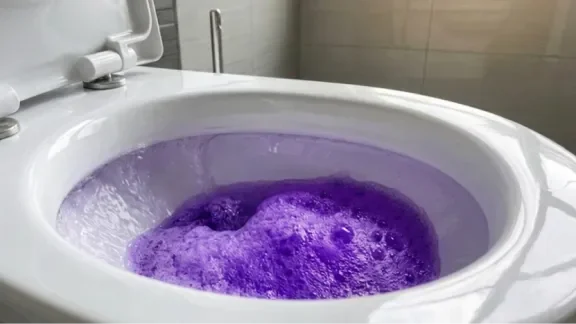
The product photography shows purple foam climbing toward the rim. Color is how you see whether the reaction happened. It is not a sporicidal badge. Do not wait for a color change as a sterility signal. Wait the ~20 minutes the manufacturer quoted, then flush. If the foam never rises, you may have a water-level problem, a spent pouch, or a bowl shape that does not cooperate. Try once more on a normal waterline. Then write support@fuugu.com rather than stacking pouches into a volcano the listing did not describe.
Dye that stains a plastic seat or a rug is a possibility with any colored cleaner. The sales page we read did not warn about dye stains in the excerpt we used, and this review will not invent a stain table. Wipe spills. Close the lid. Keep a white rug away from the bowl during dwell. If dye bothers you as a category, the missing ingredient list already told you you cannot check for it. Skip.
Fragrance is not named as a specific perfume in the excerpt we used. Some people shop “free and clear.” Without a list, you cannot verify that. The 4.2 already withholds a point for the blank. Fragrance sensitivity is one reason that blank is not a trivia gap. It is a buyer gap. Ask support for a list. If they will not send one, you have your answer before you open a pouch.
Foam that overflows onto the floor is a water-level and dose problem. One pouch is the dose. Two pouches is not a documented booster on the page we read. Do not double “to be sure.” Flush, wait for the waterline, one pouch, lid, twenty minutes. If overflow happens anyway, that is a support photo, not a reason to add vinegar in the same foam.
Photography lighting makes foam look taller. Your bowl may look less dramatic. Dramatic is not the success metric. The waterline ring is. Look at the ring after the flush, in daylight, after several weekly cycles if the manufacturer’s hardness hedge applies. A single muted photo session is not a failure of the 4.2. It is a bowl.
Keep the powder out of the tank and off the flapper
Fill valves and flappers fail early when people drop tank tablets in the reservoir. Chlorine tablets are the usual villain in plumber folklore. Fuugu’s listing is a bowl pouch, not a tank tablet. Keep it that way. The tank is the wrong vessel. The chemistry, unknown to us because of the missing list, does not get a free pass to sit against a rubber flapper for a month.
Rim-jet channels can clog from years of hard water. A foam that claims to pack those channels is trying to be a maintenance unclog, not a snake. If the bowl already fills poorly, a plumber’s auger or a machine is the next SKU. Several weekly pouches will not replace a clogged rim. They might make a slightly cleaner clogged rim. Know which problem you have.
Wax rings, loose bowls, and sweating tanks are plumbing. Foam does not tighten bolts. If the floor is wet, stop pouring chemistry and start with a wrench or a pro. This review will not let a $6.95 pouch impersonate a repair.
Septic systems with pumps, alarms, and advanced treatment are more sensitive than a rural tank of 1978. The manufacturer’s “no biocides that would upset a tank at one pouch per week” is a dose-limited sentence. Show it to the service that already knows your tank. If they say no, that no wins. If they shrug, you are on the listing’s dose and no faster.
City sewer users can ignore septic copy and still obey the no-mix rule. Sewer is not a magic sink for combined cleaners. It is a pipe. Flush between products. Keep the weekly pouch on Tuesday and the bleach, if you use it, on a day the bowl is only water. The EPA and CDC documents already linked are the public why. The 4.2 is the product score inside that why.
A weekly pour is a calendar, not a gadget
Fuugu does not hang on the rim and drip while you forget it. It asks for a pouches-on-Sunday habit, or whichever day you will actually remember. People who cannot remember a gel cage will not remember a pouch unless they stack it on another habit: after the grocery run, after the recycling, after the alarm test. The 20-minute dwell can sit while you cook, not while you stand and watch foam as entertainment. Close the lid. Leave the room. Flush later. That is the labor the listing actually removes — measuring, not remembering.
If the household already has a cleaner who comes on Thursdays, the pouch can be that person’s mineral pass, with a labeled disinfectant still in their kit for the illness week. Hand the FAQ line to them: cleaner, not disinfectant. Do not let a purple photo become the whole cart. The 4.2 assumes an adult read that FAQ. A service that only restocks pretty bottles may not have.
Travel and empty houses: a weekly product in a vacant guest room is waste. Pause the pour. Hard-water rings form on a sitting waterline even in unused bowls, so a monthly peek is saner than a rigid twelve-pouch march. The listing’s default is per toilet per week. Vacancy is a reasonable off-script. Do not also off-script the “not a disinfectant” part. That one stays.
Rentals that turn over on Saturday need a faster story than several weekly cycles. A crust left by the last guest is not a Fuugu-in-one-hour job on the documents we have. A brush, a labeled disinfectant if required by the house rules, and honesty with the next guest are the turn. The pouch is for a lived-in mineral week, not a 30-minute changeover miracle. The manufacturer’s own repeats hedge is how we know.
If you try one 12-pack at the 6 October 2026 rate of $83.40 plus $5.95 shipping and the ring does not move after the several cycles the brand named, you have a documented miss, not a moral one. Switch tools. Keep the 60-day path in view if you still have it. Ask support@fuugu.com before the window closes. The 4.2 will still be 4.2. It was never a promise that geology would lose on your schedule. A second box on autopilot after a miss is how a weekly habit becomes a bill. Stop the pour when the documents have already been given a fair number of Tuesdays.
Put the next Tuesday on a reminder if the ring is still moving. Skip the reminder if the bowl is already fine and you only wanted a one-month reset. Habits should match the stain, not the 12-pack. The manufacturer’s weekly default is a starting cadence, not a court order. Hard water may still take those several cycles. Soft water may not need the whole box. Watch the waterline, not the remaining pouch count, when you decide whether to reorder. A calendar reminder costs nothing and is the only “automation” this powder has, because the order page we recorded was a box, not a replenish club with a named cadence. If you will not set that reminder, you will not get the weekly dwell the manufacturer described, and the 12-pack will just age on a shelf.
The 4.2 we give this foam
We give Fuugu 4.2 / 5. The manufacturer is clear that this is a cleaner. The weekly pouch and the ~20-minute dwell are easy to understand. $6.95 per pouch on the 12-pack is the cheapest rate we recorded on 6 October 2026.
The score stays below 4.5 because there is no public ingredient list on the page we read, heavy scale may need repeats, and germ kill is out of scope. If you want under-rim mineral maintenance and will keep a weekly habit, the documents describe a coherent product. If you need disinfection, buy that separately. The methodology page is document research, not a swab test.
Points stay for answering the disinfectant question honestly in the brand FAQ, for a timed dwell, and for dated pack math. Points leave for the missing formula and for hardness that may outlast a shopper’s patience. That is a 4.2, not a shrug and not a rave.
Bowl-chemistry questions the pouch still leaves
Answers follow the manufacturer FAQ, the 6 October 2026 order page, USGS hardness education, and EPA/CDC cleaning-versus-disinfecting labels. They do not add an ingredient list the sales page did not print.
No. The manufacturer's own answers say Fuugu is a cleaner, not a disinfectant. It is marketed to dissolve mineral scale and cleaning residue. Germ kill needs a registered disinfectant used separately. The U.S. Environmental Protection Agency’s page on antimicrobial pesticides is the public line between those two labels.
The manufacturer quotes about 20 minutes of dwell time. Pour one pre-dosed pouch into standing bowl water, close the lid, then flush. The schedule is one pouch per toilet per week. No measuring cup. No hot water required on that page. Gloves are not required on that page either.
The order page listed $83.40 for 12 pouches ($6.95 each), $71.60 for 8, $51.80 for 4, and $35.90 for 2, plus $5.95 shipping. Heavy scale may still need several weekly pouches. Struck-through figures on that screen were list prices, not an offer from this site.
Yes, on the manufacturer’s own copy. Calcium rings, limescale, rust streaks from iron-rich water, and dull mineral film are the stains the sales page leads with. Heavy, years-old buildup may need a few weekly pouches before you can judge anything. USGS explains hardness of water as dissolved calcium and magnesium — the chemistry behind those rings, not a Fuugu lab result.
No. The sales page we read did not print a full formula. The feature list omits chlorine bleach, ammonia, and quats, and says there are no biocides that would upset a septic tank at one pouch per week. Omission copy is not a formula. If you will not buy a chemical without a list, skip the pouch.
The manufacturer says there are no biocides that would upset a septic tank at one pouch per week. Ask your septic service if the tank is already stressed. This page is not a septic engineer. One pouch per toilet per week is the dose the listing uses for that sentence.
The manufacturer acknowledges that baking soda and vinegar can work on light buildup with enough dwell time. The pouch sells pre-measurement and foam that climbs instead of sitting in the water. That is the pitch. It is not a lab rank.
The sales page describes a 60-day money-back path to the original payment method. Return steps can change — read the current terms. Support listed on 6 October 2026: support@fuugu.com and +1 (337) 458-4009 (US).
Under the rim, along the waterline, and down the trapway are the three trouble spots named. Gravity-fed gels slide off the rim in seconds. That is the gap this powder tries to fill. Foam height still depends on bowl shape and water level.
Do not mix cleaners you cannot name. The pouch’s feature list omits chlorine bleach. If you still want germ kill, use a registered disinfectant on its own schedule, with its own label, not as a cocktail in standing foam. CDC material on cleaning and disinfecting keeps those jobs separate.