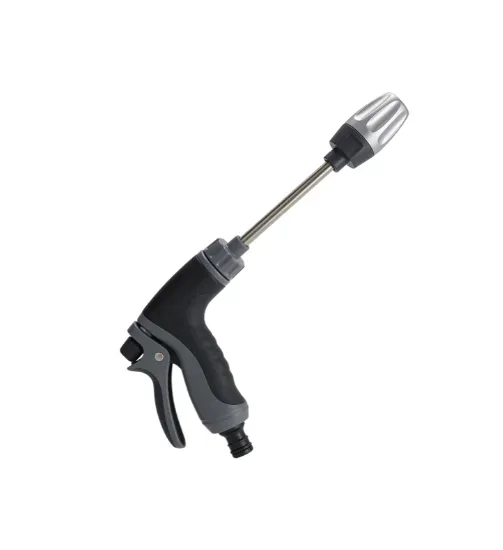
The tap is the pump — there is no motor
The buyer choice is a brass hose-end tip that squeezes tap water, or a machine with an engine that makes its own pressure. Jetterix is only the first of those. Garden-hose attachments sell as washer substitutes. This one is a hydro-mechanical tip: household water enters an aluminum chamber, then a narrow brass exit. That squeeze is the Venturi effect. Velocity can rise. Pressure the house does not already have cannot appear.
A weak spigot stays weak. A broken line stays broken. If the hose is already a trickle, twisting a metal nozzle onto the end does not invent a pump. Britannica’s entry on the Venturi tube is the public physics document for a constriction in a pipe. It is a description of flow, not a product test of this brand, and not a promise that driveway stains will vanish.
The listing positions the jet for driveways, siding, decks, cars, RVs, boats, and patios. Those jobs still depend on the water behind the thread. The body is described as corrosion-resistant aluminum alloy with a brass tip. Hot-water taps are listed as safe because the construction is metal, not a plastic gun that can warp. That is a materials claim, not a stain-removal result.
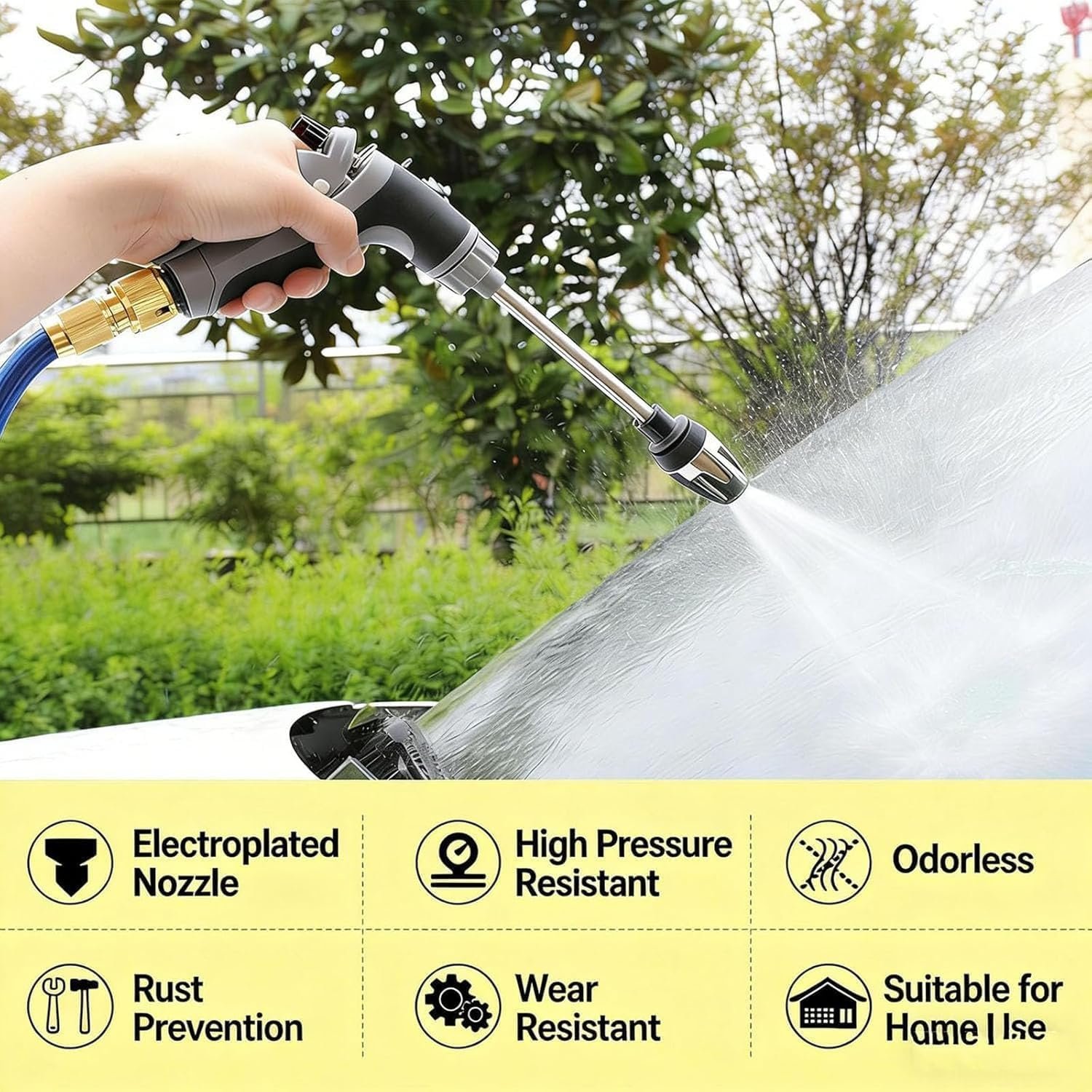
Motors do work. They take fuel or wall current and raise pressure far above the street main. This SKU has no motor in the listing. The honest sentence is shorter than the ads: a metal tip on a 3/4-inch hose. If that sentence is enough, keep reading for thread, spray shape, pack math, and the public refund file. If that sentence is not enough, you already know you need a different class of machine.
Hydrox5 appears among this site’s keywords because the offer has used that name in the same funnel family. This review titles the product as the Jetterix listing we recorded. If a later checkout uses another name on the same brass tip, the mechanism does not change: still no motor. Still the tap.
People buy hose-end gadgets after watching a video of paint blasting off a fence. Videos are not a PSI gauge. They are not your spigot. They are not a refund policy. This publication did not film a driveway. It read a listing and a public complaint record. That is a narrower job, and it is the job we can defend.
A brass hose tip is still a hose tip
Gas washers generate thousands of PSI with an engine. The listing itself puts this attachment short of commercial 3000+ PSI work and of stripping industrial paint. That gap is the product. A metal tip can feel louder than a cheap plastic spray gun. It is still the same household water, aimed tighter.

Brass at the exit is a wear surface. Aluminum in the body is weight and corrosion copy. Neither metal creates a pump. If a salesperson says “pressure washer” without “hose-end,” they are using the wrong noun. This review uses “hose tip” on purpose. Nouns are how buyers get stranded with the wrong tool in a driveway.
Leave this in the cart
- The house has zero or broken water pressure.
- The job is stripping industrial paint or running commercial-grade PSI.
- You need a documented engine washer, not a 3/4-inch thread.
- You will only be satisfied by a motor sound and a dedicated hose rated for washer duty.
A closer fit is a homeowner with a working spigot who wants a drawer-sized metal nozzle for ordinary outdoor rinsing, and who already understands it will not replace a machine. Ordinary outdoor rinsing is mud on a bumper, pollen on a deck chair, a trash-can rinse. It is not a restoration contractor’s bid.
Thread quality matters because garden-hose fittings leak when they are cross-threaded. The listing says screw it on; the page does not require tape. If your particular hose weeps at every fitting, this tip will not teach the hose manners. Replace the washer in the hose end, then try again. That hose washer is a dime part. It is not included as a named accessory on the excerpt we used, and this page does not invent a kits list.
Household spigot pressure and the 3000+ engine class
Residential water supply is a utility product. Many U.S. water utilities describe typical household pressure in a range measured in tens of pounds per square inch, not thousands. Engine-driven washers advertise 3000 PSI and up as a sales class. Those two numbers are not cousins. They are different decades on a log scale. The Jetterix listing itself uses the 3000+ figure as the class this attachment is not.
This review does not invent a PSI rating for the brass tip, because the listing we recorded did not give one we could check. “High pressure” in a headline is an adjective. An adjective is not a gauge. If a later spec sheet publishes a number with a method, that would be a new document. Until then, the category is hose-end.
Washer safety is its own public topic. The U.S. Consumer Product Safety Commission has warned for years about pressure-washer injuries — injection wounds, eye injuries, flying debris. Those warnings attach to machines that actually make washer pressure. A hose tip is less of that machine. It is not zero-risk: a pinpoint jet in an eye is still a bad idea, and a ladder plus any jet is still a fall. Wear eye protection. Do not point the tip at people or pets. That is ordinary water-jet sense, not a branded protocol.
Electric small washers sit in a middle class: a motor, a dedicated hose, often 1500–2000 PSI in retail ads. This page is not a catalog of those SKUs. It names the class so Jetterix is not smuggled into it. If your job needs that middle class, shop that middle class. Do not hope a Venturi chamber is a quiet electric washer.
Well pumps, gravity tanks, and rain barrels change the “tap is the pump” sentence. A weak well is a weak jet. A barrel with a few feet of head is not a municipal main. The listing assumes household tap pressure. Off-grid setups need their own honesty: you will get what the pump already gives.
Pinpoint jet, wide fan, and finishes you can scar
The spray choice is a manual twist: pinpoint jet or wide fan. The page’s guidance for cars is the concentrated jet on rims and undercarriages, then fan spray on clear coats and windows. There is no independent paint-safety test on this review. Keep the pinpoint tip off peeling finishes and weathered boards if you do not want to find out the hard way.

Clear coat, old cedar, crumbling mortar, and oxidized aluminum trim are easy to mark with any concentrated jet. That is true of a thumb over a hose and true of a brass tip. The tip only makes the mistake more efficient. Start with the fan. Step back. Move closer only if the dirt is still there and the surface still looks like itself.
Windows and locks can drive water inside a door. A pinpoint jet at a weatherseal is how you discover a wet door card the next morning. Fan spray at an angle, not a spear into the gap. The listing’s car guidance is rims and undercarriage for the concentrated jet. Follow that sentence more than a video of someone attacking a windshield gasket.
People on ladders should not be using a jet that surprises them with kick. A hose-end tip has less kick than a washer wand. It still has some. Two feet on the ground is better than one foot on a rung. This is not a product-specific lab finding. It is how water and balance work.
Public refund records sit next to the 30-day banner
The checkout copy we recorded advertised a 30-day send-back. That banner is seller language. It is not a finding that refunds arrive. Public complaint records about refunds and shipping exist for this offer. One sourced example is BBB Scam Tracker lookup 1345942 — read the wording on that report; we are not restating it as a verdict of our own, and we are not adding invented case numbers around it.
Documents this review used
- The partner listing for Venturi copy, 3/4-inch thread, aluminum-and-brass build, spray modes, and the 30-day return line.
- Checkout pack totals on that same offer (one, two, three, and four nozzles).
- BBB Scam Tracker lookup 1345942, a public complaint record for this funnel.
The listing also says orders process within 24 hours and typically arrive in 3–7 business days with tracking emailed on dispatch. Treat that as seller copy. If delivery or a refund is the risk you care about, read the current terms and the public complaint file before you pay — not after the box fails to show up.
Direct-to-consumer funnels sometimes run 30-day banners while support queues run longer than 30 days. That mismatch is exactly what public complaint boards exist to surface. This site is not the Better Business Bureau. We link one tracker record that is already on this page’s history. We do not scrape a pile of unnamed “customers.” We do not invent a complaint count. One linked record plus the banner is the documentation pair.
Pay with a method that still lets you dispute a charge if a box never moves. That is ordinary card-network advice, not a Jetterix policy. Keep the order email. Keep the tracking number if one arrives. If one does not arrive in the window the listing described, you have a paper trail. If you pay a method with no dispute rights, you have a story.
What 3.6 is attached to
The score on this page is 3.6 / 5 because public refund complaints sit next to the 30-day banner, and because the object is a hose tip rather than a washer. It is not a 1 because the listing’s mechanism — Venturi, 3/4-inch thread, aluminum and brass — is internally consistent. It is not a 4 because consistency of physics does not settle consistency of refunds.
Four tips at $44.95, or one at $59.99
Pack math is the only reason to buy more than one nozzle. Figures below are what the listing showed. They are not an offer from this site.
| 1 nozzle | $59.99 (shown against $149.98) |
|---|---|
| 2 nozzles | $109.90 total ($54.95 each) |
| 3 nozzles | $149.97 total ($49.99 each) |
| 4 nozzles | $179.80 total ($44.95 each, shown against $719.20) |
The 4-pack is $14 cheaper per tip than buying one. That only helps if you actually need four tips — a house, a neighbor, a spare. One metal nozzle in a drawer is the whole product for most hoses. Confirm the live total before you pay; direct-to-consumer stickers move.
Struck-through $149.98 and $719.20 are compare-at theater. This site does not confirm that a brass hose tip sells for $149.98 at a hardware counter. The numbers a reader can use are $59.99, $109.90, $149.97, and $179.80 as recorded on that listing. If today’s checkout differs, today’s checkout wins.
Aluminum body, hot-water claim, and 3/4-inch thread
Standard garden-hose thread in the U.S. is 3/4-inch GHT. The listing says the tip is machined for that. European garden fittings can differ. If you are not on a U.S.-style 3/4-inch hose, look at the live page before you assume a screw-on fit. This review does not list metric adapters because the listing we recorded did not require them.
Hot-water taps are listed as safe because the construction is metal. Plastic spray guns can soften. Metal still gets hot in your hand. “Safe” here is a materials sentence, not a permission to point scalding water at a child, a pet, or a window. Household hot water is a burn hazard with or without a Venturi chamber.

Corrosion-resistant aluminum alloy is a marketing phrase until a spec names the alloy. The listing we read did not name 6061 or any other temper. Brass tip is more specific. Store the unit dry. Do not leave it full of water in a freeze. Frozen water in a chamber cracks cheaper fittings; this page does not have a freeze test, and it will not invent one. Ordinary hose hygiene still applies.
Do not wrench the aluminum body as if it were a pipe fitting in a gas line. Hand-tight plus a gentle snug is how garden hose lives. If it leaks, check the hose washer, not a roll of pipe dope, unless you like grit in a brass orifice.
Driveway, siding, deck, and car jobs as listed
Driveways: loose mud and silt are hose work. Oil spots and nested algae are not guaranteed by a tip. Siding: vinyl can dent; wood can fuzzy. Decks: weathered boards lose fiber to any jet. Cars: soap, fan spray, then rinse — the listing’s own split between rims and clear coat is the cautious reading. RVs and boats add height, wax, and gelcoat. Patios add grout. None of those nouns come with a before-and-after from this publication.
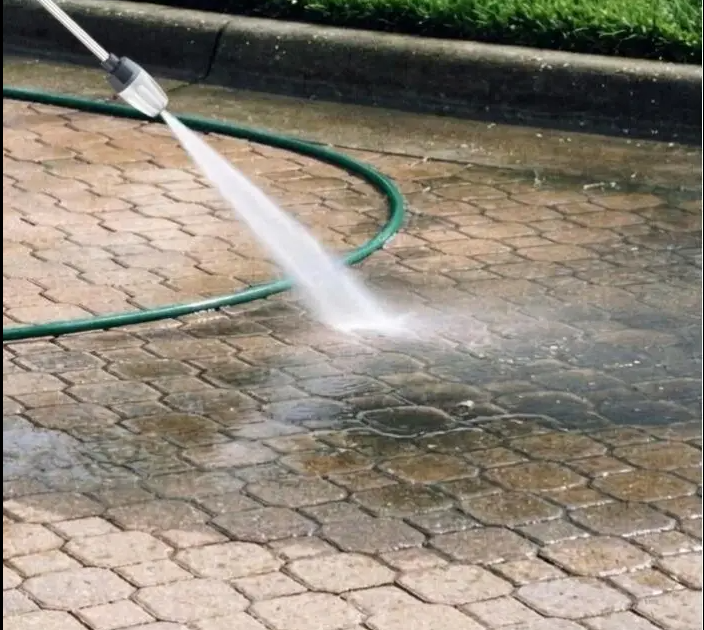
A second photo on the listing family shows deck and siding work. A third shows a car rinse. Those are use-case pictures, not measurements. We reuse them as illustrations of the jobs the page names. We do not caption them as proof.
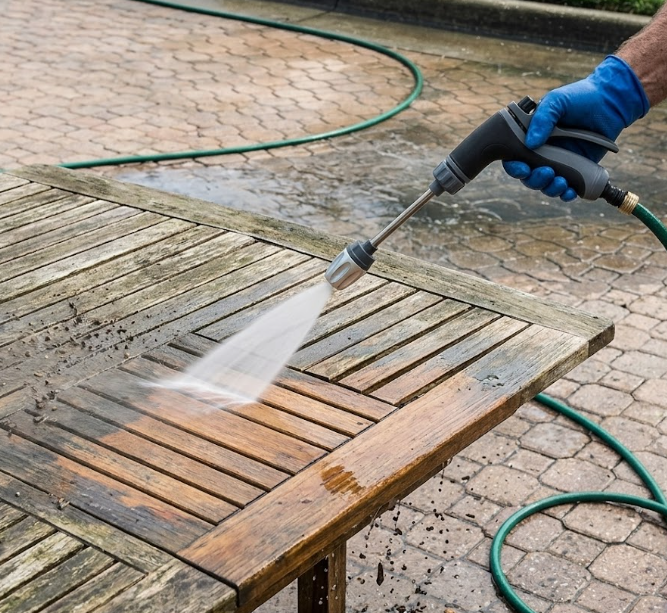
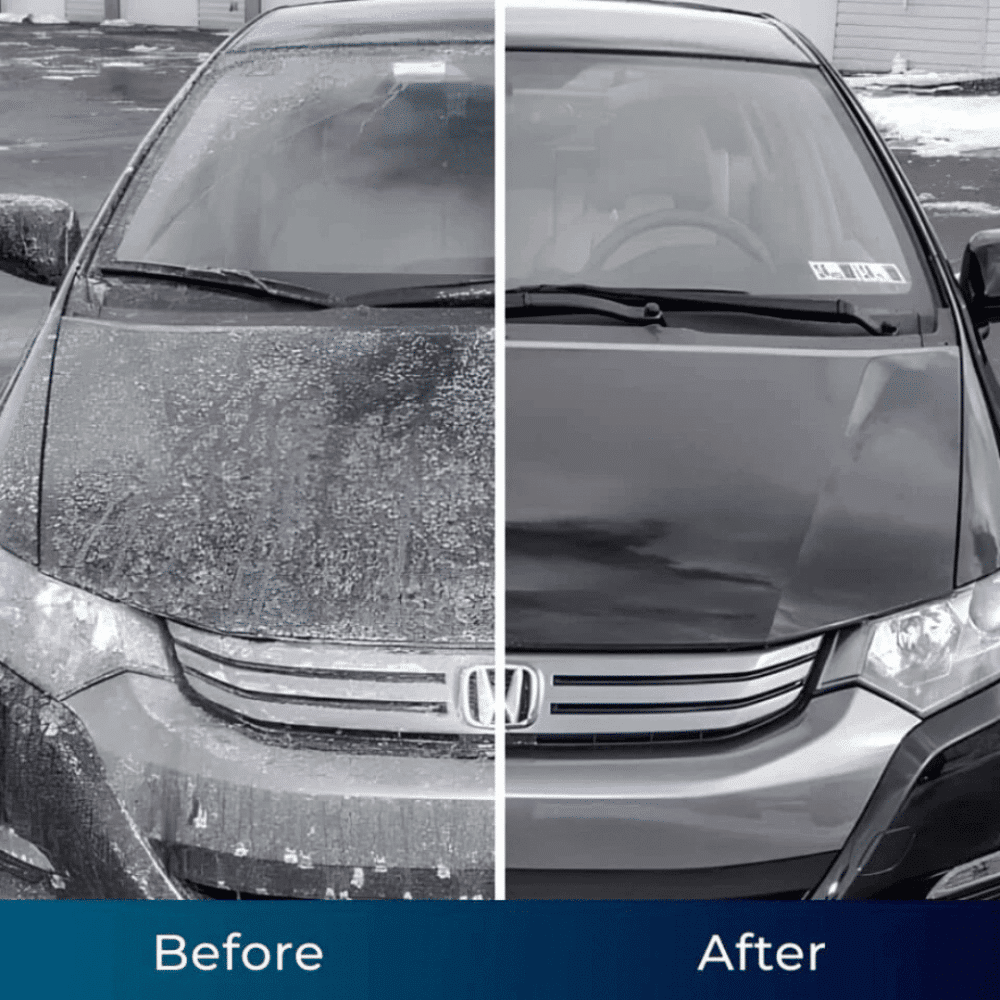
If the dirt is construction mud, start at the fan and keep the jet off window felt. If the dirt is pollen, a fan and a bucket may be the whole job and the brass tip is optional. If the dirt is a contractor’s paint overspray, you are back in the class the listing excluded: industrial paint. Stop. Hire the right machine, or live with the speckle.
Neighbors, HOA rules, and runoff into storm drains are local law. Soap and oil do not belong in a creek. This review is not your stormwater permit. A hose-end tip does not exempt you from those rules any more than a washer would.
Garden-hose thread is still garden-hose thread
U.S. garden hoses use 3/4-inch garden-hose thread, a slightly different animal from pipe thread on a boiler. The listing says Jetterix is machined for that 3/4-inch garden-hose thread and that the page does not require adapters or tape. If a fitting at the house is a strange quick-connect, a metric European coupler, or a worn male end with crushed threads, the brass tip will not invent compatibility. Buy the matching hose end first. Then screw the tip on by hand.
Cross-threading aluminum is easy if you start crooked. Turn backward until you feel the first thread drop, then forward. If it takes a wrench to start, it is wrong. Garden hose should snug with a hand and maybe a quarter-turn of complaint, not a pipe-fitter’s stance. Leaks at the joint are usually the rubber washer in the female hose end, not a need for yellow tape. Tape in a small orifice is how you feed debris into a Venturi chamber.
Quick-connect systems (plastic click fittings sold in big-box aisles) sit between the hose and the tip. Each extra joint is a leak and a pressure drop. The listing describes screw-on. If you insist on a click fitting, you are in accessory land this page does not document. Expect less jet, more drip. That is plumbing, not a scandal.
Splitters that feed a sprinkler and a nozzle at once divide the tap. The tap is the pump. Divided tap is a weaker jet. If you need the sprinkler on, you do not also need a driveway blast. Pick one job. The 3/4-inch thread can only carry what the valve sends.
Hose diameter and length also steal velocity. A 100-foot cheap hose is a longer straw. A kink is a closed valve. Straighten the run before you blame the brass. This review will not publish a pressure-loss table. It will say the listing assumed a standard hose, not a maze.
Drought rules, storm drains, and a jet that still wastes water
A hose-end tip uses tap water. In a drought restriction, that can be illegal on some days, in some cities, for some uses. A brass logo does not write you an exemption. Check the local water utility’s outdoor-use page. The EPA’s WaterSense program is the national efficiency conversation; your city still writes the ordinance. If watering days exclude driveways, a Venturi chamber does not reclassify a driveway as a garden.
Soap, degreaser, and engine oil in runoff belong in a stormwater story, not in a creek. Many municipalities tell residents not to wash cars on the street for that reason. A jet that lifts oily film more efficiently just moves the film to the gutter faster. Use a commercial car wash with a treatment system if that is the local rule, or wash on gravel that does not drain to a storm inlet, if that is allowed. This review is not your public-works department. It is a reminder that “patio” and “driveway” on a listing are job names, not discharge permits.
Water waste is also a money line. A garden hose can dump hundreds of gallons an hour depending on the tap. A longer rinse is not a feature. Fan spray, then stop. If the dirt is a stain that needs chemistry, a tip is the wrong tool. If the dirt is dust, a broom is drier. The listing’s jobs are rinsing jobs. Rinse means water. Water means a bill and a rulebook.
Well users already know the pump’s limit. A jet session that empties a pressure tank will give you rusty water and a hot pump. That is not a Jetterix defect. It is a well. Short bursts. Let the tank recover. If the well is already weak, you are in the skip-box: zero or broken pressure in practice, even if the gauge is not at zero.
Winter outdoor taps should be shut off from inside and drained. A nozzle left on a frozen bib is a cracked-bib story. Remove the tip. Store it dry. The hot-water materials claim does not cover ice expansion. Ice does not care that the body is aluminum.
What a BBB Scam Tracker lookup actually is
The Better Business Bureau runs a Scam Tracker where the public can file reports. Lookup 1345942 is one such file attached to this funnel. It is not a court verdict. It is not a count of “how many customers.” It is not a testimonial this site wrote. Read the wording on that page. Then read the 30-day banner on the checkout. Then decide whether those two documents feel like the same company on the same day.
This review will not invent extra case numbers, extra dollar amounts, or extra names. One linked record is the sourced example already used on this page. If more records exist, they exist on those sites, not as a pile we fabricated. Shoppers who want a broader scan can search the brand name on the BBB and on their card network’s dispute pages. That search is theirs. This page stays with 1345942 plus the listing.
Scam Tracker files can be messy, emotional, and one-sided. They can also be the only public trail a funnel leaves. Editorial caution means: link, do not launder the complaint into our voice, do not call the product a proven scam as a legal conclusion, and do not ignore the file because it is inconvenient for a 5.0. The 3.6 is how that caution looks as a number. Refunds and shipping are the theme the file and the banner share. Mechanism honesty is why the number is not a 2.
If you pay, use a method with dispute rights, keep emails, and watch the 3–7 business day copy against a calendar. If tracking never appears, the listing’s own logistics sentence is the document you cite to support. If a refund is refused after the 30-day banner, the banner is the document you cite. None of that is legal advice. It is record-keeping that matches how this funnel talks.
Do not harass support staff. Do not post invented order numbers. Do not ask this publication to mediate. We are a review site with an affiliate link, disclosed, that does not change the 3.6. The affiliate disclosure is the money sentence. The tracker link is the complaint sentence. Keep them both visible.
Freeze, leftover water, and a metal chamber in January
Water left in a metal chamber that then drops below freezing expands. Expansion cracks fittings. The listing’s corrosion-resistant aluminum and brass tip do not include a freeze-test report on this page. Ordinary hose practice is: unscrew, drain, indoor shelf. If the unit has a twist head, cycle it while it drains so a pocket of water is not trapped in the “fan” position.
Hot-water use, then a freeze, is a worse cycle: warmer water, then ice. If you used a hot tap because the listing said metal can take it, still drain before night in a cold garage. “Safe with hot water” is not “safe as a block heater.” Gloves help because metal gets hot. Gloves also help because metal gets cold. Neither sentence is a brand lab. Both are temperature.
Dezincification of brass in aggressive water is a plumbing-industry topic for cheap fittings. This review does not have a metallurgy report on the Jetterix tip. It will not diagnose a green crust in advance. Rinse and dry. If the orifice looks eaten after a season of well water, stop using a weakened tip that might shed metal. That is inspection, not a warranty claim we can adjudicate.
Store away from fertilizer and pool chlorine. Those chemistries attack metals in sheds. The listing did not name a storage SKU. A hook is enough. Do not drop the brass exit onto concrete as a habit. Burred orifices spray crooked. Crooked spray is how you wet a window felt you meant to miss.
Replacement parts are not on the excerpt we used. If the twist seizes, you may own a paperweight. Four-pack math only helps if you wanted four working tips, not one seized and three in a drawer. Buy the count you will maintain. Maintenance here is drain and don’t freeze — a low bar, and still a bar.
Eye protection, kick, and a ladder you should get off
Any concentrated water jet can bounce grit into an eye. Safety glasses are cheaper than an urgent-care copay. The CPSC’s pressure-washer injury warnings are about higher-energy machines; the eye is still an eye at garden-hose energy if grit is in the mix. Fan spray first. Point down. Do not “test” the pinpoint at face height.
Kick is smaller than a washer wand and not zero. On a ladder, small kick is enough. Get off the ladder. Wash siding from the ground with a longer hose if you must, or hire a crew that owns fall gear. This publication will not draw a stick figure on a third-story pinpoint jet. The listing named siding as a job. Gravity named the limit.
Injection injuries — fluid under the skin — are the nightmare of high-PSI tools. A garden-hose tip is unlikely to match that energy. Unlikely is not a permission to put the orifice against a hand. Kids will try. Do not let them. The skip-box already said this is not a toy class. Repeat it at the brass end.
Pets hate jets. A dog that bites a hose is a puncture in a 3/4-inch line and a trip to a vet if the jet hits an eye. Turn the water off before you turn your back. Ordinary backyard sense. The product photos show outdoor work, not a play session.
Hearing is not a big issue on a hose tip the way it is on a gas washer. You can still annoy a neighbor at 7 a.m. Courtesy is not a spec. It is how driveways stay neighborly while you rinse pollen the listing named as a job.
Hydrox5, funnel names, and the SKU this page titles
Direct-to-consumer hose tips sometimes change the word on the box without changing the chamber. This site’s keyword list includes hydrox5 because that string has appeared in the same offer family. The review title stays Jetterix Pressure Nozzle because that is the listing we recorded: Venturi copy, 3/4-inch thread, aluminum and brass, pinpoint and fan, 30-day banner, pack prices, BBB Scam Tracker lookup 1345942. If a checkout tab says another name on the same brass tip, the physics does not change. The refund file does not change. The 3.6 does not become a 4.5 because the logo swapped.
Shoppers who search one name and land on the other should still read the tracker record and the no-motor sentence. Funnel names are a marketing layer. The tap is still the pump. A new name is not a new engine. This review will not play along with a relaunch that only relaunches the headline. If a future listing adds a motor, that would be a different product and a different page. Until then, treat renamed tips as this tip.
Affiliate URLs in this catalog point at a partner checkout. The live page may A/B a headline. Look at the nouns: hose, brass, Venturi, 3/4-inch. If those nouns are gone and a gas engine is in the cart, you are not on the page we reviewed. Leave. If those nouns remain, you are. The 30-day banner should still be read against lookup 1345942. That pairing is the editorial point, not the trademark.
Do not email us to ask whether Hydrox5 is “legit.” Read the documents this page already linked. Legitimacy in the legal sense is a court. Legitimacy in the shopping sense is: mechanism matches the job, and refunds match the banner. We scored the second pair harder than the first. That is why 3.6 exists.
Copycats in the hose-end aisle use the same Venturi story. This page is not a police lineup of every Amazon brass nozzle. It is one funnel with one tracker file we are willing to link. If you are holding a different brand’s tip, you need that brand’s documents. Do not paste our 3.6 onto a stranger’s SKU. Scores on this site are per listing.
Paint overspray, mortar haze, and work the listing already excluded
The listing itself puts this attachment short of commercial 3000+ PSI work and of stripping industrial paint. Believe the exclusion. Overspray on a window, a fence, or a car is a restoration job. Chemicals, clay bars, or a real washer with a professional on the wand are the tools. A pinpoint garden-hose jet will sometimes move weak latex and will sometimes etch glass. This publication did not run that experiment. The listing already told you industrial paint is out. Stay out.
Mortar haze on new brick is a mason’s detergent job, often with a specified dwell and a neutralization step. A jet can drive haze deeper or blow sand out of joints. Decks with mill glaze, cedar that fuzzes, and stucco that sheds are similar: water at speed is not a nuance tool. Fan, distance, stop. If the surface changes color in a way you did not want, you are already in damage. Stop sooner than that sentence.
Oil on a driveway is a poultice and time, or a contractor. A jet spreads the rainbow into a wider rainbow and into the gutter, which is a storm-drain problem already named. Degreaser plus a broom plus absorbents is closer to an adult approach. The listing named driveways as a job. Mud and silt fit. Last year’s oil leak does not become a Jetterix success story on this page, because we do not have that story.
Boat bottoms and RV roofs add height, coatings, and warranties. Gelcoat scratches. Roof membranes puncture. Manufacturer warranties on vehicles often dislike pressure washers; they will not be happier with a buyer who says “it was only a hose tip” after a seam lifts. Read the vehicle manual. If it says stay below a PSI or a distance, and this listing did not publish a PSI, you cannot prove you stayed below it. That is a reason to use fan spray far away or to pay a wash that insures its own mistakes.
Graffiti, rust stains on concrete, and chewing gum are chemistry jobs. A brass tip is not a solvent. The 3.6 does not rise if a video shows gum flying. Videos omit the surface that lost aggregate. Stay in the listing’s ordinary rinsing jobs: pollen, mud, a trash can, a rim. Leave the restorations to restoration.
Washer hoses, garden hoses, and why the fittings are not cousins
Pressure-washer wands use different fittings, often quick-connects rated for thousands of PSI, and hoses with a different burst rating than a $20 garden hose. You cannot screw this brass tip onto a washer gun and call it an accessory. You also should not put a washer hose on a bib and expect a garden-hose thread to be happy. The listing is 3/4-inch garden-hose thread on a tap. Keep it there.
Burst hoses are a backyard classic: sun-rotted rubber, a kink, a closed nozzle, a surprise. A twist-to-pinpoint tip that is left closed in the sun can pressurize a cheap hose. Open the valve at the bib last, after the tip is aimed at the ground. Close the bib first when you are done. That order is hose manners. It is not a Jetterix manual we were given. It is how you do not write a wet basement into the afternoon.
Heated washers exist as a class. This listing’s hot-water claim is “metal can take a hot tap,” not “this is a heated washer.” A hot household tap is maybe 120–140°F at the fixture, not a 200°F coil. Do not import heated-washer jobs (grease on an engine, restaurant hood filters) into a brass garden tip. Those jobs are why heated washers exist as a class. You do not own that class because you ran the bathroom tap.
Electric washers in the 1300–2000 PSI retail band still have motors, dedicated hoses, and detergent tanks. They also have GFCI plugs because water and 120 volts share a driveway. Jetterix has none of that, because it has no motor. If your job needs detergent injection and a wand, shop that class. If your job needs a drawer-sized metal nozzle, you are in this aisle, refund file and all.
Gas washers add fuel, oil changes, pull cords, and neighbor noise. They earn 3000+ PSI. The listing used that number as the far shore. Stay on this shore unless you meant to buy a machine. The 3.6 is the score of this shore. It is not a smear of the other shore. It is a refusal to pretend they are the same beach.
Pay with a method that still lets you open a dispute
When a funnel’s 30-day banner sits next to a public refund file, the payment rail is part of the product. Card networks and some bank-transfer apps still let you dispute a charge if goods do not arrive or if the terms on the page are not the terms you got. Gift cards, some wallets, and cash-like rails do not. This review is not a legal clinic. It is a shopping note: if lookup 1345942 is the file you read, do not also volunteer a payment method with no reverse gear.
Keep the order confirmation. Keep the tracking email if one arrives in the 3–7 business day window the listing described. If day eight is silent, you have a dated sentence to point at. If a refund after a 30-day send-back is slow, you have the banner. None of that guarantees a win. It is how adults document a direct-to-consumer cart. The 3.6 already assumes you might need that file. Act like it.
Do not share card photos in a support chat. Do not send extra “verification” copies of an ID to a random email that is not the domain you checked twice. Funnel support can be real and still be a place phishing impersonates. Start from the checkout’s own contact path, not from a social-ad inbox. This is ordinary fraud hygiene. It belongs on this page because this page already had to link a tracker record.
If the box arrives and the tip is a thin plastic toy instead of aluminum and brass, you are not in the listing we recorded. Photograph, then dispute or return on the banner. The mechanism honesty we scored is the metal chamber. A bait-and-switch SKU would be a different story, and we will not pretend we unboxed yours. We read a page. You read a porch.
Four-pack math at $179.80 is a larger charge than $59.99. Larger charges are larger disputes. If you do not need four tips, do not buy four as a “deal” on a funnel you already distrust enough to be reading a 3.6. One tip is the product. Extra tips are extra faith. The score does not recommend extra faith. A neighbor who also wants a metal spray tip is the only clean reason for a second unit — not a checkout grid that looks cheaper per piece while the tracker file is still the same lookup 1345942.
The 3.6 we print for Jetterix
We give Jetterix 3.6 / 5. The mechanism is honest if you read it as a Venturi hose tip: 3/4-inch thread, aluminum body, brass twist, no engine. The 4-pack at $44.95 each is the cheapest rate we recorded. That is what the documents support.
The score sits well below a washer rating because this is not a washer. Public refund and shipping complaints sit on the same funnel as the 30-day banner. If you need engine PSI, skip it. If you have a working tap and want a metal spray tip, the listing is at least describing the right object. The methodology page is how 3.6 got onto this page. It is not a driveway stopwatch.
Points stay for naming the 3000+ class as out of reach and for a metal build that matches a hot-water claim. Points leave for the refund file and for sales language that lets a buyer hear “washer” when the SKU is a tip. Read the BBB tracker record before you pay. Keep the 3.6 in mind while you do.
Hose-end questions before you pay
These answers stay inside the listing, the pack totals we recorded, the Venturi public explainer, and BBB Scam Tracker lookup 1345942. They do not add PSI figures the listing did not publish.
No. It is a metal hose-end tip. Water from your spigot is forced through a Venturi chamber and a brass exit. There is no motor, no gasoline, and no 3000+ PSI engine. Encyclopedia entries on the Venturi tube describe a constriction that raises velocity. They do not describe a pump that invents pressure the house does not already have.
The listing says it is machined for a standard 3/4-inch garden-hose thread. Screw it on; the page does not require adapters or tape. If your hose is not 3/4-inch garden-hose thread, this SKU as described does not match.
One nozzle was $59.99. Four nozzles were $44.95 each ($179.80 total). Two were $109.90 and three were $149.97. Read the current checkout before you pay. Struck-through figures on that offer are seller compare-at numbers, not an offer from this site.
One sourced example is BBB Scam Tracker lookup 1345942. Read the wording on that report. We are not restating it as a verdict of our own, and we are not inventing extra case numbers. Public refund and shipping complaints sit next to a 30-day return banner on the same funnel.
No. The body is described as corrosion-resistant aluminum alloy with a brass tip. Household tap pressure is the only pump. A weak spigot stays weak. A broken line stays broken. Hot-water taps are listed as safe because the construction is metal, not a plastic gun that can warp. That is a materials claim, not a stain-removal result.
A manual twist: pinpoint jet or wide fan. The page’s guidance for cars is the concentrated jet on rims and undercarriages, then fan spray on clear coats and windows. There is no independent paint-safety test on this review. Keep the pinpoint tip off peeling finishes and weathered boards if you do not want to find out the hard way.
Driveways, siding, decks, cars, RVs, boats, and patios. Those jobs still depend on the water behind the thread. The listing itself puts this attachment short of commercial 3000+ PSI work and of stripping industrial paint. That gap is the product.
The listing says orders process within 24 hours and typically arrive in 3–7 business days with tracking emailed on dispatch. Treat that as seller copy. If delivery or a refund is the risk you care about, read the current terms and the public complaint file before you pay — not after the box fails to show up.
No. Municipal supply is often discussed in a tens-of-PSI range on utility pages; engine washers advertise thousands of PSI. Those are different machines. This review does not invent a PSI number for Jetterix because the listing we used did not publish one we could check. The honest category is a 3/4-inch hose tip.
The 4-pack at $44.95 each is $14 cheaper per tip than the $59.99 single on the listing we recorded. That only helps if you actually need four tips — a house, a neighbor, a spare. One metal nozzle in a drawer is the whole product for most hoses.